










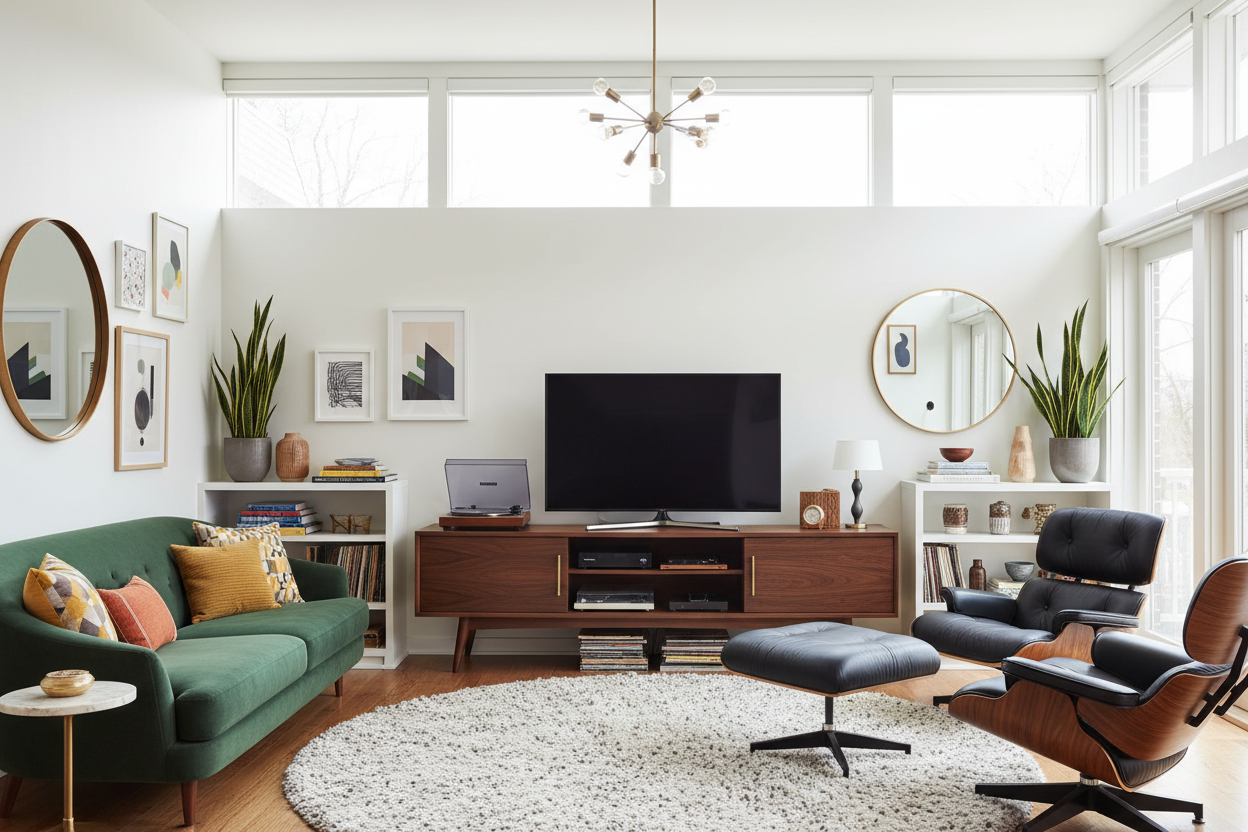
I remember staring at my first real living room feeling like something was fundamentally broken. I had the mid-century sofa, the jute rug, and a media console so low it practically hugged the floorboards. It looked like a piece of dollhouse furniture lost in a canyon. My 65-inch screen looked like it was hiding from the rest of the room.
We have been conditioned by a decade of minimalist catalogs to think that low-slung is the only way to go. But for many of us, a tall tv stand isn't just a preference—it is a functional necessity for a room that doesn't feel half-finished or ergonomically cursed. If your furniture feels like it is sinking into the floor, you probably have a scale problem.
- Visibility: Tall stands ensure your screen is visible over furniture and kitchen islands.
- Visual Weight: They fill the vertical void in rooms with high ceilings.
- Ergonomics: Proper eye level prevents the dreaded 'bedroom neck' from high mattresses.
- Storage: Extra height usually means an extra row of cubbies or drawers for clutter.
We Need to Talk About the 'Knee-High' Furniture Trend
For the last ten years, the furniture industry has been obsessed with the 'low-profile' look. It is great if you live in a glass-walled condo in Tokyo, but in a standard American home, a 20-inch high console is a mistake. When your TV sits that low, the rest of your wall looks like a vast, empty desert of drywall.
I have seen people try to fix this by hanging massive pieces of art above the TV, but it just makes the setup look cluttered. The real issue is that the base of your entertainment center lacks the 'visual weight' to anchor the room. You need a piece that stands its ground, especially if you aren't planning on wall-mounting every single device you own.
Layout 1: The Open-Concept 'Great Room'
The 'Great Room' is a blessing for entertaining but a nightmare for sightlines. If your sofa is floating in the middle of a 20-foot wide space, a low console is your enemy. From the kitchen island or the breakfast nook, a low-set TV is blocked by the back of the couch, the coffee table books, or even just the dog walking across the rug.
When you are browsing a collection of TV stands, look for something in the 30-to-35-inch height range. This extra elevation ensures that the screen clears the 'horizon line' of your other furniture. A high tv stand acts like a pedestal, making the TV a focal point that can be seen from the stove just as clearly as from the recliner.
Layout 2: Vaulted Ceilings and Giant Blank Walls
If you are lucky enough to have 12-foot vaulted ceilings, your biggest challenge is scale. A standard media unit under a massive ceiling looks like an afterthought. It creates a weird 'bottom-heavy' feeling where all the visual interest is crammed into the bottom two feet of the room, leaving ten feet of nothingness above it.
A taller unit draws the eye upward and balances the architecture. I usually recommend pieces with some textured wood grain or dark metal hardware to really 'ground' that wall. It makes the room feel intentional rather than cavernous. Without that height, your expensive vaulted ceilings just feel cold and empty.
Layout 3: The Primary Suite (Where Necks Go to Ache)
Watching TV in bed is a luxury, but doing it with a low console is a medical hazard. Most modern mattresses, especially with a box spring or a thick hybrid topper, sit 25 to 30 inches off the floor. If your TV is on a standard 20-inch stand, you are effectively looking down at your feet to watch the news. That constant chin-to-chest tuck is a recipe for a chronic neck ache.
In the bedroom, you want the center of the screen to be at eye level while you are propped up against your pillows. Using a tall TV stand mount can save your neck by lifting the display to a natural viewing angle. Trust me, your chiropractor will thank you.
The 'Floating' Trick If You Can't Find the Right Height
Sometimes you find a piece you love, but the legs are just too short. If you are handy with a stud finder, you can cheat the system. Buying a floating high gloss TV stand allows you to mount the unit at the exact height your room requires, regardless of where the floor is.
I love this move for smaller rooms because it keeps the floor visible, which makes the space feel larger, while still giving you that elevated screen height. Just make sure you use heavy-duty toggle bolts if you aren't hitting studs—standard drywall anchors won't hold the weight of a console and a soundbar.
My Biggest Furniture Mistake
I once bought a beautiful, vintage-style sideboard to use as a TV stand. It was 42 inches tall—way taller than standard. I thought I was being a genius. The problem? I put it in a tiny room with a low sofa. I spent six months feeling like I was in the front row of a movie theater, straining my eyes upward. The lesson: height is about the relationship between your eyes and the screen, not just the number on the tape measure. Measure your seated eye height before you click 'buy'.
FAQ
How high should a tall TV stand be?
Generally, 'tall' starts at 30 inches and can go up to 42 inches. For most living rooms, 32-35 inches is the sweet spot for visibility without causing neck strain.
Can a TV stand be too tall?
Yes. If you have to tilt your head back to see the middle of the screen, it is too high. You want your eyes to naturally land on the top third of the screen when sitting comfortably.
Do tall TV stands work with large TVs?
They do, but check the weight limit. Tall stands have a higher center of gravity, so make sure the base is sturdy and always use the included anti-tip wall straps, especially if you have kids or pets.


Leave a comment
This site is protected by hCaptcha and the hCaptcha Privacy Policy and Terms of Service apply.