










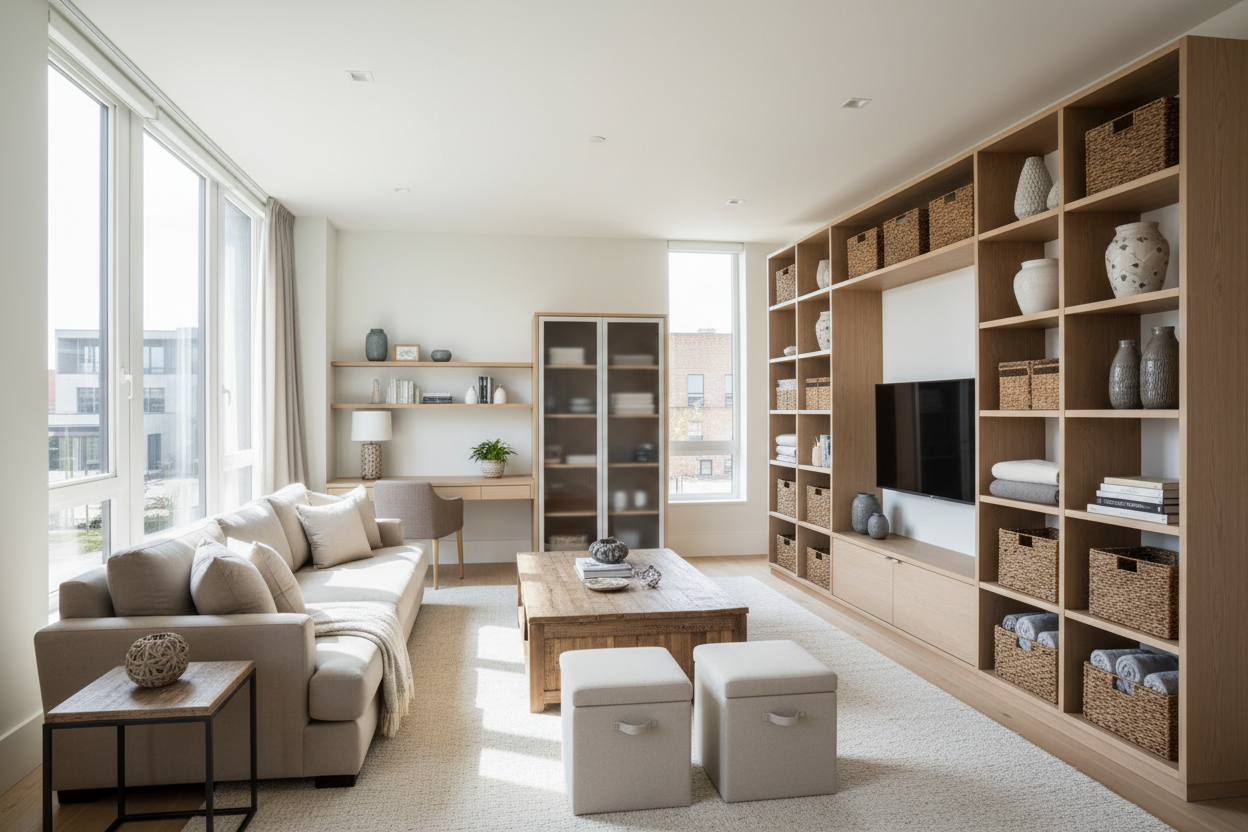
I have spent way too many Tuesday nights staring at 47 open browser tabs, convinced that a $99 dresser is the solution to my life’s chaos. Last year, I bought a 'deal' that arrived in a box the size of a pizza—it was so flimsy I could literally hear the particle board crying under the weight of my sweaters. It was a classic mistake: I bought the price, not the piece.
When a massive storage furniture sale hits, our brains switch from 'design mode' to 'panic mode.' We see a 60% off tag and suddenly forget that we actually need to open the drawers without the whole unit tipping over. I have learned the hard way that a discount is only a deal if the furniture actually stays in your house for more than six months.
- Prioritize heavy-duty anchor pieces over small bins.
- Measure your baseboards and door clearances before clicking buy.
- Look for multifunctional items like low-profile sideboards.
- Focus on high-traffic zones like the entryway first.
The 'Panic Buy' Effect (And How to Avoid It)
Flash sales are designed to make you sweat. They create this artificial urgency that makes us abandon our actual aesthetic for whatever is cheapest. This is how you end up with a living room full of mismatched, wobbly cabinets that look like they belong in a college dorm, not a grown-up home. You start thinking, 'Well, it’s only $40,' but three $40 mistakes later, you’ve wasted over a hundred bucks on junk.
Before you even browse storage furniture during a big event, you need a solid game plan. I start by auditing my mess. Are the shoes the problem? Or is it the pile of mail? Shopping with a specific 'problem to solve' prevents you from grabbing random cubby organizers just because they’re on clearance.
Rule 1: Stop Buying Bins, Start Buying Sideboards
People love to waste money on small, temporary storage solutions during sales. We buy plastic bins, canvas cubes, and tiny wire racks. The problem? They don't hide the mess; they just categorize it. If you want your home to feel calm, you need pieces that actually conceal the clutter behind solid doors. I always tell my friends to skip the five small organizers and buy one substantial, hard-working piece instead.
A 59-inch sideboard cabinet is the perfect example of a 'hero' piece. When the prices drop, this is where you should put your money. A sideboard this size can hold your entire holiday dish set, the board games you only play once a year, and the random electronics chargers you can't throw away. It’s a permanent furniture investment, not a temporary fix.
Rule 2: Don't Ignore the 'Short' Stuff
Everyone looks for tall bookshelves during a sale, but low-profile storage is often the unsung hero of a good floor plan. Tall pieces can make a small room feel claustrophobic, but 'short' furniture keeps your sightlines open. I love using low cabinets under windows or even behind a floating sofa to act as a console and storage hub simultaneously.
I’ve written before about how a short storage table might be the smartest furniture decision you'll make because it utilizes that 'dead space' below eye level. It’s the easiest way to add 10 square feet of storage without making your living room feel like a warehouse.
Rule 3: The Entryway Needs More Love Than You Think
If you're going to spend money on storage, putting it right at your front door gives you the highest daily return on investment. The entryway is the most chaotic 20 square feet of any home. If you don't have a dedicated spot for shoes and keys, that mess will bleed into your kitchen and living room within hours of you getting home.
Investing in entryway shoe storage furniture is my top recommendation for sale hunters. It’s the difference between tripping over a pile of sneakers and actually enjoying the walk to your sofa. Look for slim-profile cabinets that tuck against the wall—they take up almost no floor space but can swallow a dozen pairs of shoes easily.
My Quick Pre-Checkout Checklist
Before you hit that 'place order' button, take thirty seconds to run through these questions. I’ve skipped these before and regretted it every single time.
- Did I measure the baseboards? (Some furniture won't sit flush if the baseboards are thick).
- Does it have cord management holes for electronics?
- Is the back panel solid or that flimsy 'cardboard and tape' stuff?
- Will the delivery person bring it to my door, or just leave a 100lb box on the curb?
Is MDF always bad for storage?
Not necessarily. High-density MDF with a good veneer can be more stable than cheap solid wood that might warp. Just check the weight capacity—if a shelf can't hold at least 30 lbs, skip it.
How do I know if a sideboard is too big?
Tape it out on the floor with blue painter's tape. You need at least 36 inches of 'walkway' space in front of the piece to comfortably open the doors and walk past.
What is the one thing I should never buy on sale?
Anything that 'almost' fits. If you have a 60-inch space and buy a 62-inch cabinet because it's 70% off, you've just bought a very expensive headache.

Leave a comment
This site is protected by hCaptcha and the hCaptcha Privacy Policy and Terms of Service apply.