










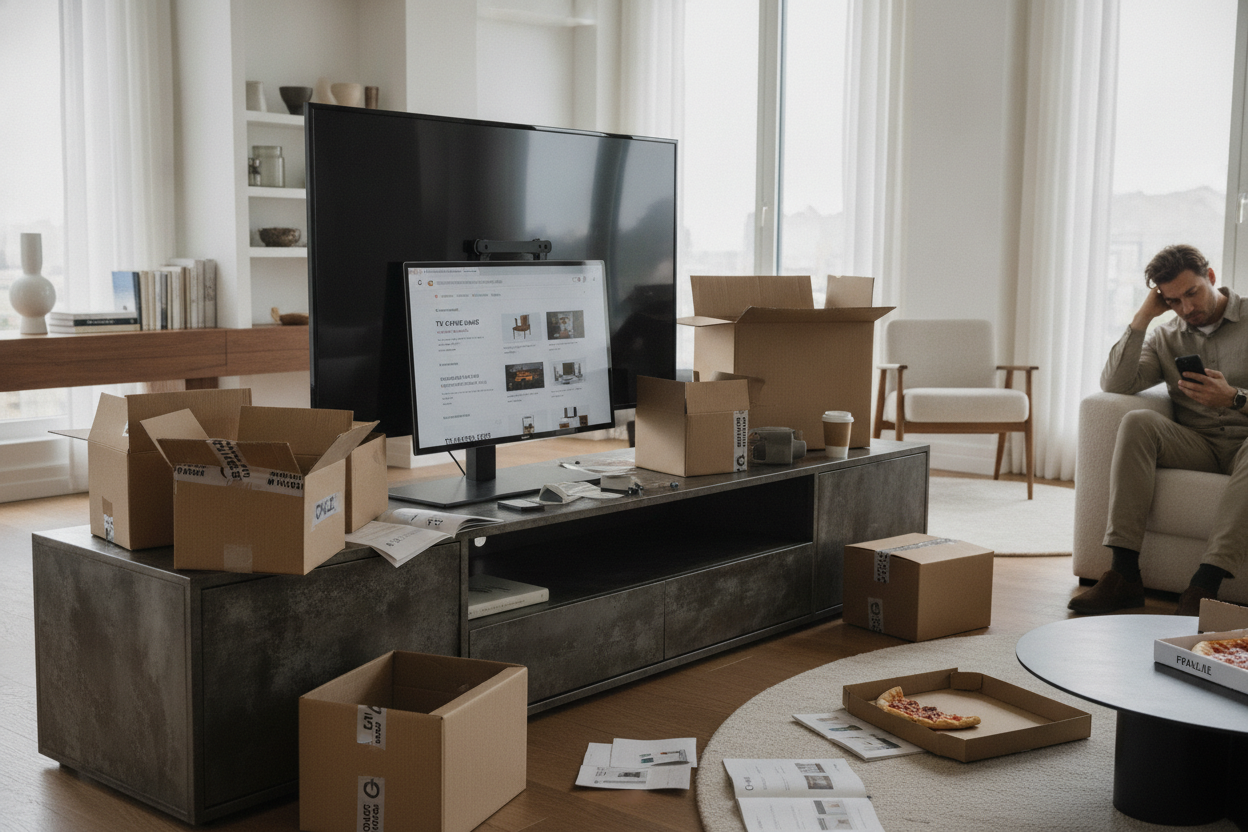
I’ve spent years hauling heavy boxes up three flights of stairs and watching people’s faces fall as they realize the 'solid mahogany' console they ordered weighs less than their cat. If you're starting a tv stand buy online journey, stop scrolling for a second. I've seen the good, the bad, and the literal piles of sawdust that arrive on doorsteps.
Quick Takeaways
- Weight is the ultimate truth-teller; if the box is under 60 lbs for a large unit, it's flimsy.
- 'Solid wood' often means a 1mm veneer over compressed paper.
- Cable management holes are usually a joke—look for open backs or wide cutouts.
- Flat-pack shipping is a gamble for glass doors; sliding tracks are safer than hinges.
Why You Need to Check the Shipping Weight Immediately
When you look for a tv stand online, the first spec you should hunt for isn't the color—it's the weight. In my delivery days, I could tell which units would be returned within 48 hours just by how easily they slid across the truck floor. If a 60-inch console weighs 45 pounds, it’s made of low-density particle board that will sag the moment you put a modern 65-inch OLED on it.
You want heft. A quality media unit should feel substantial. High-density MDF is acceptable, but kiln-dried hardwoods are the gold standard. A heavy package means the material can actually hold a screw without stripping the hole during assembly. If the 'Product Weight' section is hidden or suspiciously low, keep moving. Your floor—and your electronics—deserve better than a cardboard-core shelf.
The 'Solid Wood' Loophole in Product Descriptions
Retailers love to play word games. You’ll see 'Solid Wood Accents' or 'Real Wood Finish,' which usually means the legs are wood but the entire body is paper-thin veneer. Before you commit to a tv stand online buy, read the fine print for terms like 'engineered wood.' There's nothing wrong with high-quality engineered wood, but you shouldn't be paying solid-oak prices for it.
I’ve seen plenty of 'solid' units bow in the middle because the manufacturer didn't include a center support leg. If you want something that won't warp, look for designs with structural integrity built into the frame, like a slatted mid century modern TV stand. Slats allow for airflow and offer a rigidity that solid, thin panels often lack. Plus, they don't hide the fact that they're built to last.
Cable Management is Usually an Afterthought
Most manufacturers think one 2-inch circle in the back panel is enough for a TV, a soundbar, a gaming console, and a router. It’s not. I’ve spent way too many afternoons helping friends dremel larger holes into their brand-new furniture because their HDMI heads wouldn't fit through the pre-drilled gaps. It's frustrating and ruins the aesthetic immediately.
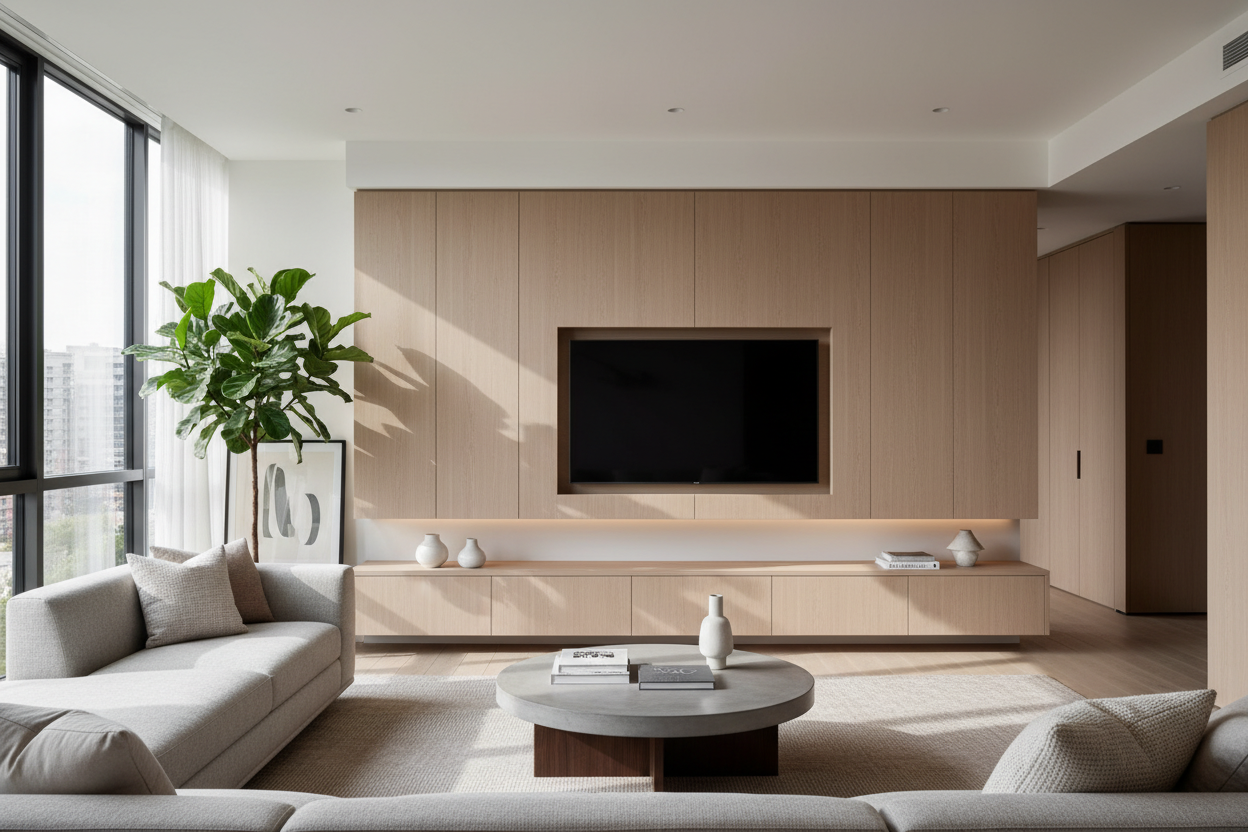
Check the photos of the back. If there's only one tiny hole, you're going to have a 'spaghetti monster' of wires peeking out from the sides. To truly hide the mess and keep your sanity, you should get a TV cabinet stand that features full-width cord channels or removable back panels. This allows for actual ventilation so your PlayStation doesn't overheat while you're mid-raid.
Flat-Pack vs. Pre-Assembled: The Delivery Reality
I once delivered a pre-assembled unit with glass doors that had been through four different shipping hubs. It arrived as a box of expensive maracas. Flat-pack furniture is actually safer to ship because the components are sandwiched tightly together, but the assembly is where people lose their minds. If you aren't handy with an Allen wrench, the 'savings' of buying online disappear the moment you strip a cam lock.
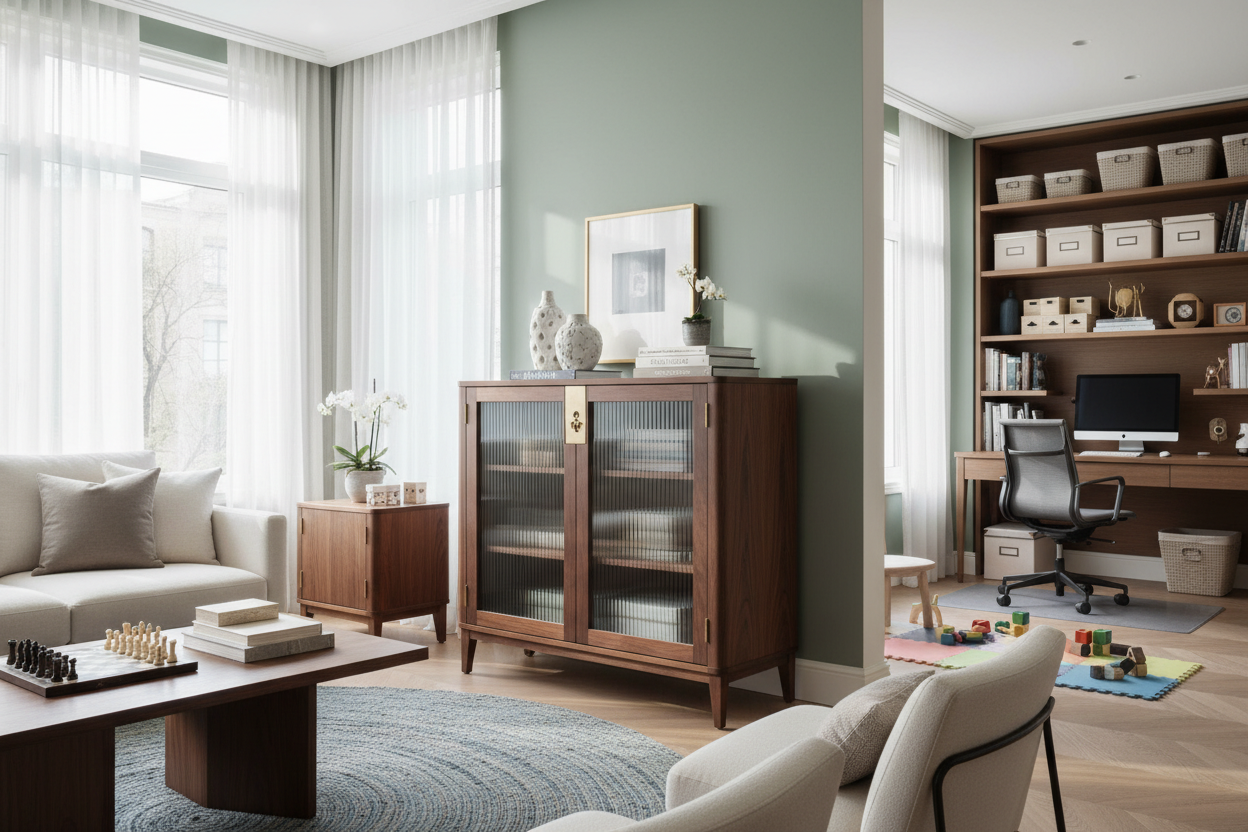
If you’re worried about transit damage but hate assembly, look for units with sliding components rather than swinging doors. A storage credenza with sliding glass doors is often packed much more securely because the glass is protected by the outer frame of the unit. Hinged doors are notorious for arriving bent or with the glass shattered because they have 'room' to move inside the box during a rough flight or truck ride.
My Final Checklist Before You Hit 'Add to Cart'
Before you finalize that tv stand buy online, do a quick sanity check. Measure your TV’s actual stand width, not just the screen size. A '65-inch TV' refers to the diagonal screen, but the feet might be 50 inches apart. You don't want the edges of your TV hanging over the sides of the console—it looks cheap and it's a tipping hazard for kids or pets.
Verify the 'Max Load' capacity. If your TV weighs 60 lbs and the stand is rated for 65 lbs, you’re cutting it too close. Aim for a 20% buffer. Once you’ve checked the weight, the materials, and the cable routing, you're ready. Feel free to browse TV stands with these specs in mind, and you’ll avoid the heartbreak of a wobbly, wire-filled living room.
FAQ
How much wider should my stand be than my TV?
Ideally, aim for at least 3 to 6 inches of clearance on each side. This prevents the 'top-heavy' look and keeps the TV from being bumped by people walking past.
Is MDF always bad?
Not at all. High-density MDF is actually more stable than solid wood in humid environments because it won't shrink or swell. Just avoid the 'low-density' stuff that feels like compressed lint.
What's the best height for a TV stand?
Your eyes should be level with the bottom third of the screen when seated. For most standard sofas, that means a stand height of 22 to 28 inches.

Leave a comment
This site is protected by hCaptcha and the hCaptcha Privacy Policy and Terms of Service apply.