










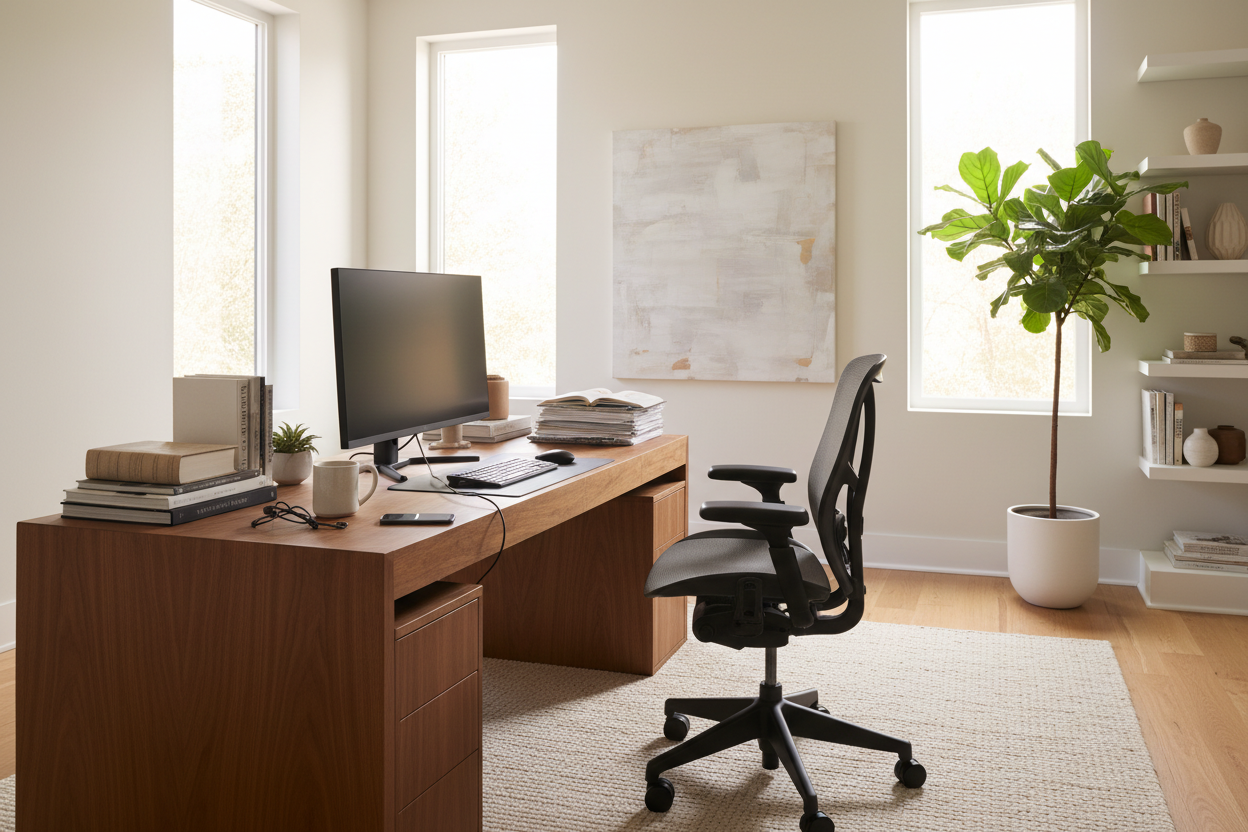
We often treat our workspaces as static furniture pieces rather than dynamic tools for productivity. The visual noise of a cluttered surface does more than just look messy; it creates a subconscious cognitive load that drains your energy before you even answer your first email. As a designer, I see this constantly: beautiful mahogany executive tables buried under mountains of paper, rendering the aesthetic useless. If you want to **organize a desk** effectively, you must move beyond simple tidying and start thinking about ergonomics and workflow zoning.
Quick Decision Guide: The Pillars of Desk Organization
- Zoning: Divide the surface into 'reach zones'—primary (keyboard/mouse), secondary (reference materials), and tertiary (decor/storage).
- Verticality: Utilize wall space or risers to lift monitors and accessories, freeing up the desk pad for active work.
- Concealment: Prioritize opaque storage for small items (paperclips, batteries) to reduce visual clutter; keep only aesthetically pleasing items visible.
- Cable Management: A truly organized office table hides the 'spaghetti' of wires using under-mount trays or grommets.
- Lighting: Ensure task lighting is positioned opposite your writing hand to prevent shadowing.
Defining Your Prime Real Estate
When clients ask, "how do I organize my desk for maximum efficiency," I start with the concept of prime real estate. Your desk surface is finite. The area within the sweep of your arms is sacred. If you are keeping a stapler there that you use once a week, you are wasting space. To achieve the best organized desk, place only daily essentials within this arc.
For those wondering how to arrange office desk layouts, consider the 'triangle of workflow.' Your monitor, your writing space, and your reference materials should form a tight triangle. This minimizes reaching and twisting, which is crucial for long-term physical health.
Structuring Storage: Hidden vs. Display
Conquering the 'Drawer of Doom'
How to organize your desk at work often comes down to drawer discipline. Use modular drawer dividers—preferably felt-lined to prevent sliding and noise. Dedicate the top drawer to pens, sticky notes, and lip balm. The deep bottom drawer should be reserved for hanging files or bulky items like headphones. Avoid the temptation to toss loose items in; if it doesn't have a home, it becomes clutter.
Vertical Solutions for Small Spaces
If you are figuring out how to organize small desk setups, you cannot afford to spread out. You must build up. A high-quality monitor riser with storage underneath is an excellent way to organize a desk while improving ergonomics. Pegboards or floating shelves above the desk can hold the items that usually clutter the surface, such as scissors or tape, turning them into a functional display.
Visual Balance and Materiality
An organized work desk isn't just about function; it's about feeling. The tactile experience of your workspace matters. When advising on how to organize home office desk setups, I suggest mixing textures. If you have a cold glass or laminate desk, introduce a leather desk pad. This not only defines the work zone but also provides acoustic dampening and a soft touchpoint.
When selecting desk organizer tips, avoid cheap, clear plastic if possible. While popular, they expose the visual mess inside. Instead, opt for wood, ceramic, or leather organizers that conceal the contents, giving your organized office table a curated, high-end look.
Managing the Digital and Physical Hybrid
In modern workspace organization, we deal with cables as much as paper. How to organize your work desk involves rigorous cable management. Use velcro ties rather than zip ties (so you can adjust them later) and mount a power strip to the underside of the desk. This keeps the floor clear and maintains the clean lines of the furniture's silhouette.
Lessons from My Own Projects
I learned a hard lesson about aesthetics versus reality early in my career. I once styled a client's home office with beautiful, open wire-frame baskets to hold their tech accessories. It looked stunning in the portfolio photos. Two weeks later, the client called to say the space felt messy. Why? because wire baskets show everything—every tangled USB cable, every half-used battery pack.
I realized that "organizing" isn't just about containment; it's about masking. I swapped those baskets for solid, canvas-wrapped boxes with lids. The visual calm was instant. Now, when I organize my desk or a client's, I follow the "opaque rule": unless the object itself is beautiful (like a fountain pen or a brass ruler), it belongs inside a solid container, not a clear or open one. It’s a small detail that drastically reduces mental fatigue.
Frequently Asked Questions
How do you organize your desk if it has no drawers?
If you lack built-in storage, you must rely on desktop organizers and under-desk solutions. A small mobile pedestal cabinet (file cabinet) that slides under the table is the best way to organize a desk with no drawers. Additionally, use a monitor riser with drawers to stash small items like pens and sticky notes.
What is the best way to maintain an organized desk daily?
The most effective method is the "PM Reset." Spend the last five minutes of your workday returning everything to its designated spot. This ensures that when you sit down the next morning, you are greeted by a clean slate rather than yesterday's chaos.
How to organize your desk office or cubicle at work with strict rules?
In corporate environments where you cannot drill holes or change furniture, focus on non-permanent solutions. Use magnetic organizers for metal cubicle walls, command hooks for headphones, and a high-quality desk pad to define your personal zone within the corporate surface.



Leave a comment
This site is protected by hCaptcha and the hCaptcha Privacy Policy and Terms of Service apply.