










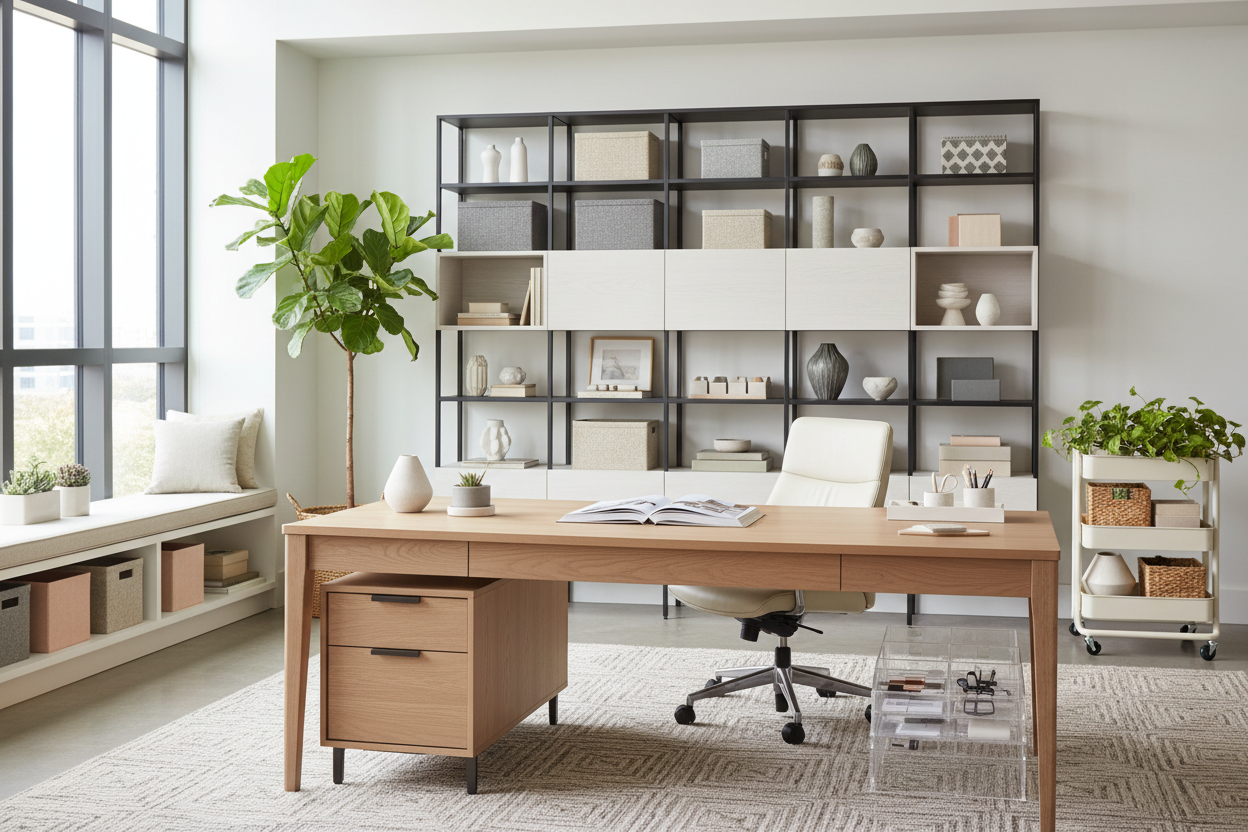
There is a distinct tension between the need for creativity and the reality of clutter. As a designer, I frequently walk into workspaces where the architecture is beautiful, but the surface-level chaos renders the room unusable. True office organizing isn't just about hiding papers; it is about calibrating your environment to support your workflow while maintaining visual serenity. Whether you are managing a corporate suite or curating a corner of your living room, the goal is a frictionless experience where every tool has a deliberate home.
Key Pillars of a Functional Workspace
- Zone Your Workflow: Establish distinct areas for computer work, reference reading, and physical filing to prevent cross-contamination of clutter.
- Vertical Utilization: Maximize square footage by using wall-mounted systems and tall shelving rather than expanding the desk footprint.
- Concealed vs. Display Storage: Use closed cabinetry for unsightly tech and paperwork, reserving open shelving for curated books and decor.
- Material Continuity: Select organizers that match your furniture's finish (e.g., walnut trays on a walnut desk) to reduce visual noise.
Structuring the Layout: Beyond the Desk
Many ideas for organizing an office fail because they focus solely on the desktop. To achieve a high-end look, we must look at the room holistically. The layout should prioritize the "command position," giving you a clear view of the entrance, but it must also account for storage office organization ideas that are accessible without breaking your ergonomic flow.
Zoning for Efficiency
Effective work office organization relies on zoning. I recommend a "primary reach zone" for daily essentials and a "secondary reference zone" for archival material. By physically separating these, you eliminate the daily shuffling of papers that don't require immediate attention.
Curating Storage: Cabinets and Shelving
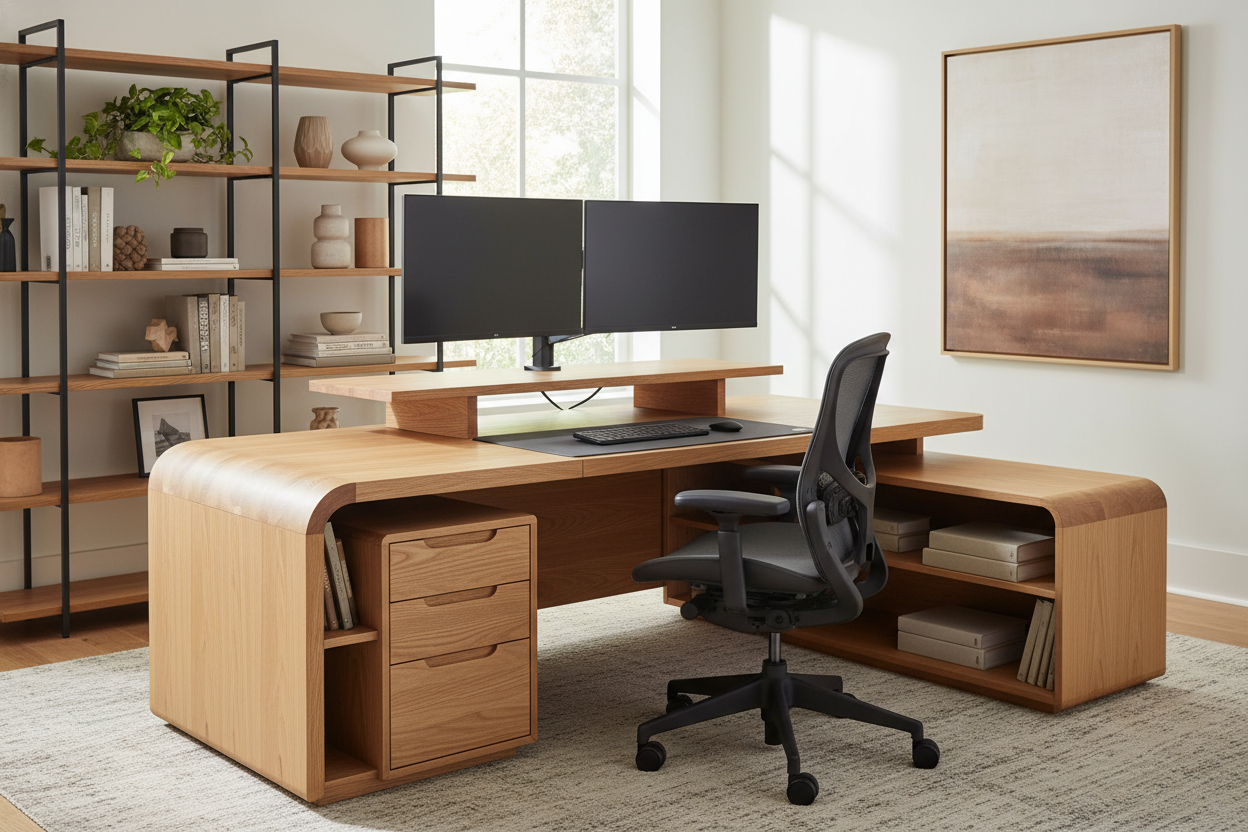
When selecting furniture, consider the visual weight of the piece. For office cabinet organizer ideas, I prefer modular systems with integrated cable management. A common mistake is buying deep cabinets where items get lost in the back. Opt for shallow, wide drawers with custom dividers.
For office shelf organizer ideas, balance is key. If you are implementing office organization ideas for home, mix functional storage boxes (linen or leather-clad) with negative space. This prevents the shelves from looking like a warehouse and keeps the aesthetic sophisticated.
Small Space Solutions and Budget Hacks
Small office organization ideas require aggressive editing. In compact urban apartments, I often utilize "floating" storage—wall-mounted units that keep the floor visible, making the room feel larger. If you are looking for home office organization ideas on a budget, consider repurposing kitchen drawer dividers. They are often more durable and varied in size than standard office supplies.
The "Hidden" Office
For multi-purpose rooms, organizing ideas for office spaces must be discreet. Use decorative baskets that mimic the room's decor to hide cables and routers. These office organization hacks allow the space to transition from work mode to relaxation mode instantly.
Materiality and Visual Texture
The texture of your organizers matters. Cheap plastic bins degrade the look of a solid wood desk. Elevate your business office organization by choosing materials like felt, leather, or powder-coated steel. These materials absorb sound and add a layer of tactile luxury to the organized office space ideas you implement.
My Personal Take on Office Organizing
In my years designing executive suites, I’ve learned that the "perfectly empty desk" is a myth. I once worked with a high-profile architect who felt paralyzed by his pristine, magazine-ready office. He was afraid to mess it up. The solution wasn't more rigid organization, but what I call a "staging tray."
I introduced a large, leather-bound tray on his sidebar. This became the designated drop zone for active files and sketches. It contained the mess within a defined, beautiful boundary. It allowed him to work freely during the day, and "reset" the room instantly by moving the tray into a cabinet at night. Also, a word of caution on acrylic organizers: while they look sleek in photos, I find they attract dust and micro-scratches relentlessly. For a workspace that ages well, I always steer clients toward wood or fabric-lined organizers that hide the wear and tear of daily grind.
Conclusion
Refining your workspace is an investment in your mental clarity. By combining ergonomic zoning with sophisticated materials, you move beyond basic organizing tips for the office and create an environment that inspires productivity. Start with one drawer or one shelf, and let the functionality dictate the design.
Frequently Asked Questions
How do I maintain an organized office long-term?
The "Friday Reset" is crucial. Dedicate the last 15 minutes of your work week to clearing your desk and filing papers. This ensures you walk into a clean slate on Monday, preventing clutter from compounding over time.
What are the best office organization ideas for paperless workflows?
Focus on cable management and digital docking stations. Even paperless offices have "tech clutter." Use under-desk trays to hide power strips and designated charging drawers to keep devices off the main work surface.
Is custom built-in storage worth the investment?
For office room organization ideas in awkward or small spaces, custom millwork is often the best solution. It maximizes every inch of vertical space and increases property value, making it superior to standalone units in the long run.

Leave a comment
This site is protected by hCaptcha and the hCaptcha Privacy Policy and Terms of Service apply.