










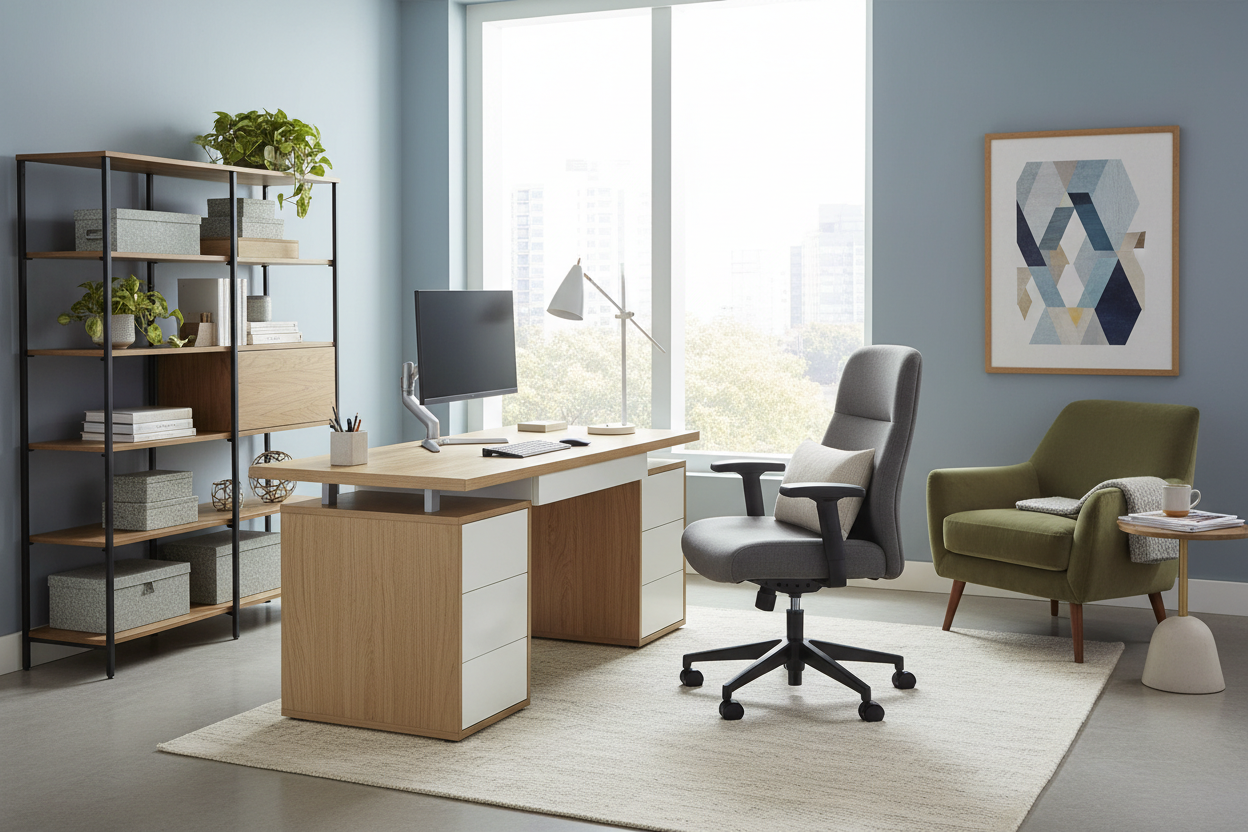
Creating a workspace that balances professional functionality with residential comfort is one of the most common challenges I see in modern interiors. You want a space that commands respect during a Zoom call but doesn't feel sterile when you're off the clock. This is where rooms to go office furniture often enters the conversation—it sits at the intersection of accessibility and residential style.
However, navigating a showroom floor (or a website) without a plan can lead to purchasing pieces that look good in the store but feel cluttered in your home. In this guide, I will walk you through how to select pieces that offer the best return on investment regarding aesthetics and longevity.
Key Features to Look For
- Material Composition: Distinguish between solid wood accents and engineered wood surfaces to understand long-term durability.
- Scale and Proportion: Ensure the desk footprint allows for at least 36 inches of clearance for chair movement.
- Cable Management: Check for pre-drilled grommets or hidden channels to keep technology cords visually contained.
- Drawer Construction: Look for dovetail joinery and full-extension glides for ease of access to the back of the drawer.
Analyzing Build Quality and Materials
When curating a rooms to go home office, the first thing to scrutinize is the finish. Many collections feature veneers over engineered wood. From a design perspective, this isn't necessarily a negative—it prevents warping in humid climates—but it does dictate how you treat the surface. If you are eyeing a piece with a dark, high-gloss finish, be aware that it will reflect ambient light and fingerprints. For high-traffic home offices, I often recommend looking for their textured wood-grain finishes or matte options, which are far more forgiving of daily wear.
Mastering Layout and Flow
A common mistake with office furniture rooms to go collections is buying the entire matching set without measuring the visual weight of the room. A heavy executive desk paired with a matching credenza and bookshelf can make a standard 12x12 bedroom feel claustrophobic.
The "Mix and Match" Approach
Instead of buying the full suite, try anchoring the room with a substantial desk from a collection like the Cindy Crawford Home line, but pair it with a lighter, contrasting accent chair or open shelving. This breaks up the monotony and makes the space feel curated rather than catalog-bought. Pay attention to the "silhouette" of the desk; leggy, open desks make small rooms feel larger, while pedestal desks provide storage but consume visual floor space.
Ergonomics Meets Aesthetics
While rooms to go office chairs are designed to match the desks, as a specialist, I prioritize your spine over a perfect color match. If you are working eight hours a day, test the chair's lumbar support rigorously. If the matching chair is purely decorative (often wood-backed or minimally padded), consider using it as a guest chair in the corner and investing in a dedicated ergonomic task chair for your main seat. You can bridge the design gap by throwing a sheepskin or textured throw over the task chair to soften its technical look.
Lessons from My Own Projects
I want to share a candid observation from a project I completed last year in a suburban remodel. The client fell in love with a trestle-style desk from Rooms To Go. Visually, it was a stunner—it had the gravity of a much more expensive heritage piece. However, during installation, I noticed a specific nuance regarding the assembly.
The desk arrived in flat-pack components that were heavier than anticipated. While the finish looked premium, the under-desk clearance was slightly lower than standard due to a decorative apron. My client, who was over six feet tall, couldn't cross his legs comfortably underneath it. We solved this by adding discrete furniture risers, but it was a reminder that "standard" dimensions can vary. Also, the drawer glides were a bit stiff initially; a quick spray of silicone lubricant was necessary to get that silent, premium glide feeling. These are the small, unpolished details you need to be ready to address to get a luxury feel on a budget.
Designing for Productivity
Ultimately, your workspace should serve your workflow. Whether you choose a sprawling L-shaped configuration or a compact writing desk, the goal is to create an environment that minimizes distraction. By being selective with your pieces and focusing on scale and finish, you can achieve a high-end look that stands the test of time.
Frequently Asked Questions
How do I clean Rooms To Go wood veneers?
Avoid harsh chemical cleaners which can strip the finish. Use a slightly damp microfiber cloth for dust and a mild wood soap for deeper cleaning, always wiping in the direction of the grain to prevent streaking.
Are the desk chairs rated for 8+ hours of use?
Many decorative chairs in these collections are rated for casual use (2-4 hours). For full-time work, check the specifications for "ergonomic" features or tilt-lock mechanisms, or consider upgrading the seat cushion insert.
Can I fit these pieces in a small apartment?
Yes, but look for "writing desks" or "parsons desks" within their collections. These usually lack heavy pedestal drawers, offering a lighter visual footprint that preserves the sense of space in smaller apartments.

Leave a comment
This site is protected by hCaptcha and the hCaptcha Privacy Policy and Terms of Service apply.