










We have all been there: balancing a laptop on a dining chair or trying to squeeze productivity out of a cramped, windowless closet. When a room feels claustrophobic, it drains your focus and creativity. If you are staring at a cluttered desk right now, a small home office makeover might be exactly what you need to reclaim your workday. But buying a smaller desk is rarely the magic fix.
I am going to walk you through how to properly plan, scale, and light a compact workspace so it feels intentional, not like a frustrating afterthought. By focusing on visual weight and proper clearances, you can make even the tightest square footage work for you.
Quick Decision Guide
- Measure clearances first: Always leave at least 36 inches behind your desk chair to comfortably push back and stand up without hitting a wall.
- Float the desk: If space allows, moving the desk off the wall and facing the door creates a commanding position and makes the room feel significantly larger.
- Go vertical with storage: Utilize wall space up to the ceiling rather than taking up precious floor square footage with bulky filing cabinets.
- Prioritize task lighting: Relying on a single overhead fixture casts harsh shadows on your work; add a dedicated, adjustable desk lamp.
Space Planning for Tight Quarters
In North American homes, the workspace is often relegated to a secondary bedroom, a den, or even an oversized hallway closet. The biggest mistake homeowners make during a small office makeover is treating it like a sprawling corporate cubicle.
Mastering Clearances
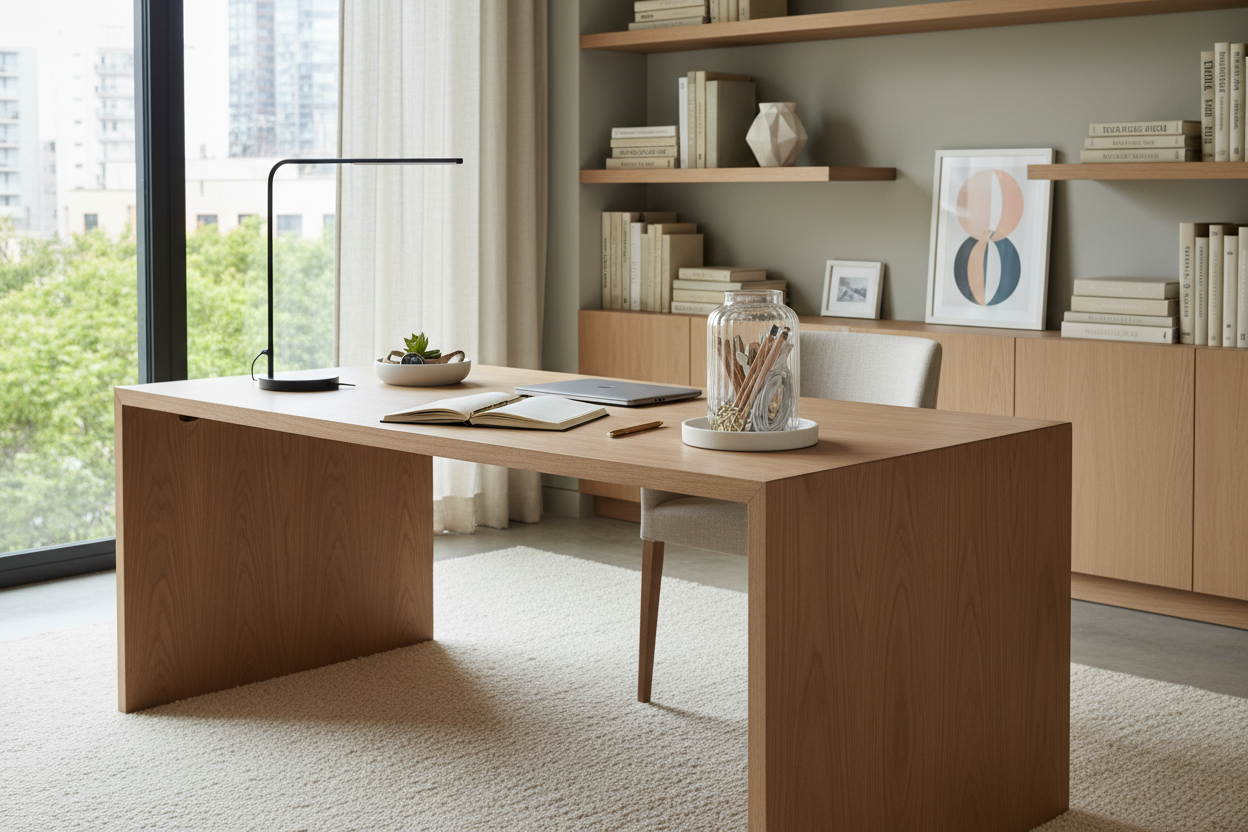
You need negative space to breathe. A common trap is buying a massive executive desk that swallows the room whole. Instead, look for a desk depth between 20 and 24 inches for standard laptop work. Ensure you have adequate walkway clearance around the room. If you are sharing the space with a guest bed, consider a modular wall unit that folds away or doubles as a bookshelf to keep the floor plan open.
Utilizing Vertical Real Estate
When floor space is limited, your walls are your best asset. Floor-to-ceiling shelving draws the eye upward, making the ceiling feel higher than it actually is. Install floating shelves above your monitor height to keep daily essentials within arm's reach without cluttering the desktop.
Style and Visual Weight
A compact room gets easily overwhelmed by heavy, dark furniture. You want to manage the visual weight of the pieces you bring in so the room maintains an airy, open feel.
Choosing the Right Silhouette
Instead of a solid wood desk with modesty panels that block light, opt for a streamlined silhouette. Desks with slim metal legs or a glass top allow light to pass right through them, creating the illusion of more space. Pair this with a monochromatic color palette to keep the visual noise to a minimum. Soft, tonal colors like warm greige or muted sage can make the walls recede.
Comfort Above All Else
A workspace can look beautiful in magazine photos, but if it hurts your back after two hours of emails, it is a failed design.
The Non-Negotiable Chair
Never sacrifice ergonomics for aesthetics. A rigid wooden dining chair will ruin your posture in a matter of days. Look for an office chair with adjustable seat depth, proper lumbar support, and armrests that clear the bottom of your desk. If a standard mesh ergonomic chair feels too sterile for your home's decor, transitional designs upholstered in performance fabrics offer a fantastic middle ground.
Designer's Honest Take
Early in my career, I designed a stunning, moody office in a tiny Brooklyn apartment. I specified a gorgeous, vintage-inspired velvet chair and a sleek, minimalist walnut desk with zero drawers. It looked incredible in the portfolio photos.
Six months later, I visited the client. The velvet chair had given them chronic lower back pain because the seat pitch was entirely wrong for typing. Worse, because the desk had no storage, the beautiful walnut surface was buried under a chaotic mountain of mail, hard drives, and tangled charging cables. I learned the hard way that open, minimalist desks require a militant level of personal organization. If you are someone who naturally spreads out paperwork, you need a desk with closed drawers—even if it means a slightly bulkier silhouette in your small room.
Frequently Asked Questions
How do I make a small home office look bigger?
Use furniture with exposed legs to show more floor space, paint the walls and trim the exact same color to blur the room's boundaries, and maximize natural light. Keep the center of the room as open as possible to maintain a flow of movement.
Where should I place my desk in a tiny room?
If possible, place the desk perpendicular to the window to reduce screen glare while still enjoying natural light. Avoid shoving the desk into a dark corner unless absolutely necessary; facing the door feels much less confining.
What size desk do I actually need?
For a laptop and a single monitor, a desk that is 48 inches wide and 24 inches deep is usually sufficient. If you use dual monitors or draft on paper, you will need at least 60 inches of width to work comfortably without feeling cramped.

Leave a comment
This site is protected by hCaptcha and the hCaptcha Privacy Policy and Terms of Service apply.