










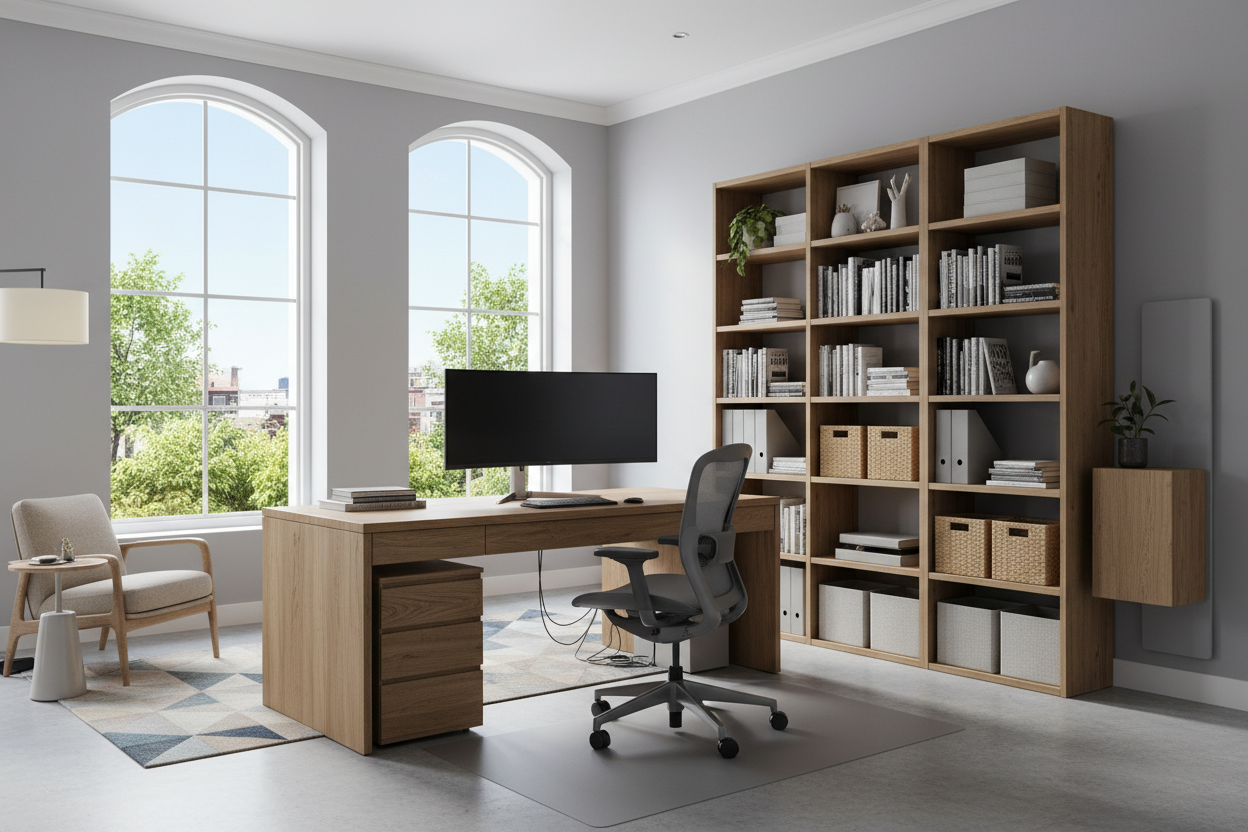
We have all been there. You buy a sleek desk, push it against a wall in the spare bedroom, and assume you are ready to conquer the workday. Three weeks later, your back aches, the lighting gives you a headache, and you are back to answering emails from the living room sofa. Creating the ideal home office requires more than just ordering a matching furniture set online. It demands a deliberate approach to ergonomics, visual weight, and spatial flow. In this guide, I will walk you through exactly what it takes to build a workspace that actually supports your daily routine.
Quick Decision Guide
- Position your desk perpendicular to the window to reduce screen glare while still enjoying natural light.
- Prioritize an ergonomic chair over a stylish desk; your spine will thank you after an eight-hour shift.
- Leave at least 36 to 42 inches of clearance behind your desk to push your chair back comfortably.
- Incorporate closed storage to hide visual clutter, which directly impacts mental fatigue.
Space Planning & Layout
Choosing the best office room
When clients ask me how to pinpoint the best office room in their house, I always tell them to follow the light and the quiet. A common mistake is defaulting to the darkest basement corner just because it is empty. If you spend forty hours a week in a space, it needs natural light. If you lack a dedicated spare room, look for a low-traffic alcove or a wide hallway where you can carve out a distinct zone.
Creating a functional home office design
A functional home office design relies heavily on the command position. Whenever possible, float your desk facing the entry door rather than shoving it against a blank wall. This layout mimics a professional executive setup and prevents that claustrophobic feeling. Ensure you have adequate negative space around the desk so the room breathes.
Comfort & Ergonomics
The foundation of comfortable office design
A visually stunning room means nothing if you cannot sit in it for more than an hour. A truly comfortable office design starts with the chair. Look for adjustable seat depth, lumbar support, and armrests that align with your desk height. Your desk should sit around 29 to 30 inches high. If you are petite, you might need a footrest to maintain the proper 90-degree angle at your knees.
Style & Coordination
How to design your home office to match your home
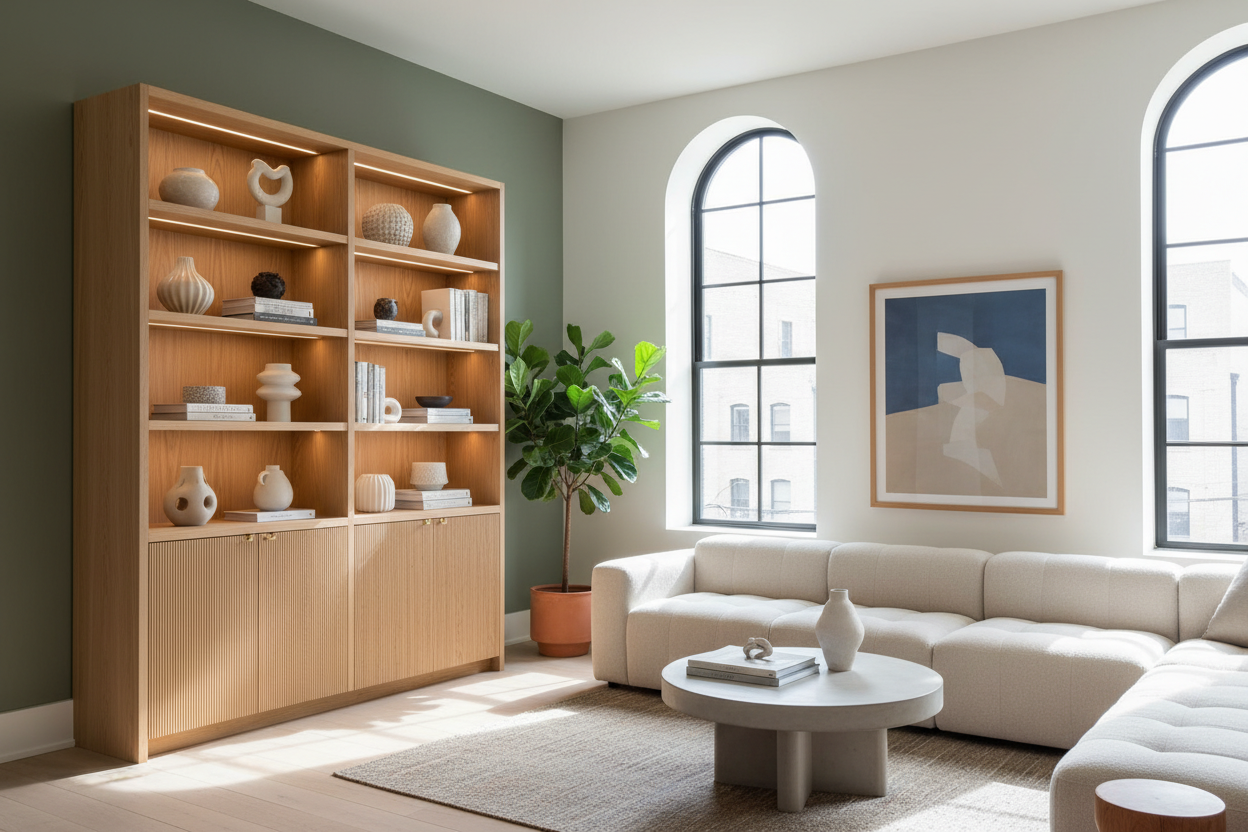
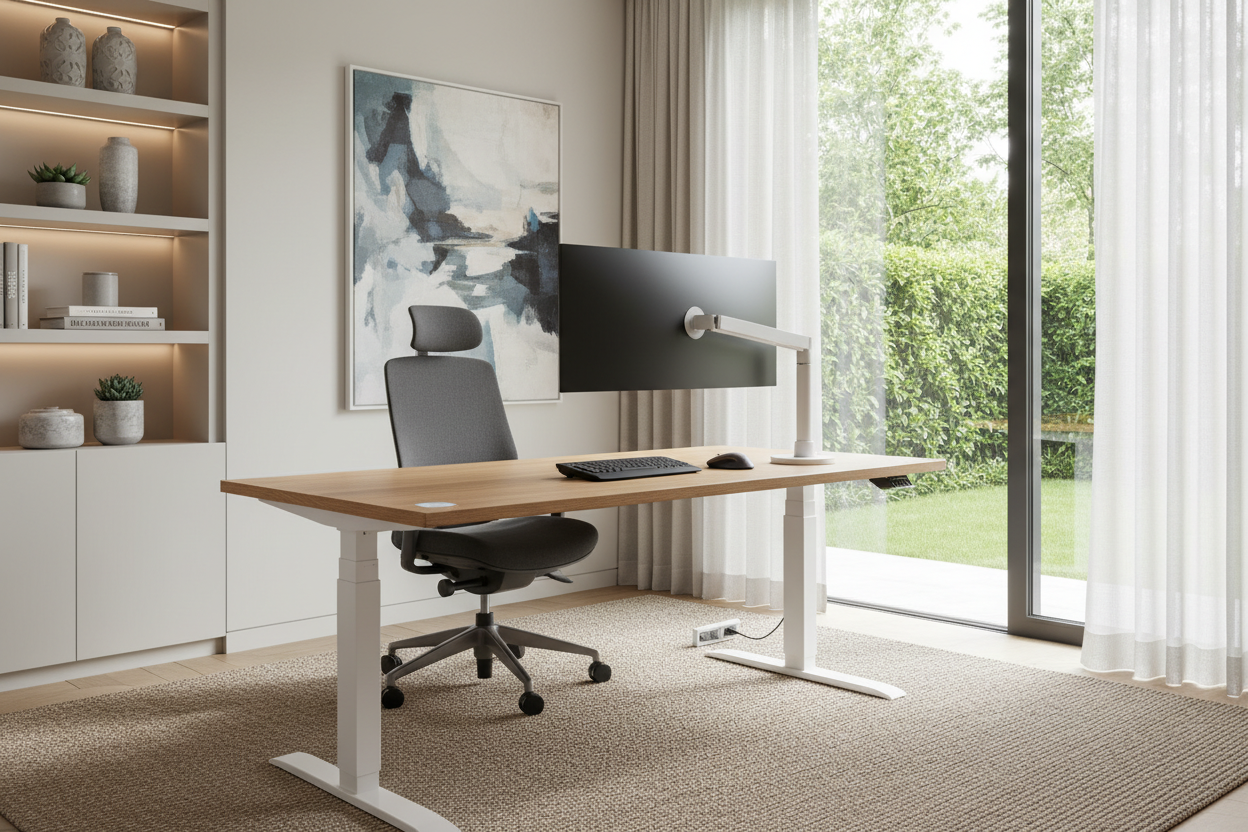
People often wonder, 'how to design my office so it does not look like a corporate cubicle?' The secret is layering textures. If you have a sleek metal standing desk, soften the visual weight with a woven wool rug, linen drapery, and a warm wood bookcase. When figuring out how to design your home office, treat it like a natural extension of your living areas. Carry your home's color palette into the workspace, but lean toward muted, less saturated versions to reduce visual distraction.
Designer's Honest Take
Early in my career, I designed what I thought was the ultimate mid-century modern workspace for my own apartment. I bought a gorgeous, authentic vintage teak desk and a matching sculpted wood chair with a thin leather seat pad. It looked incredible in photos. The reality? That chair absolutely wrecked my lower back within two months, and the vintage desk was too low to accommodate my knees comfortably. I learned the hard way that you should never sacrifice ergonomics for aesthetics in a workspace. I eventually swapped the vintage chair for a high-end ergonomic mesh model. It broke my mid-century illusion, but it saved my posture.
Frequently Asked Questions
How do I design an office space at home with limited square footage?
Use vertical space. Install floating shelves above a compact writing desk and choose furniture with a visually light silhouette, like a glass or acrylic desk. A wall-mounted drop-leaf table can also serve as a great temporary workspace.
What is the most critical piece of furniture to invest in?
Without a doubt, the office chair. You can work effectively on a budget-friendly flat-pack desk or even a sturdy dining table, but a cheap chair will actively harm your health over time.
How much clearance do I need around my desk?
Always leave a minimum of 36 inches behind the desk for your chair to roll back easily. If the desk sits near a bookshelf or filing cabinet, allow 48 inches of clearance so you can open drawers without hitting the desk.

Leave a comment
This site is protected by hCaptcha and the hCaptcha Privacy Policy and Terms of Service apply.