











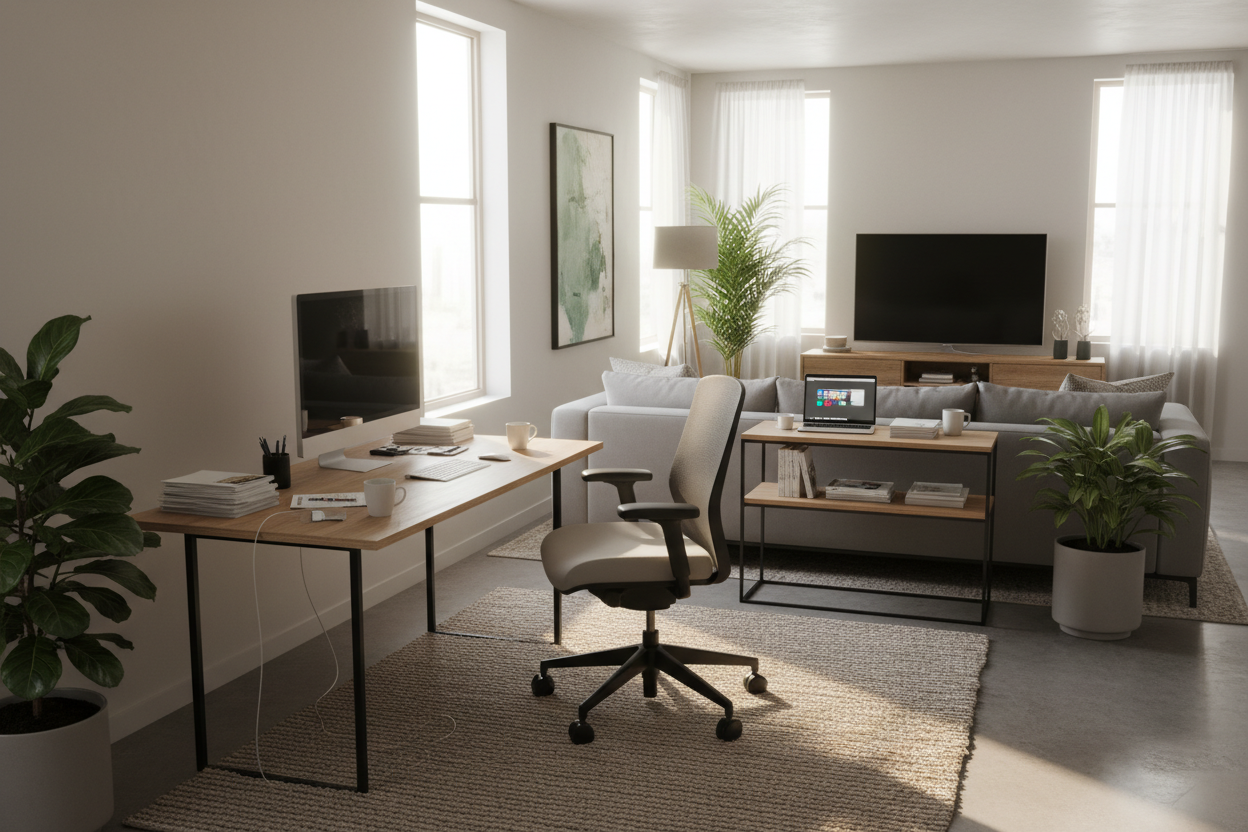
We often blame our discipline or time management skills when work piles up, but as an interior designer, I often find the real culprit is poor spatial planning. You cannot expect high-level output from a low-level environment. If you are struggling with how to be productive at home, the answer rarely lies in a new app; it lies in the ergonomics, lighting, and zoning of your physical space.
Key Design Elements for High-Performance Spaces
Before investing in new furniture, evaluate these core components. These are the non-negotiables for creating a productive home environment:
- Ergonomic Foundation: Prioritize a chair with adjustable lumbar support and seat depth over aesthetic trends.
- Lighting Temperature: Utilize cool white bulbs (4000K-5000K) for task lighting to maintain alertness, reserving warm light for relaxation zones.
- Spatial Zoning: Create a physical or visual barrier between your workspace and living areas to psychologically separate 'work mode' from 'rest mode'.
- Acoustic Control: Incorporate soft textiles (rugs, curtains) to dampen echo and reduce auditory distractions.
Zoning and Layout: The Command Position
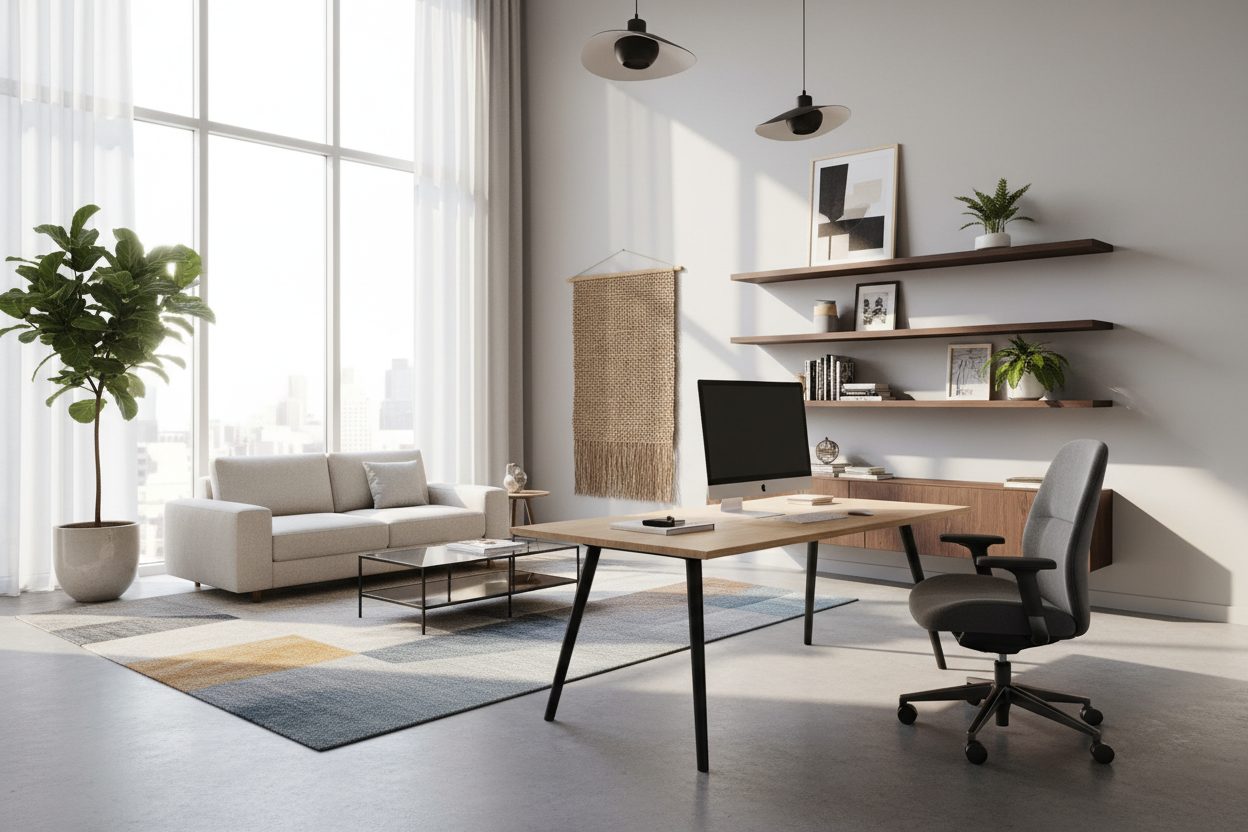
One of the most effective ways to be productive at home is to adopt the 'command position.' In design theory, this means positioning your desk so you have a view of the door without being directly in line with it. Facing a wall creates a subconscious feeling of confinement, while having your back to the door can induce subtle anxiety.
If you have a dedicated room, float the desk in the center. If you are working in a multi-purpose space, use a console table or a rug to anchor the office area, clearly defining where the work happens.
Furniture Selection: Materiality Matters
When clients ask me how to stay productive at home, I direct them toward natural materials. The tactile experience of your furniture influences your comfort and focus duration.
The Desk Surface
Avoid glass tops if you plan on working long hours. While they look sleek, glass is cold to the touch, reflects glare from overhead lighting, and creates a harsh acoustic environment. Instead, opt for solid wood or high-quality veneer. Wood has a warmer tactile quality and naturally absorbs sound, creating a calmer sensory experience essential for deep work.
Seating Ergonomics
A dining chair is not an office chair. For a truly productive home, you need a task chair with a breathable mesh back or high-quality leather. Ensure the chair features a synchro-tilt mechanism, allowing the seat and back to move together, supporting your posture as you shift throughout the day.
Lighting: Layering for Focus
Relying solely on overhead recessed lighting is a recipe for eye strain. To understand how to have a productive day at home, you must master light layering. Start with ambient light (overhead), add task lighting (an articulated desk lamp), and finish with accent lighting.
Position your task light on the opposite side of your dominant hand to eliminate shadows while writing or sketching. This reduces visual fatigue, allowing you to work longer without discomfort.
My Personal Take on how to be productive at home
I learned a hard lesson about aesthetics versus function in my own home office renovation last year. I initially installed a stunning, high-gloss lacquer desk because it photographed beautifully. It was a disaster for productivity.
Within a week, I realized that the high-gloss finish acted like a mirror for my monitor, causing constant glare that triggered headaches by 2 PM. Furthermore, every time I touched the surface, it left oily fingerprints that drove me crazy, distracting me from my actual work. I swapped it out for a matte-finish walnut desk with a leather blotter. The difference was immediate—the matte surface diffused the light, and the leather provided a soft, warm landing pad for my wrists. Sometimes, the secret to how to be more productive at home is simply removing the micro-annoyances that chip away at your focus.
Conclusion
Designing a workspace is not just about buying furniture; it is about curating an environment that respects your workflow. By prioritizing ergonomics, proper lighting, and thoughtful materials, you remove the physical friction that hinders performance. Elevate your space, and your productivity will follow.
Frequently Asked Questions
What is the best color for a home office to boost productivity?
Color psychology suggests that blues and greens are best for focus and efficiency as they induce a sense of calm. However, if your work is creative, accents of yellow or orange can stimulate energy and innovation.
How do I fit a productive workspace in a small apartment?
Verticality is key. Use a ladder desk or wall-mounted shelving units that include a drop-down desk. This minimizes the footprint while maximizing storage, keeping the floor area open and uncluttered.
Is a standing desk worth the investment?
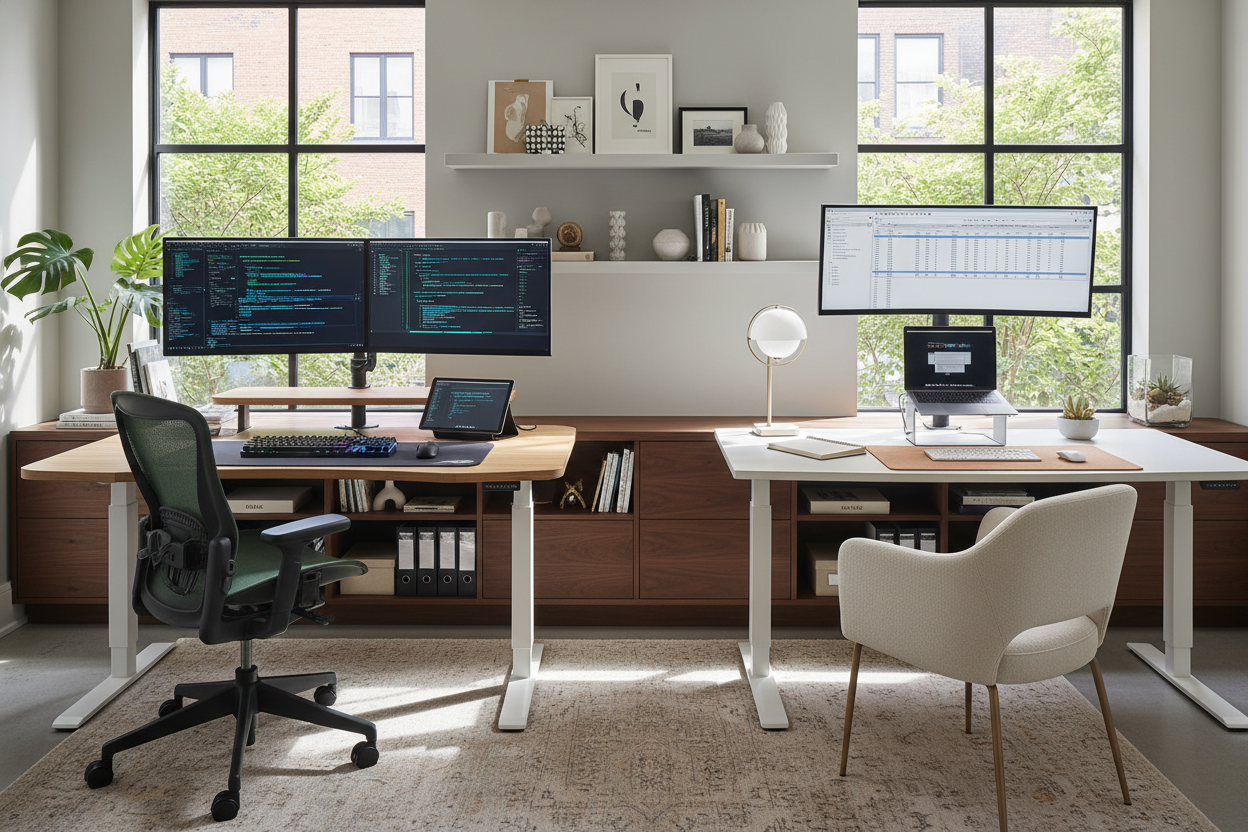
Yes, but only if used correctly. A standing desk promotes blood flow and energy, which is vital when figuring out how to stay productive at home. However, you should alternate between sitting and standing every hour to prevent fatigue.

Leave a comment
This site is protected by hCaptcha and the hCaptcha Privacy Policy and Terms of Service apply.