










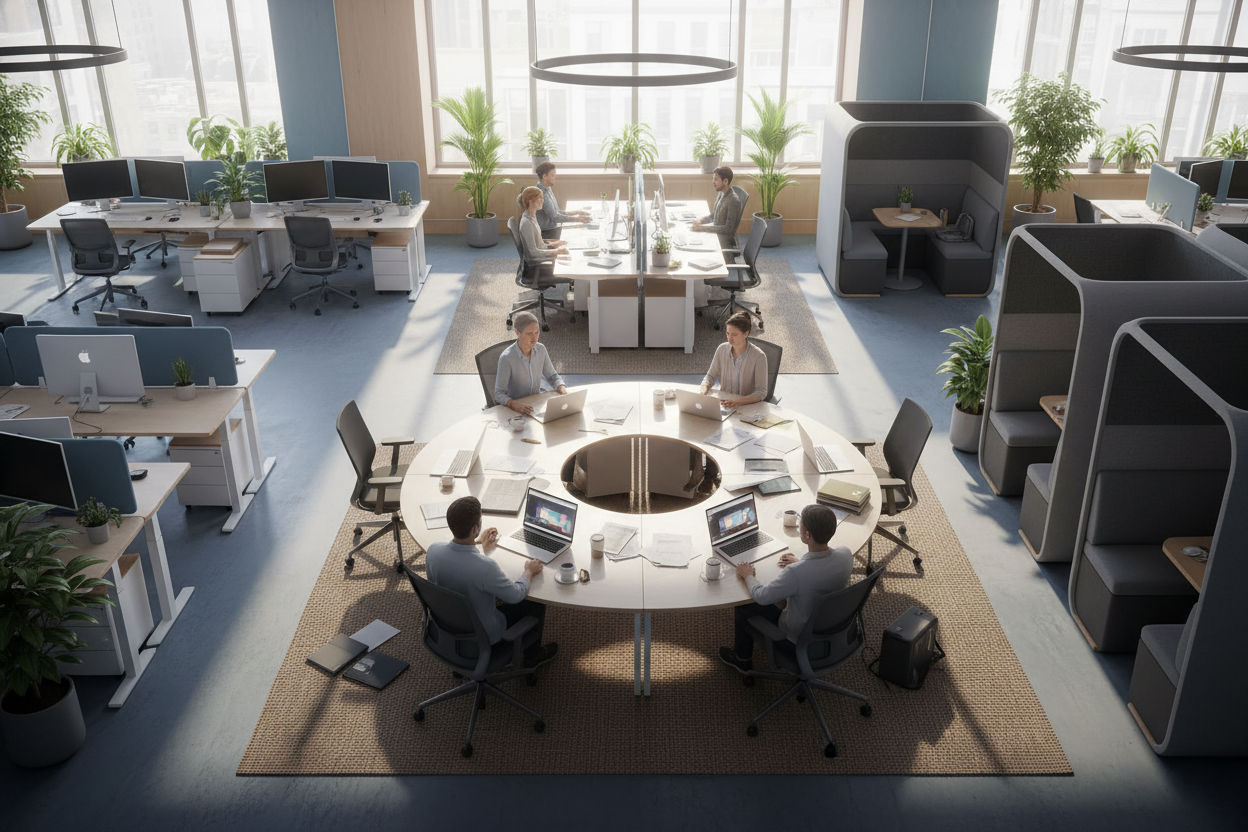
We often attribute professional stagnation to burnout or a lack of motivation, but as an interior designer, I see a different culprit: the physical environment. If you are wondering how to be more successful at work, stop looking at your to-do list and start looking at your floor plan. A poorly lit, ergonomically disastrous workspace creates physical friction that eventually becomes mental fatigue. This guide explores how intentional design choices—from lumbar support to color psychology—can become your greatest professional asset.
Quick Decision Guide: The Elements of a High-Performance Space
- Ergonomics First: Prioritize a chair with adjustable lumbar support and seat depth over pure aesthetics to maintain focus during long hours.
- Lighting Temperature: Utilize 4000K-5000K (cool white) lighting for task areas to maintain alertness, layering with warmer ambient light for breaks.
- Acoustic Control: Incorporate soft textiles (rugs, acoustic panels, or upholstered furniture) to dampen echo and reduce cognitive load.
- Surface Materiality: Choose matte finishes for desktops to prevent glare and eye strain; avoid high-gloss lacquer in direct sunlight.
- Spatial Zoning: Distinctly separate 'deep work' zones from 'reference' or 'storage' areas to streamline mental transitions.
The Ergonomic Foundation: Seating and Posture
When clients ask what do i need to be successful at work, my answer is invariably a high-performance task chair. Success is stamina, and you cannot maintain stamina if your lower back is seizing up by 2 PM. In the showroom, I steer clients away from the 'executive' style leather chairs that look plush but offer zero skeletal support.
Look for a chair with a synchro-tilt mechanism, which allows the seat and back to move in a ratio that keeps your feet flat on the floor while you recline. The material matters immensely here; high-quality mesh allows for thermal regulation, preventing the heat buildup that causes restlessness, whereas cheap foam compresses within months, ruining your alignment.
Lighting: The Invisible Productivity Tool
Lighting is often the most undervalued aspect of being successful at work. Relying solely on overhead recessed cans creates harsh shadows and eye fatigue. To curate a space that fosters success, you need a layered lighting scheme.
Start with task lighting. An adjustable architectural lamp with a high CRI (Color Rendering Index) ensures you see documents clearly without straining. Position the light source opposite your writing hand to avoid casting shadows. Furthermore, consider the placement of your monitor relative to windows. Contrast glare—where the screen is significantly dimmer or brighter than the background—is a major productivity killer. Position your desk perpendicular to windows to control the influx of natural light.
Zoning and Flow: Organizing for Efficiency
Understanding how to be successful at work and on the job requires analyzing your workflow. In interior design, we talk about 'adjacencies'—placing things near where they are used. If you have to walk across the room to get a file or reach awkwardly for a printer, you are breaking your flow state.
Create an L-shaped or U-shaped layout if space permits. This allows you to have a 'clean' digital zone for computer work and a secondary 'analog' surface for reviewing papers or sketching ideas. This physical separation helps compartmentalize tasks, making work tips for success actionable through spatial design.
My Personal Take on how to be more successful at work
In my early years designing home offices, I made a classic error: prioritizing the 'reveal' over the reality. I once specified a stunning, reclaimed rough-hewn oak desk for a high-powered attorney. It looked incredible in photos—full of texture and character.
Two weeks later, he called me. He couldn't write on it. The texture was so uneven that his pen poked through papers, and the raw wood snagged his wool suit sleeves. It was a beautiful failure. I had to swap it out for a walnut veneer with a satin smooth finish and a leather desk blotter. That experience taught me that what is success at work if not the absence of friction? Now, I always run my hand across a desk surface to check for 'drag' before recommending it. If a piece of furniture fights you, you will lose the battle for productivity.
Conclusion
Ultimately, your workspace is a tool, not just a backdrop. By investing in ergonomic furniture, correcting your lighting, and organizing your layout for flow, you remove the physical barriers to your performance. Design your space with intention, and you will find the focus follows naturally.
Frequently Asked Questions
Is a standing desk actually necessary for success?
While not strictly necessary, a sit-stand desk is highly recommended for maintaining energy levels. The ability to change posture stimulates blood flow, which can help overcome the post-lunch energy slump. Look for a dual-motor frame for stability at full height.
How does color affect my work performance?
Color psychology is real. Blue and green tones are generally considered best for focus and efficiency, as they are low-wavelength colors that are restful to the eye. Avoid painting your entire field of vision bright red or orange, as these can induce anxiety over long periods.
What is the best desk depth for a multi-monitor setup?
If you use dual monitors, aim for a desk depth of at least 30 inches (approx. 76cm). Standard 24-inch desks place the screens too close to your face, leading to digital eye strain. Proper depth allows you to maintain a comfortable viewing distance.

Leave a comment
This site is protected by hCaptcha and the hCaptcha Privacy Policy and Terms of Service apply.