










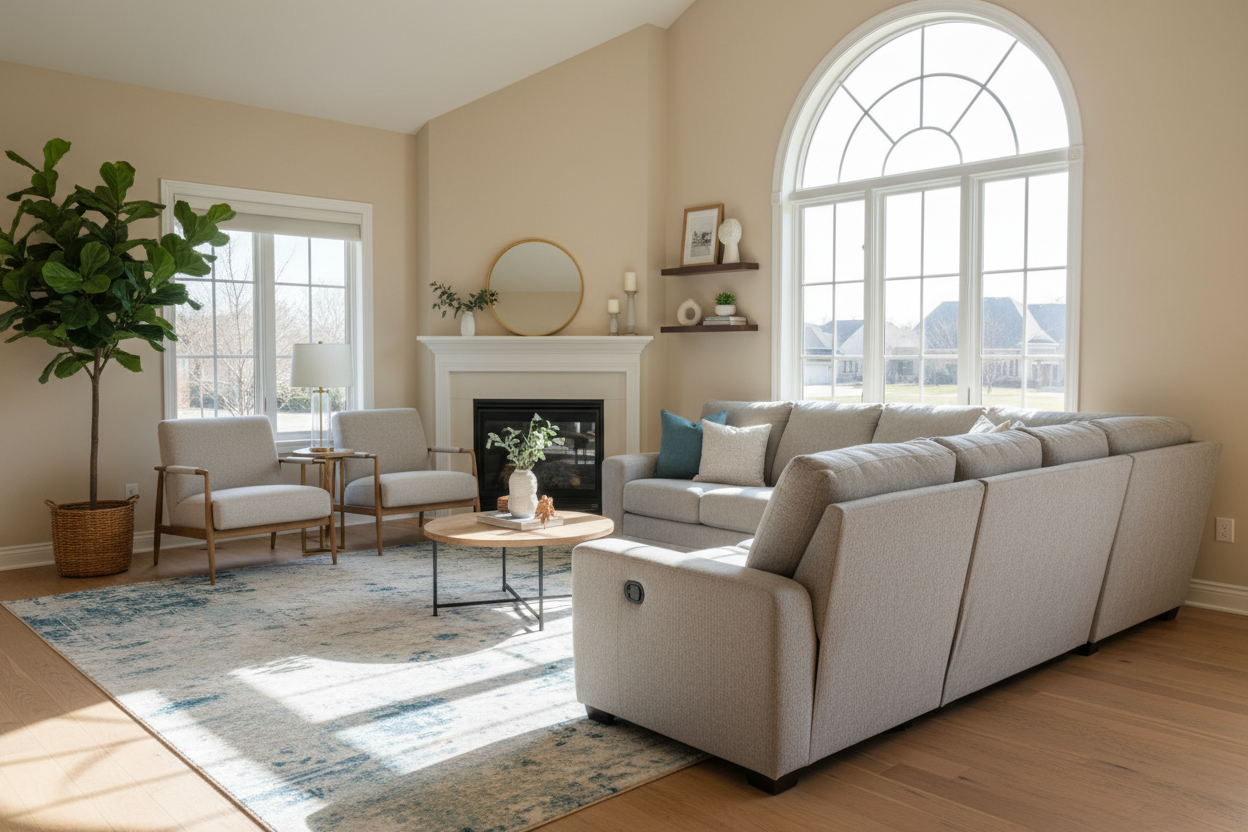
You have measured the room, selected the perfect swatch, and visualized the Sunday afternoon naps. But there is a specific heartbreak that occurs when the delivery team arrives, and you realize the chaise blocks the primary walkway. Choosing the correct right-facing reclining sectional is not merely about comfort; it is an exercise in spatial geometry and traffic flow. As a designer, I see homeowners frequently confuse orientation with placement, resulting in a piece that dominates the room rather than anchoring it. Let’s ensure you select a piece that elevates your interior architecture rather than obstructing it.
Quick Decision Guide: Key Features to Look For
- Orientation Definition: Verify if the brand defines "right-facing" as looking at the sofa or sitting on it (standard industry rule: looking at the sofa, the arm is on the right).
- Wall Clearance: Check if the mechanism requires "zero-wall" design (needs inches) or standard clearance (needs feet) to fully recline.
- Upholstery Durability: Look for Wyzenbeek double rub counts over 30,000 for high-traffic family rooms.
- Power vs. Manual: Power offers infinite positions but requires a floor outlet if floating the furniture; manual is cord-free but offers limited angles.
- Modular Connections: Ensure heavy-duty metal alligator clips connect the pieces to prevent separation on hardwood floors.
Decoding the Orientation and Layout
The most critical aspect of purchasing a sectional is understanding the "facing" terminology. In the professional design world, a right-facing sectional means that when you stand in front of the piece looking at it, the sectional arm or chaise extends on the right side.
Analyzing Traffic Patterns
Before committing to a purchase, tape the footprint of the sofa on your floor. A right-facing configuration works best when the right side of the room is a solid wall or a low-traffic corner. If your right side leads to a kitchen or hallway, the extending arm will act as a barrier, forcing traffic to walk around the furniture, which disrupts the room's chi and functional flow.
Materiality and Mechanism Quality
A reclining sectional has moving parts, which introduces mechanical wear and tear that static furniture does not face. The internal frame must be kiln-dried hardwood to withstand the torque of the reclining mechanism.
The Aesthetic of Motion
Historically, recliners were bulky and visually heavy. Modern design has corrected this. Look for "high-leg" recliners where the mechanism folds inward, hiding underneath. This reveals the legs and creates negative space beneath the sofa, making the room feel larger and less cluttered. Avoid overstuffed arms if you are working with a compact footprint; track arms provide a cleaner silhouette and save precious floor space.
Lessons from My Own Projects
I want to share a specific challenge I encountered during a renovation for a client in a downtown loft. We ordered a stunning, Italian leather right-facing reclining sectional intended to "float" in the center of the room. It looked magnificent on the floor plan.
However, once installed, we realized a critical oversight: the power cords. Because the sofa wasn't against a wall, we had ugly black cables trailing across a light wool rug to the nearest wall outlet. It ruined the clean lines immediately. We eventually had to bring in an electrician to cut into the concrete floor and install a floor outlet directly beneath the sofa.
Another detail to note is the "leather noise." On lower-quality reclining sectionals, the friction between the seat and the console during movement can create a squeaking sound. I always advise clients to test this in the showroom or ensure high-quality leather conditioning is part of their maintenance routine. These are the tactile, lived-in nuances you won't see in a catalog photo.
Conclusion
Investing in a right-facing reclining sectional is a commitment to both relaxation and structure. By prioritizing the correct orientation, understanding the mechanical requirements, and selecting a silhouette that respects your room's scale, you create a living space that feels curated rather than cluttered. Measure twice, check the facing direction three times, and enjoy the upgrade.
Frequently Asked Questions
How much space do I need behind a reclining sectional?
This depends on the mechanism. "Wall-hugger" or "zero-clearance" models only require 2 to 4 inches of space behind the frame. Standard reclining mechanisms often require 8 to 12 inches to allow the backrest to fully extend without hitting the wall.
Can I change a right-facing sectional to left-facing later?
Generally, no. Most high-end sectionals are built with fixed joinery and specific arm placements. Unless you are purchasing a truly modular "cube" system where arms and backs are detachable, the orientation is permanent.
What is the best fabric for a reclining sectional with kids and pets?
Top-grain leather is excellent for wiping away spills, but claws can scratch it. For a softer feel, opt for a performance velvet or a crypton fabric. These are engineered to resist stains and have a tight weave that resists snagging from pet claws better than loose-weave linens or tweeds.

Leave a comment
This site is protected by hCaptcha and the hCaptcha Privacy Policy and Terms of Service apply.