










I’ve spent way too many nights staring at a pile of board games and tangled HDMI cables, wondering why my lounge looks like a disorganized dorm. I once tried to fix it by buying a massive oak unit, only to realize it looked like it had escaped from a 1990s formal dining room. Finding the right wooden cabinets living room setups shouldn't feel like a compromise between an office filing system and your grandmother’s china hutch.
- Low and wide beats tall and skinny for most TV walls.
- Check for soft-close hinges; slamming doors feel cheap and damage the wood.
- Don't match your wood species perfectly—it looks like a staged showroom.
- Drawers are for cables and remotes; doors are for bulky blankets and board games.
The 'Kitchen Overflow' Trap (And How to Avoid It)
The biggest mistake I see—and I’ve made it myself—is buying a cabinet that is too deep. If a piece sticks out more than 18 or 20 inches from the wall, it starts to feel like a kitchen island that lost its way. Living room furniture needs to breathe. When you’re hunting for a wood cabinet for living room use, look for tapered legs or a recessed base. Anything that lifts the bulk off the floor makes the room feel larger and less like a storage locker.
Avoid pieces with glass panes and tiny little spice drawers unless you actually plan on displaying porcelain. In a living space, you want clean lines that hide the chaos. If the hardware looks like it belongs on a pantry door, swap it out for something brushed brass or matte black. It’s a twenty-dollar fix that completely changes the vibe from 'utility' to 'intentional design.'
Height Matters More Than You Think
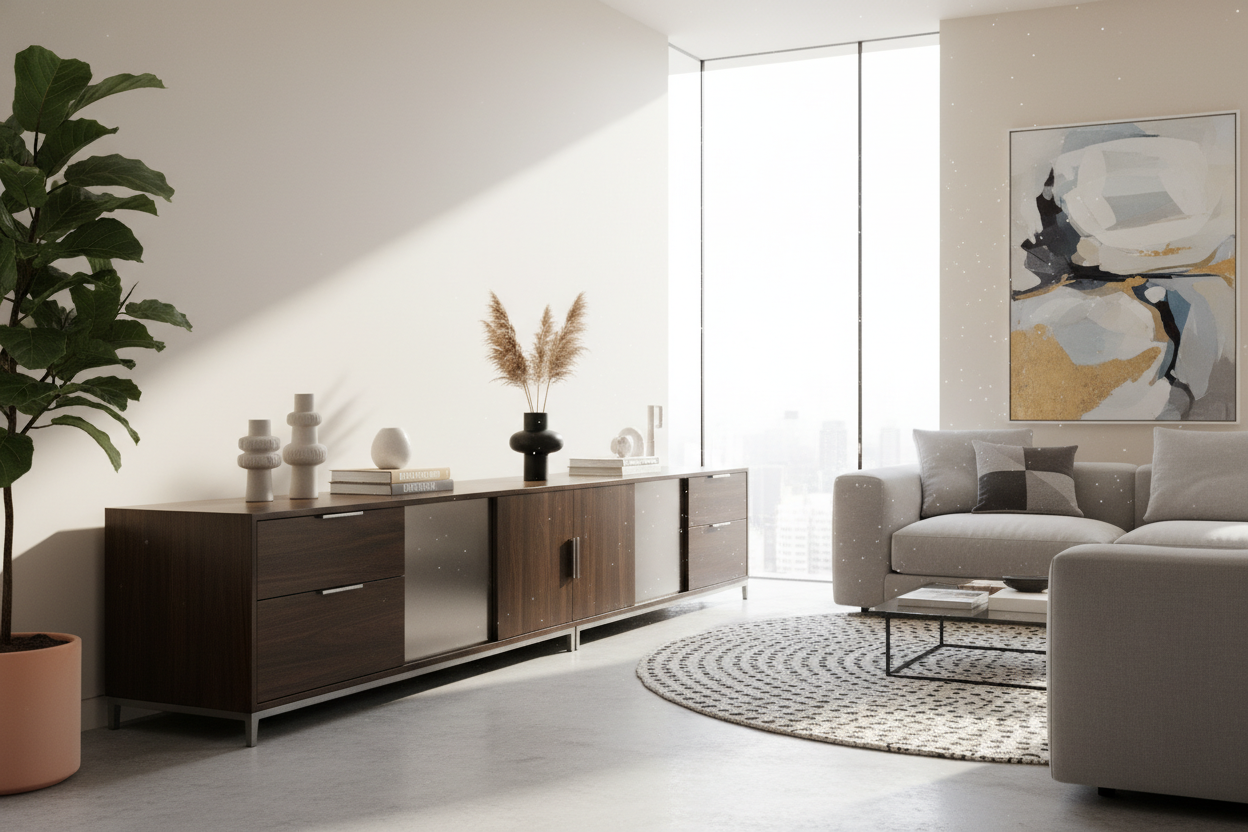
Scale is where most people trip up. If you have a standard 8-foot ceiling and you shove a 72-inch tall cabinet next to your sofa, you’ve just created a visual monolith that sucks the light out of the corner. For most modern layouts, I prefer a long, low credenza. It keeps the sightlines open and gives you a surface for more than just dust.
If you are browsing Living Room Storage options, measure your TV height first. If the cabinet is for a television, the screen should be at eye level when you're seated. A cabinet that's too tall will give you a neck ache, while one that's too low makes the TV look like an afterthought. Aim for a height that aligns with the arms of your chairs to keep the room's 'horizon line' consistent.
Mixing Wood Tones Without Panicking
Stop trying to match your oak floors to an oak cabinet. It’s impossible to get it 100% right, and when you’re 5% off, it looks like an accident. I follow the 80/20 rule: 80% of your wood should be in the same 'temperature' (warm vs. cool), and 20% can be a bold contrast. If you have light maple floors, a dark walnut cabinet provides a sophisticated anchor.
A versatile storage cabinet living room furniture piece works best when it bridges the gap between your other finishes. Look for pieces with a visible grain; it adds texture that flat, painted surfaces lack. Solid wood or high-quality veneers are worth the extra cash here. I once bought a 'walnut-look' laminate unit that started peeling at the edges within six months because of the humidity. Never again. Real wood ages with the house; cheap laminate just dies.
Drawers vs. Doors: What Are You Actually Hiding?
Be honest about your mess. If your coffee table is currently covered in half-dead batteries, three different remotes, and a stack of mail, you need drawers. Doors are great for hiding big things, but they are 'clutter graveyards' for small items. You’ll just end up with a jumbled pile behind a closed door that falls out every time you open it.
That’s why I often recommend a wooden storage cabinet for living room spaces that leans heavily on drawer space. A nine-drawer chest isn't just for the bedroom; in a living room, it’s a category-killer for organization. One drawer for tech, one for coasters, one for the kids' tablets. It keeps the surface clear and your sanity intact. If you go with doors, make sure the shelves inside are adjustable. Fixed shelves are the enemy of large coffee table books.
My Go-To Styling Formula for the Top
Once the cabinet is in place, don't just center a TV and call it a day. That’s the fastest way to make it look like a hotel room. I use a three-step formula to make any wood unit look integrated. First, add height with a tall, skinny lamp on one end. This creates a warm glow at shoulder height, which is much better than harsh overhead lights.
Second, lean a piece of art against the wall. Don't hang it; leaning feels casual and 'un-stuffy.' Finally, use a low catch-all tray for the things you actually use, like a candle or a bowl for keys. This layers the textures—metal or ceramic against the wood—and makes the piece feel like part of your life rather than just a box that holds your stuff.
Personal Experience: The Veneer Disaster
I once fell in love with a mid-century sideboard that was 'priced to move.' I ignored the fact that the 'solid wood' description was buried under a pile of marketing fluff. It arrived, and it was essentially heavy cardboard with a sticker on top. The first time I put a sweating glass of water on it, the 'wood' bubbled up like a blister. Now, I always check the weight and the joinery. If it weighs less than my dog, it’s not staying in my living room. I’d rather have a smaller, solid mango wood piece than a massive faux-wood unit that I have to baby.
FAQ
Can I use a bedroom dresser as a living room cabinet?
Absolutely, but watch the depth. Dressers are often 20+ inches deep, which can feel bulky. If it has a clean silhouette and you swap the hardware, no one will know it was meant for socks.
Does the wood cabinet have to match my coffee table?
No. In fact, it shouldn't. If everything matches, the room feels flat. Try to vary the grain patterns or the stains slightly to give the room some history and character.
How do I hide cables behind a solid wood cabinet?
If it doesn't have pre-drilled holes, don't panic. A 2-inch hole saw bit on a standard power drill will let you create a tidy exit for cords. Just make sure you measure twice before you start drilling through the back panel.


Leave a comment
This site is protected by hCaptcha and the hCaptcha Privacy Policy and Terms of Service apply.