










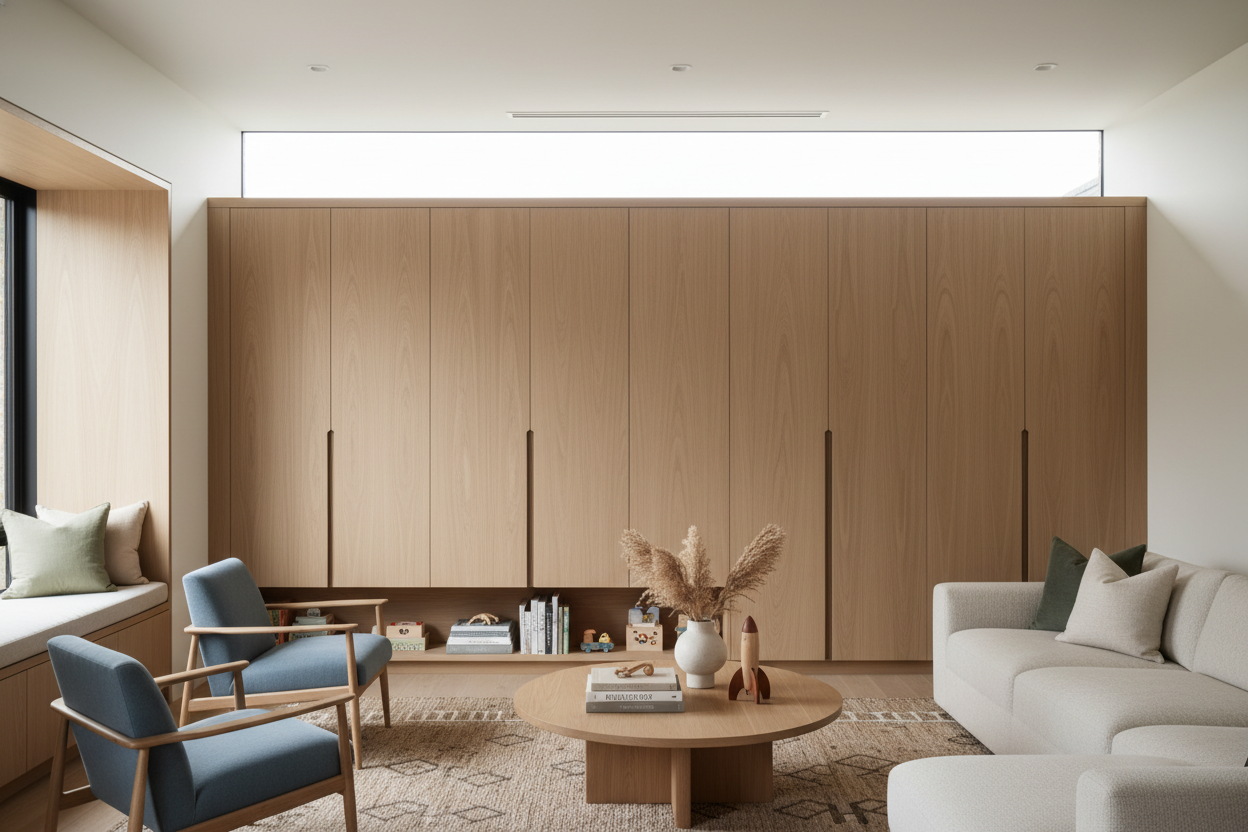
I spent three years trying to convince myself that a dozen seagrass baskets and some low-slung wooden shelves would solve my parenting stress. I fell for the Pinterest lie. I thought if I just bought the right 'aesthetic' bins, my living room wouldn't look like a primary-colored bomb went off every afternoon at 4 PM. Instead, I ended up with overflowing baskets of mismatched Legos and a constant, low-grade headache from the visual noise of playroom storage cabinets that weren't actually cabinets at all, but just open cubbies for chaos.
Then I got smart. I realized that if I wanted my house to feel like a home for adults again after the kids went to bed, I needed to stop organizing the mess and start hiding it. I swapped the baskets for heavy-duty, closed-door furniture. The difference wasn't just aesthetic; it was psychological. Here is why the 'open bin' trend is a trap and why real cabinetry is the only way to survive the toy years.
- Visual Peace: If you can't see the neon plastic, it doesn't exist (at least after 8 PM).
- Verticality: Tall cabinets use the air, not your precious floor space.
- Safety First: Always, always bolt these to the wall studs with 12-gauge steel anti-tip kits.
- Longevity: A solid cabinet survives the toddler years and becomes a bookshelf or linen closet later.
The Pinterest Open-Bin Trap
We’ve all seen the photos: a sun-drenched room with three perfectly curated wooden toys sitting in a beautiful woven basket. It looks peaceful. It looks manageable. But unless your children are robots who only play with one neutral-toned block at a time, those open bins are a disaster waiting to happen. In a real house, those baskets become 'junk drawers' for the entire floor. You find a half-eaten granola bar at the bottom, three socks, and a headless Barbie.
The problem is visual noise. Even when toys are 'put away' in open bins, your brain still processes all those shapes, colors, and textures. It’s a chaotic blur that makes a room feel cluttered no matter how much you vacuum. Woven baskets also lose their shape over time. I’ve owned dozens, and after six months of a toddler leaning on them, they look like sad, deflated potatoes. Transitioning to a real childrens storage cabinet changed the entire energy of our main floor. Suddenly, the walls looked clean again.
Why Doors Are a Parent's Best Friend
There is a specific kind of relief that comes from physically shutting a door on a mess. When you use toy storage cabinets with doors, you are drawing a boundary between 'kid time' and 'adult time.' At the end of the day, I don't want to see a half-finished Lego castle or a pile of dress-up clothes. I want to see a beautiful piece of furniture that matches my decor. It’s about reclaiming your space.
When you decide to choose the perfect storage cabinet with doors, you need to look for soft-close hinges. I learned this the hard way after my son slammed his fingers in a cheap MDF unit I bought on a whim. Look for doors with 110-degree hinges that allow full access to the interior. You want a toy cabinet with doors that can handle being opened and closed fifty times a day without the hardware wiggling loose. Since switching to playroom storage cabinets with doors, my evening 'reset' takes five minutes instead of thirty. I just shove the stray pieces inside and click the doors shut. Out of sight, out of mind.
Hiding the Neon Plastic Eyesores
Let’s be honest: most modern toys are hideous. They are made of eye-searing neon plastic and come in shapes that don't stack or store easily. No matter how much you love your kids, you probably don't love the way their plastic kitchen set looks next to your mid-century modern credenza. This is where toy storage with doors becomes a literal sanity saver. You can have the most colorful, obnoxious toys in the world, and as soon as that door is closed, your living room looks like an adult lives there again.
I recommend looking for dedicated toy kids storage options that offer deep shelving—at least 15 to 18 inches. This is the 'sweet spot' for those awkwardly shaped items like car tracks, dollhouses, and oversized stuffed animals. A solid toy closet with doors acts as a shield for your interior design. I opted for a matte white finish that blends into the walls, making the massive amount of storage almost invisible. It’s the ultimate 'stealth' move for parents who care about style.
Going Vertical: The Tall Toy Storage Cabinet Strategy
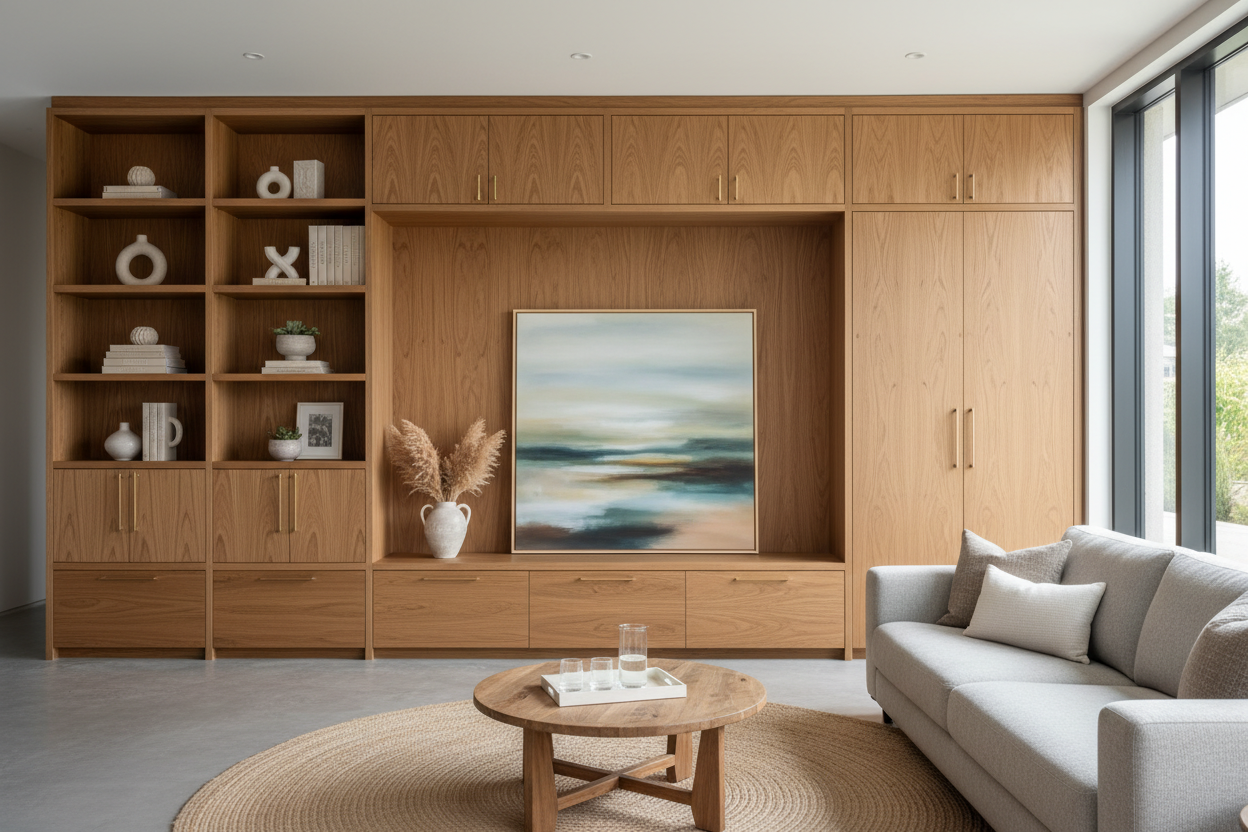
If you’re working with a small footprint, stop looking for wide, low toy room storage cabinets. They eat up all the floor space where your kids actually need to play. Instead, go up. A tall toy storage cabinet is the most efficient way to manage a large collection without making the room feel cramped. I use the bottom two shelves for things the kids can reach themselves—blocks, cars, and books. The middle shelves are for puzzles and board games that require adult supervision (no one wants a 1,000-piece puzzle dumped on the rug at 6 AM).
The top shelves are my secret weapon. I use large storage cabinets with top doors to hide the 'out of rotation' toys. Every few months, I swap the bottom shelf toys with the top shelf toys. It’s like Christmas morning for the kids, and I don’t have to buy anything new. Just remember: if you go tall, you must anchor the unit to a wall stud. Don't rely on those flimsy plastic zip-ties that come in the box. Spend $10 at the hardware store for a heavy-duty steel anti-tip kit. It’s non-negotiable.
How to Organize the Inside So Kids Can Actually Use It
The biggest argument against playroom cupboards is that kids won't be able to find their stuff. That’s only true if the inside is a disaster. The trick is to treat the inside of your playroom cabinets with doors like a pantry. Use clear, stackable plastic bins on the shelves. This way, the kids can see that the 'blue bin' has the dinosaurs and the 'green bin' has the trains. They can pull out one bin at a time, play, and—theoretically—put it back.
I also like to use the back of the doors. You can mount small spice racks or adhesive bins to the interior of the doors to hold art supplies, stickers, or small figurines. This turns your playroom storage with doors into a fully functional activity center. Labeling is also your friend. Even if your kids can't read yet, you can use picture labels. A little icon of a Lego brick or a crayon tells them exactly where things go. It builds independence and keeps the 'shove and shut' method from becoming a permanent mess inside the cabinet.
Will They Actually Put Things Away?
The short answer? Not perfectly. But toy cabinets with doors make the *expectation* of tidying much lower. With open shelving, everything has to be lined up and 'styled' to look decent. With a cabinet, the goal is just to get it inside the box. We do a '5-minute sweep' before bed. I set a timer, put on a fast song, and we just race to get everything off the floor and into the cupboards. It doesn't have to be pretty; it just has to be behind the door.
I’ve found that my kids actually prefer this. The visual overwhelm of seeing all their toys at once often leads to 'analysis paralysis' where they just dump everything out and play with nothing. When the toys are tucked away in a cabinet, they focus more on the one thing they’ve pulled out. It’s a cleaner way to play and a much cleaner way to live. I’ll never go back to open bins again. My shins—and my sanity—can’t handle it.
FAQ
What is the best depth for a toy cabinet?
I recommend at least 15 inches. Most standard bookshelves are only 11-12 inches deep, which is too shallow for board game boxes or large trucks. An 18-inch deep cabinet is the gold standard for versatility.
Should I get glass doors or solid doors?
Solid doors, 100%. Glass doors still let you see the clutter, which defeats the purpose of hiding the visual noise. Plus, kids and glass doors are a recipe for fingerprints and potential breakage.
How do I stop my kids from climbing the shelves?
First, anchor the cabinet to the wall studs. Second, keep the most enticing toys on the bottom shelves so they don't have a reason to climb. If they are chronic climbers, look for a unit with doors that can be baby-proofed with a simple magnetic lock.

Leave a comment
This site is protected by hCaptcha and the hCaptcha Privacy Policy and Terms of Service apply.