










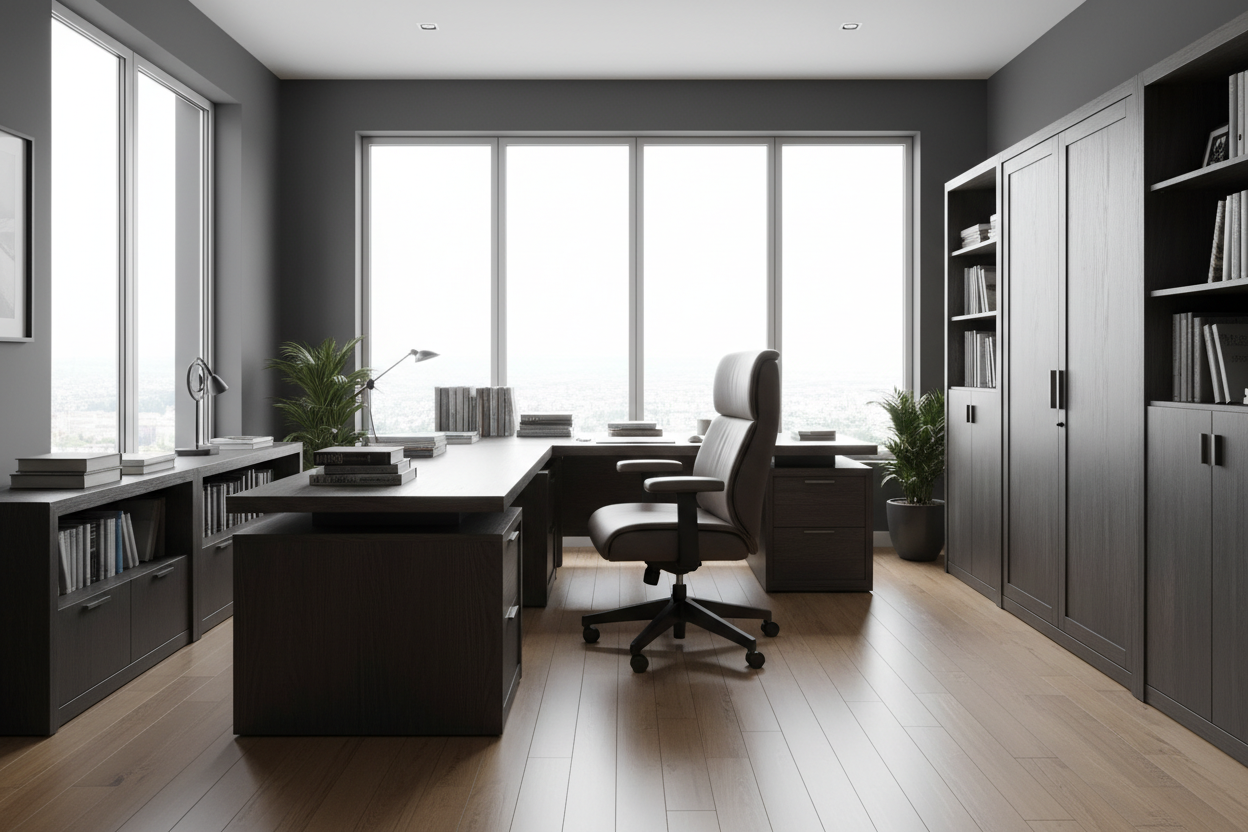
There is a fine line between a workspace that feels "cozy" and one that feels "claustrophobic." When you are dealing with limited square footage, the margin for error effectively disappears. Most homeowners assume the challenge is simply fitting furniture into the room, but the real challenge is managing visual weight and flow. Whether you are curating a remote workstation or planning a small office layout for a boutique retail environment, the goal is to create a sense of breathability where none naturally exists. This guide moves beyond basic decluttering and dives into the architectural and furniture strategies that maximize efficiency.
Quick Decision Guide: Key Design Elements
If you are rushing to purchase furniture or finalize a floor plan, prioritize these architectural pillars to avoid a cramped outcome:
- Scale & Silhouette: Avoid blocky, solid-base furniture. Opt for pieces with exposed legs or cantilevered designs to reveal more floor space.
- Vertical Utilization: Floor space is finite; wall space is not. Look for floor-to-ceiling shelving units that draw the eye upward.
- Lighting Temperature: In small spaces, poor lighting creates shadows that shrink the room. Aim for layered lighting (ambient + task) around 3000K-4000K.
- Material Translucency: Glass, acrylic, or high-gloss lacquers reflect light and reduce the visual footprint of heavy items.
- Traffic Flow: Ensure a minimum of 36 inches of clearance behind your desk chair for comfortable movement.
Mastering Space Planning & Layout
When designing a small office, the floor plan must be ruthless. The most common error I see on blueprints is the "floating island" desk in a room that cannot support it. In a compact room (under 100 sq. ft.), floating a desk in the center often severs the traffic flow and creates dead zones.
The Perimeter Strategy vs. The T-Shape
For most rectangular rooms, a perimeter layout—where storage and desks anchor to the walls—opens up the central void, making the room feel larger. However, if you are designing a small office space for two people, consider a T-shape arrangement coming off one wall. This allows for shared resources while maintaining individual zones.
The Furniture Edit: Material and Ergonomics
The physical footprint of a piece of furniture is different from its visual weight. A solid oak desk with drawers down to the floor reads as "heavy" and consumes the room. Conversely, a desk of the exact same dimensions with a slender metal frame and a walnut veneer top reads as "light."
Solid Wood vs. Veneer in Compact Spaces
While I usually advocate for solid wood for heirlooms, in a small office design concept, high-quality engineered wood with premium veneers can actually be superior. Why? Because it allows for thinner profiles and longer spans without the bulk required by solid timber construction. Look for commercial-grade laminates or rift-cut oak veneers that offer durability without the visual mass.
Ergonomics in Tight Quarters
Never sacrifice your spine for space. If you cannot fit a full ergonomic executive chair, look for "task chairs" with a mid-back silhouette. Ensure the base diameter of the chair doesn't conflict with the width of your desk knee-hole. A common friction point is the chair arms banging against the desk drawer; measure your clearance height carefully.
Commercial Context: The Small Shop Office
Small shop office design requires a different approach than a home study. Here, privacy and security blend with aesthetics. If your office is visible to customers, the "back of house" vibe must match the "front of house" brand. I recommend integrated joinery that hides printers and cabling. A tambour door appliance garage is excellent here—it allows you to hide the clutter of operations instantly when a client approaches.
Lessons from My Own Projects
I want to share a specific realization from a project I tackled last year—a 60-square-foot "cloffice" (closet-office) conversion in a pre-war apartment. On paper, the layout worked perfectly. We selected a beautiful, dark walnut floating shelf as the desk.
However, once installed, I realized a critical oversight regarding how to design small office lighting. We had relied on a single overhead can light. Because the walls were close, the dark walnut absorbed all the light, and the user's body blocked the overhead source, casting a shadow directly on the work surface. It felt like working in a cave.
We had to retroactively cut into the millwork to install under-shelf LED channels. The lesson? In small spaces, shadows are your enemy. Also, a specific "unpolished" detail regarding matte black finishes: avoid them on the high-touch areas of a small desk. In a tight space, your hands constantly brush the edges, and the oils from your skin will leave shiny patches on matte laminate within weeks. Go for a textured wood grain or a satin finish instead to hide the wear.
Conclusion
Creating a functional workspace within a limited footprint is an exercise in restraint and precision. By selecting furniture with a light visual weight, prioritizing vertical storage, and layering your lighting, you can turn a cramped corner into a command center. Don't let the square footage dictate your productivity.
Frequently Asked Questions
1. What is the best color palette for a small office?
While white is the standard answer for "expanding" space, it can feel clinical. I prefer monochromatic schemes using greige, sage, or terracotta. Painting the ceiling the same color as the walls blurs the boundaries of the room, drawing the eye up and making the ceiling feel higher.
2. How do I handle wire management in a desk with open legs?
Since open-leg desks are best for small spaces, hiding wires is tricky. Use magnetic cable raceways that attach to the back of the metal legs, or route cables through a "vertebrae" cable manager that runs from the desk surface to the floor. Never let cables dangle; visual clutter equals mental clutter.
3. Can I use a rug in a small office?
Yes, but sizing is critical. A postage-stamp rug that floats in the middle of the floor chops up the space. Choose a rug large enough that at least the front legs of your storage units and the entirety of your desk and chair sit upon it. This unifies the zones.

Leave a comment
This site is protected by hCaptcha and the hCaptcha Privacy Policy and Terms of Service apply.