










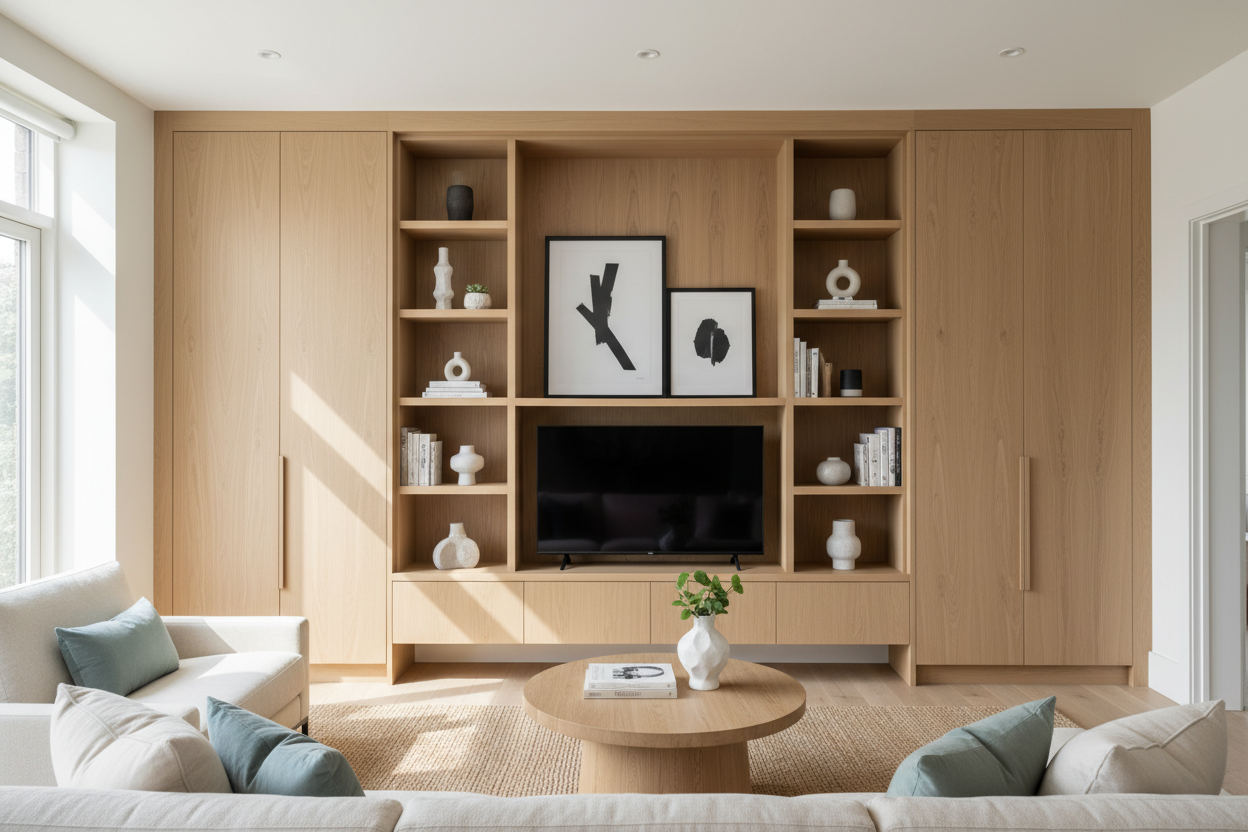
I spent three years convinced that if I just bought enough seagrass baskets, my house would look like a Nancy Meyers movie. I had baskets for the dog toys, baskets for the half-finished knitting projects, and baskets for the rogue Nintendo Switch controllers. But here is the truth: baskets are just open-top trash cans for stuff you actually want to keep. They collect dust, the cat pees on them, and you can still see every bit of the visual noise from across the room.
Last Tuesday, I finally hit my breaking point after tripping over a 'decorative' pile of mail. I realized I didn't need more organization; I needed a place to hide the evidence. Buying a living room cabinet was the only way to stop the madness. It is the architectural equivalent of shoving everything under the bed, except it looks intentional and grown-up.
- Closed doors beat open shelves every single time for high-traffic family areas.
- Deep cabinets (15-18 inches) are necessary for board games; anything shallower is just a glorified trophy case.
- Drawers are for the 'junk' (batteries, chargers); shelves are for the 'bulk' (blankets, laptops).
- Always check the hinge quality—cheap hinges sag after six months of a toddler swinging on them.
The Woven Basket Trap (And Why It Never Actually Works)
We’ve been sold a lie that open storage is the peak of 'cozy' living. In reality, a living room shelving cabinet filled with mismatched books and half-empty candles just looks messy. Open baskets are even worse because they lack structure. You start with a neatly folded throw blanket and end up with a mountain of discarded socks and mail.
When you use living room cabinets and shelves that lack doors, you are essentially putting your chores on display. Every time you sit down to watch TV, you’re staring at the clutter you haven't dealt with yet. It’s a constant low-grade hum of anxiety. A cabinet lounge room should be for lounging, not for cataloging your unfinished business.
Enter the Living Room Cabinet: Your Visual Clutter Cure
The magic happens the second you shut the door. A solid piece of living room cabinet furniture provides a visual 'anchor.' It gives the eye a place to rest. Instead of seeing forty-seven small items, you see one beautiful wood or lacquered surface. It’s the ultimate hack for people who want to live in a clean house but don't actually want to spend their Saturday morning color-coding a bookshelf.
I’ve found that moving toward dedicated living room storage changed the way I feel about my house. I stopped apologizing to guests for the 'lived-in' look. Now, when someone drops by unexpectedly, I do the 30-second sweep: arm-load of toys, straight into the cabinet, door shut. Problem solved. It’s the only way to maintain sanity in a sitting room cabinet setup that actually sees daily use.
Figuring Out the Right Size for Your Mess
Before you click 'buy' on that mid-century modern beauty, take a literal inventory of your chaos. Are you hiding a stack of 12-inch board games? You’ll need a living area cabinet with at least 14 inches of internal depth. Most 'accent' pieces are surprisingly shallow—sometimes only 11 or 12 inches—which means your Catan box is going to prevent the doors from closing.
Sneaking in a Small Cabinet for Living Room Corners
If you’re in a 700-square-foot apartment, you might think you don't have the floor space for more furniture. Trust me, you don't have the space *not* to have it. A small cabinet for living room nooks can replace three different rickety end tables. Look for something tall and narrow to maximize vertical space without blocking the flow of traffic.
I usually recommend a small cabinet with doors for your living room if you have a dead corner next to a window. It’s the perfect spot for a lamp on top and all your ugly router cables and power strips hidden inside. A small storage cabinet for living room use is basically a cloaking device for the tech-clutter we all hate.
Committing to a Large Cabinet for Living Room Walls
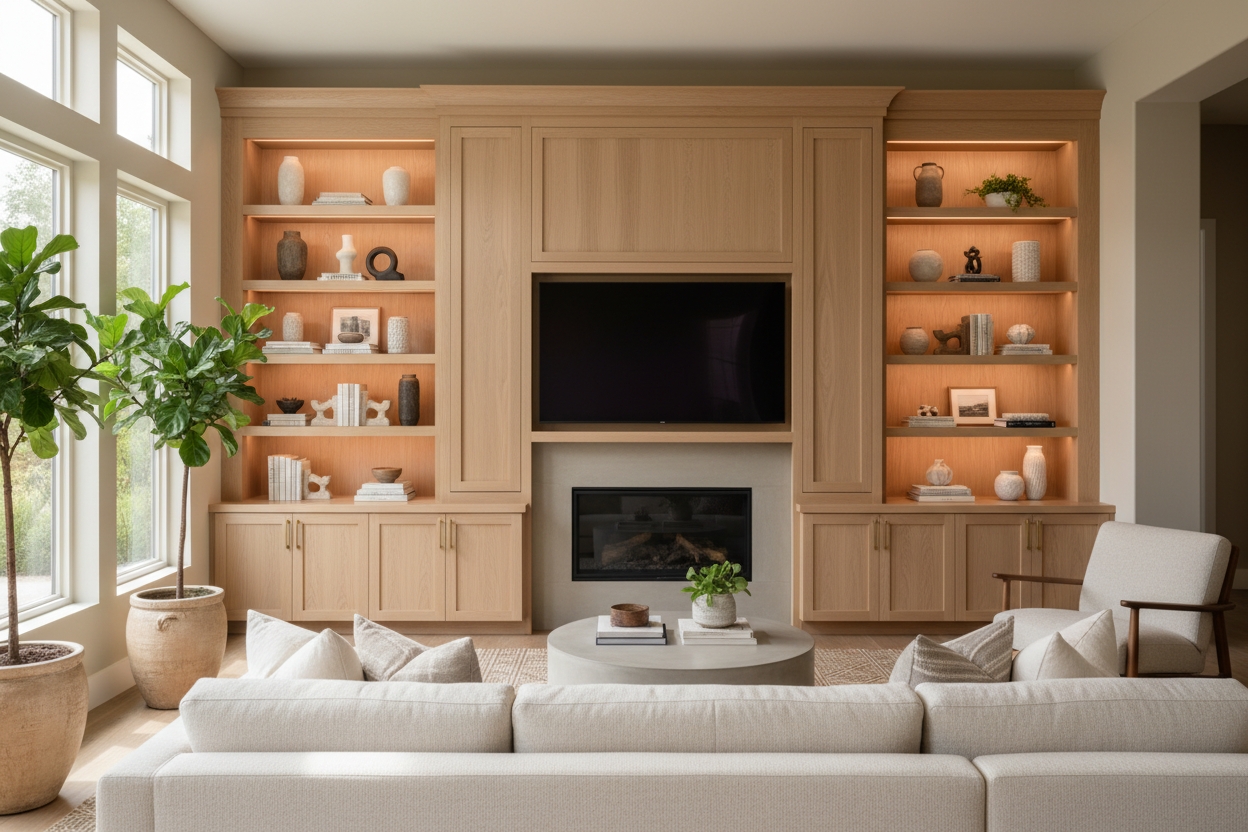
Sometimes, the 'brave' choice is to go big. Instead of three different small pieces of furniture that don't match, one large living room cabinet can unify the entire wall. It creates a focal point that feels expensive and architectural. If you have a long, empty wall behind your sofa or opposite the TV, big cabinets for living room storage are the way to go.
I recently helped a friend install a large storage cabinet for living room blankets and bulky winter gear. We went with a 70-inch sideboard style. It swallowed up two bins of Lego, a printer, and four oversized throw pillows. The room suddenly felt twice as big because the floor was finally clear.
Drawers vs. Doors: What Actually Works Best?
This is where people usually mess up. They buy a living room storage cabinet with doors and shelves and then realize they have nowhere to put their pens, batteries, and loose change. Those things just end up in a pile on the shelf behind the door, which is just a hidden mess. You need a living room storage cabinet with drawers for the small stuff.
I’m a huge fan of the hybrid model. A living room cabinet with doors and drawers gives you the best of both worlds. The drawers handle the 'junk drawer' items that every house has, while the adjustable shelves behind the doors handle the tall vases or the stack of living room storage with drawers for craft supplies. If you’re looking at contemporary cabinets living room designers are currently loving, you’ll notice they almost always feature this mix of storage types.
My Honest Mistake: The 'Paper-Thin' Backing
A quick warning from someone who has assembled too many flat-pack units: check the back panel. I once bought a gorgeous-looking living room cupboard that had a back panel about as thick as a cereal box. The first time I shoved a heavy stack of books inside, the back popped right off. If you're buying a cabinet for storage in living room environments where it'll actually be used, look for solid backings or at least reinforced corner brackets.
Ready to Finally Hide the Mess?
Stop trying to curate your clutter. You don't need to 'style' your remote controls or find a prettier way to stack your magazines. You just need a place to put them where you don't have to look at them. Whether it’s a long cabinet for living room hallways or a decorative storage cabinet for living room focal points, the goal is the same: peace of mind.
FAQ
What is the best depth for a living room cabinet?
For most homes, 15 to 18 inches is the sweet spot. It’s deep enough for standard board games and electronics but doesn't stick out so far that it eats up your walking space.
Can I use kitchen cabinets in a living room?
You can, but be careful with the height. Standard kitchen base cabinets are 34.5 inches tall, which can feel a bit 'heavy' in a lounge setting. Most people prefer sideboards or credenzas that sit around 30 inches high.
How do I stop a tall cabinet from tipping?
Always, always use the wall anchor kit. I don't care if you don't have kids. A heavy door swung open on a carpeted floor can pull the whole thing down. It takes five minutes to drill one hole; just do it.


Leave a comment
This site is protected by hCaptcha and the hCaptcha Privacy Policy and Terms of Service apply.