










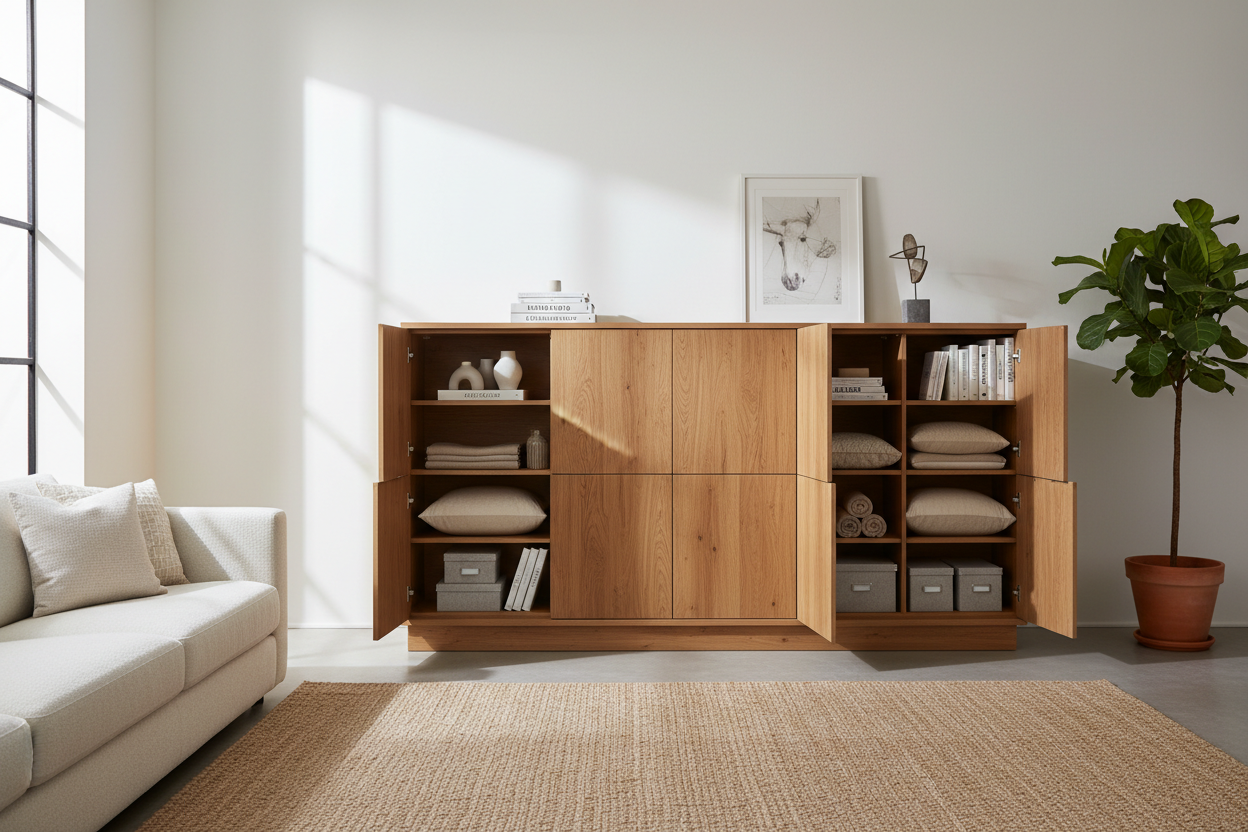
If you are managing a shared workspace, a busy garage, or a mudroom overrun by family gear, you know that open shelving often leads to visual noise. An 8 door storage cabinet solves this specific problem by compartmentalizing clutter. Rather than one giant void where items get lost, these multi-tier units provide eight distinct, secure spaces to segregate items by person, category, or frequency of use. They are the bridge between industrial functionality and necessary organization.
Most people associate these cabinets with high school hallways, but modern designs have evolved. Whether you need a metal locker setup for employee personal belongings or a sleek wood-finish unit for a pantry, the core benefit remains the same: vertical efficiency. By stacking storage compartments, you utilize height rather than floor space, making these units ideal for tight corners and narrow rooms.
My Experience: The Mudroom Transformation
A few years ago, my home’s entry point was a disaster zone. With four people dumping bags, shoes, and sports equipment into one communal closet, finding a matching pair of gloves was a twenty-minute ordeal. I initially tried open cubbies, but the visual mess was stressful. I eventually swapped the open shelving for a steel 8-door storage cabinet, typically sold for breakrooms.
The change was immediate. Assigning two vertical lockers to each family member meant that my running gear never got mixed up with my son's soccer cleats. The ability to close a door on the mess was a psychological relief. More importantly, the steel construction held up against wet umbrellas and heavy backpacks in a way that particle board never could. If you are on the fence about industrial-style storage in a home setting, the durability factor alone makes it worth the investment.
Choosing the Right Material for Your Environment
Not all cabinets are built to survive the same conditions. Your choice of material dictates how long the unit will last and where it can be placed.
Cold-Rolled Steel
For garages, workshops, and offices, steel is the standard. Look for cold-rolled steel with a powder-coated finish. This isn't just about aesthetics; the powder coating provides a barrier against rust and corrosion. If you plan to store chemicals, cleaning supplies, or heavy tools, metal is non-negotiable. It doesn't absorb odors and is easy to wipe down. Most 8-door metal lockers also come with ventilation louvers, which are critical if you are storing gym clothes or damp gear to prevent mildew buildup.
Engineered Wood and Laminate
If the unit is going into a living room, classroom, or hallway where aesthetics matter, melamine or laminate-faced particle board is a common choice. These blend better with residential furniture. However, be wary of weight limits. Unlike steel, engineered wood can sag over time if you overload the compartments with heavy books or equipment. These are best suited for linens, paperwork, or toy storage.
Security and Locking Mechanisms
One of the primary reasons to opt for an 8-door configuration is security. In a shared office or a co-working space, providing a secure place for personal effects is essential. There are generally three types of locking systems you will encounter.
Standard key locks are the most common and usually come pre-installed. They offer decent security but require key management (and the inevitable headache of lost keys). Padlock hasps are a better alternative for gyms or schools; they allow the user to bring their own combination lock, shifting the responsibility of security to them. For higher-end environments, digital keypads are becoming popular, though they require batteries and more complex initial programming.
Installation and Assembly Realities
Be prepared for the assembly process. Unless you are buying from a high-end office supply dealer, your 8-door cabinet will likely arrive flat-packed. These boxes are heavy and cumbersome.
From experience, do not tighten the bolts fully until the unit is standing and squared. Metal cabinets can twist slightly during assembly. If you tighten every screw as you go, you might find the final door doesn't close properly because the frame is slightly rhomboid. Get all the screws in finger-tight, stand the unit up, ensure it is level, and then torque everything down. Also, wear gloves. The edges of stamped steel panels can be surprisingly sharp before they are fully assembled.
Safety Anchoring
Vertical storage presents a tipping hazard. An 8-door unit is tall and relatively shallow. Once you load the top compartments with heavy items, the center of gravity shifts dangerously high. Wall anchoring is not optional. Most units come with basic L-brackets, but if you are installing this in a garage with drywall over studs, use a stud finder and drive long lag screws into the wood framing. Do not rely on drywall anchors for a fully loaded metal cabinet.
Optimizing the Interior Space
The compartments in an 8-door unit are often compact, roughly cubic or short rectangular spaces. To get the most out of them, you need to think about micro-organization. Because the walls are usually metal, magnetic accessories are a game-changer. Magnetic hooks can hold keys or headphones on the inside of the door, utilizing otherwise dead space.
For office use, shelf risers can double the usable surface area within a single locker, allowing you to stack papers without creating an avalanche. If the cabinet is for a workshop, consider plastic bins that fit the exact dimensions of the cubby. This allows you to pull out the entire "drawer" to find a specific tool rather than reaching into the dark back corners of the cabinet.
Longevity and Maintenance
Maintenance on these units is low, but necessary. For steel cabinets, inspect the hinges annually. If the doors start to squeak or resist closing, a quick spray of silicone lubricant on the hinge pins will restore smooth operation. Avoid water-based cleaners on metal if the paint is scratched, as this invites rust. For wood laminates, ensure that wet items are never placed directly on the shelf surface, as water damage will cause the material to swell and bubble, ruining the structural integrity of the shelf.
Frequently Asked Questions
Can I use a metal 8-door cabinet outdoors?
Generally, no. Even with powder coating, standard metal lockers are designed for indoor use. Exposure to direct rain and fluctuating outdoor humidity will eventually cause rust, particularly at the joints and hinges. If you need outdoor storage, look for resin or heavy-duty plastic units specifically rated for weather resistance.
How much weight can each compartment hold?
This varies by model, but a standard steel locker compartment usually supports between 30 to 50 pounds. Always check the manufacturer's spec sheet. Exceeding this limit can cause the shelf to buckle, which might jam the door of the compartment below it.
Are the shelves inside the compartments adjustable?
In most 8-door locker-style cabinets, the shelves are fixed. The shelves often act as structural stiffeners that hold the side panels together. If you need adjustable heights, you might need to look at a standard storage cabinet with fewer doors or a modular shelving system.


Leave a comment
This site is protected by hCaptcha and the hCaptcha Privacy Policy and Terms of Service apply.