










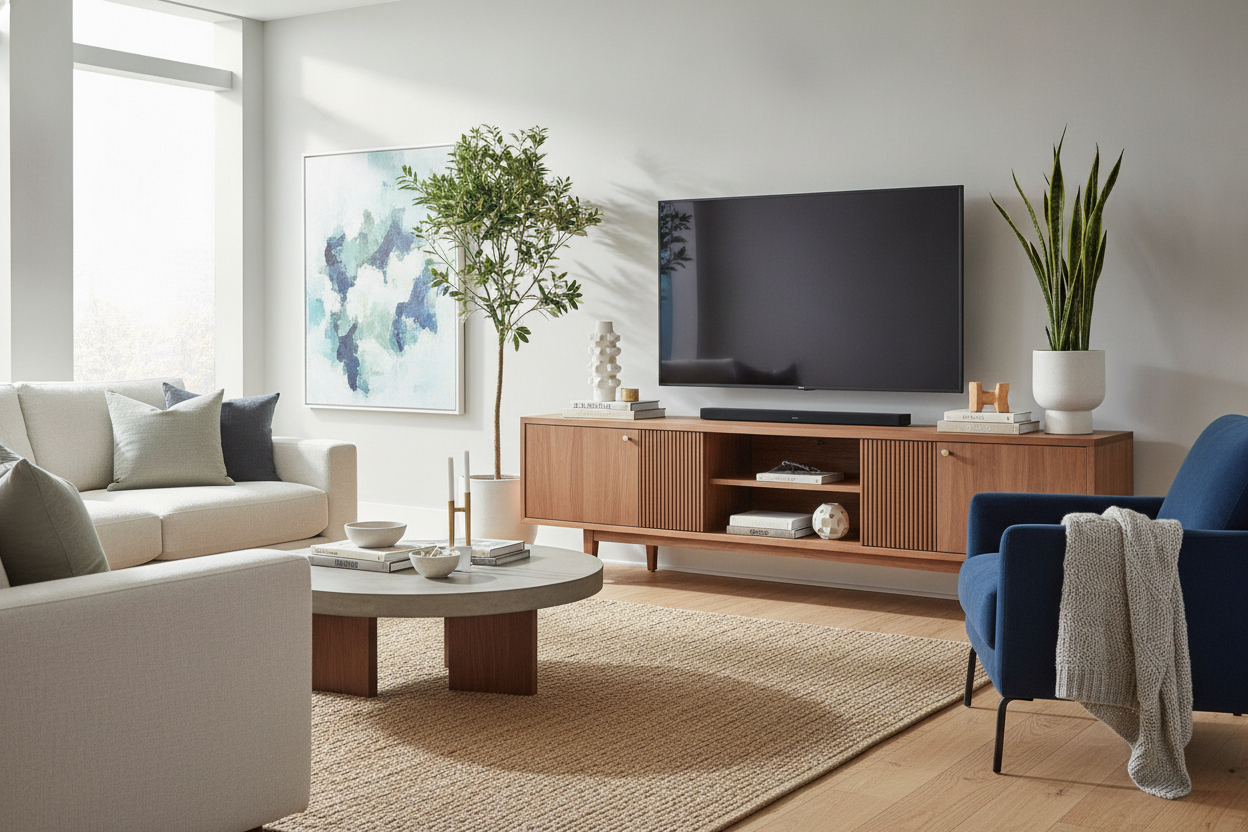
I spent three weeks staring at a temporary milk crate setup because every media unit I found online looked like it belonged in a doctor's waiting room from 1998. It is the same story every time: you spend a fortune on a 4K OLED, only to realize the market for television stands & consoles is a wasteland of laminate and wobbly legs.
We treat the TV like a centerpiece but the furniture beneath it like a utility. It is time to stop settling for 'fine' and start looking for pieces that actually have some soul. Here is how I learned to stop hating my living room layout.
- Width is non-negotiable: Your stand must be wider than your TV, period.
- Height matters: Your eye level should hit the center of the screen while seated.
- Airflow is key: Closed cabinets look clean, but your electronics will cook without ventilation.
- Material quality: If the box weighs less than the TV, it is probably cheap particle board.
The 'Black Box' Epidemic in Living Room Design
Most tv stands & consoles are built for utility first and style... never. They are often just oversized boxes made of MDF that scream 'I gave up on my aesthetic.' We have entered an era of sterile, uninspired coffins for our electronics that suck the life out of a room.
The problem is the 'safe' design. Manufacturers think we want something that disappears, so they give us grey wood-look paper and flimsy plastic handles. But your TV is already a giant black void when it is off; why would you want to sit it on top of another boring rectangle? You need texture, wood grain, or even fluted glass to break up the monotony.
Stop Treating Your Media Center Like an Afterthought
Think about your room layout for a second. Your sofa, your chairs, your rug—they all point at one single spot. Because the TV is the focal point by default, the console is essentially the stage. It is the most-viewed piece of furniture in your home, yet we buy it with less thought than a bath mat.
When you are shopping for tv stands, treat it like you are buying a fireplace mantel. It needs to be an architectural anchor. If the piece looks like it could be in an office cubicle, leave it on the warehouse shelf. You want something that feels like furniture, not an appliance accessory.
Rule #1: Scale is Literally Everything
A 65-inch TV on a 60-inch console looks like a bodybuilder on a tricycle. It is top-heavy, visually anxious, and just plain wrong. You want at least 6 to 10 inches of breathing room on either side of the screen to maintain a sense of balance. This prevents the 'overhang' look that makes a room feel cramped.
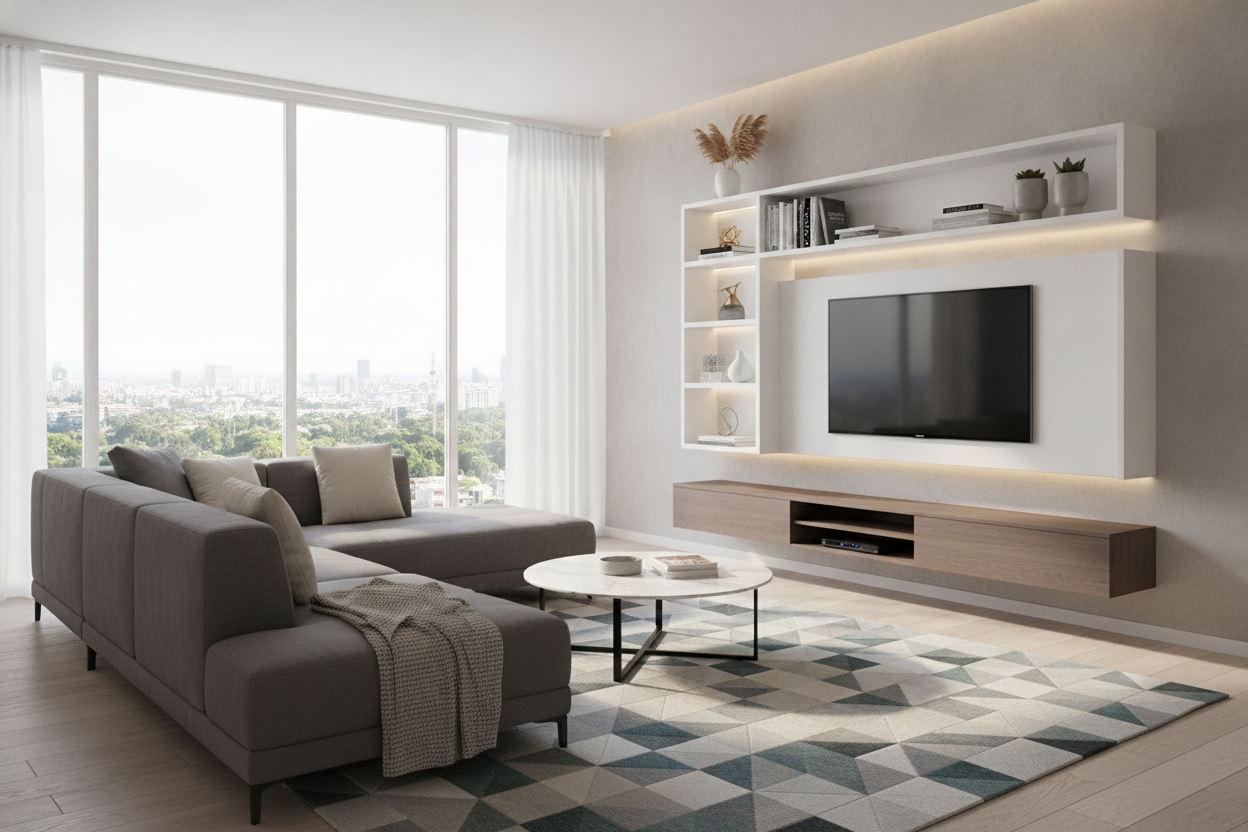
This is why long tv stands with fireplace work so well in larger rooms. They provide a massive horizontal base that makes the wall feel wider and more grounded. If you have the wall space, go big. A long, low profile always looks more expensive than a short, chunky one.
Rule #2: Play With Height and Contrast
Most modern units are too low, leaving a huge gap of dead air on your wall. While the 'low-slung' look is popular in mid-century modern circles, it does not work for every ceiling height. If you have 10-foot ceilings and a low-profile stand, your TV looks like it is floating in a void.
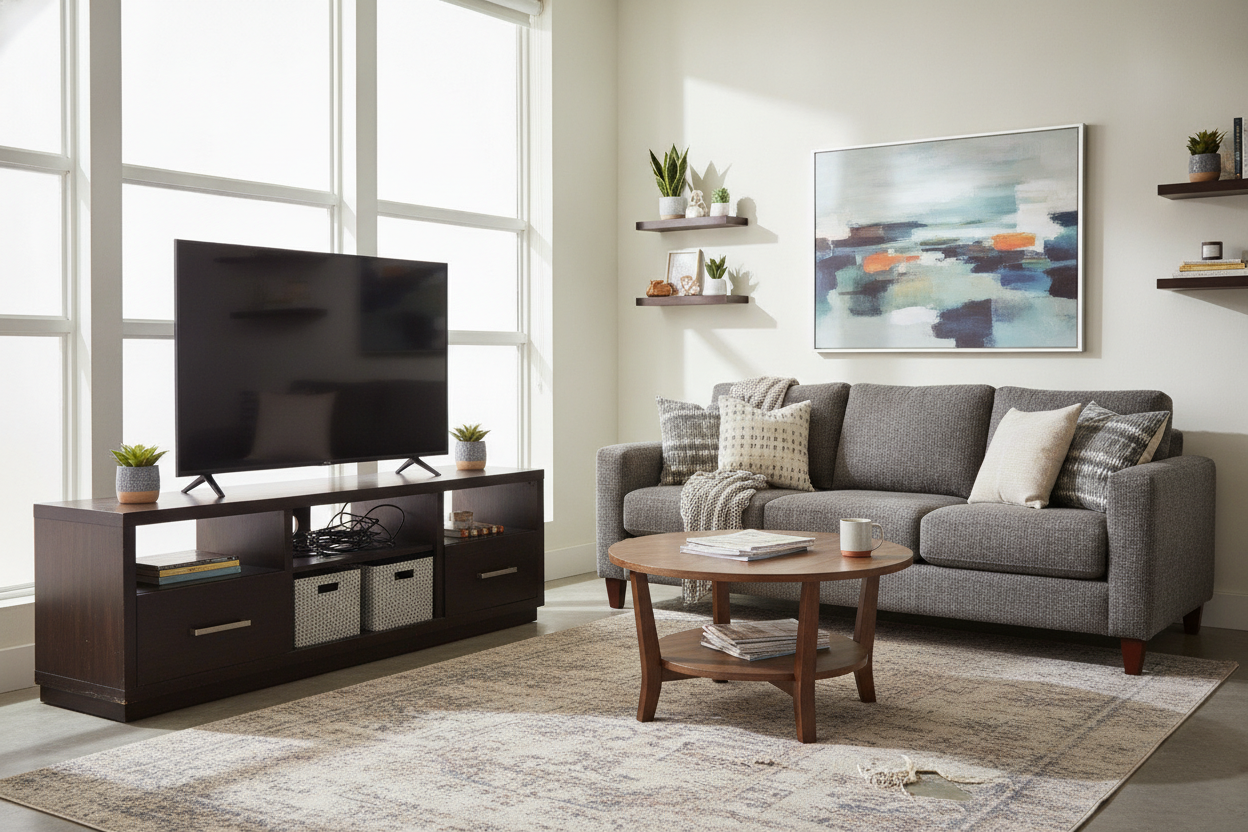
Don't be afraid to look into tall black tv stands. The added height draws the eye upward, and a dark finish helps the TV screen blend in when it is powered down. Just measure your sofa height first—you don't want to be straining your neck like you're in the front row of a movie theater.
Rule #3: Cord Management Isn't a Luxury, It's Mandatory
I have seen $3,000 'luxury' credenzas with solid back panels and zero holes. That is not a media unit; it is a sideboard. If you try to run a gaming console, a soundbar, and a router inside a sealed wooden box, you are going to have a fire hazard or at least a very expensive repair bill when things overheat.
Real functional design means ventilated back panels and internal channels. You should be able to hide every single wire from view. If I can see a 'spaghetti mess' of black cables hanging under your beautiful oak console, the whole aesthetic is ruined. Look for hidden 'mouse holes' in the shelving and removable back panels.
How wide should my TV stand be?
Ideally, your stand should be at least 20% wider than the actual width of your television. This provides visual stability and prevents the setup from looking top-heavy.
Can I use a regular dresser as a TV stand?
You can, but be careful with the height. Dressers are often 35-40 inches tall, which might put the TV too high for comfortable viewing from a standard sofa. You will also likely need to drill your own cord management holes.
What is the best material for a media console?
Look for kiln-dried hardwood or high-quality birch plywood. Avoid thin particle board with 'paper' veneers, as the weight of a large TV can cause the top shelf to sag over time.

Leave a comment
This site is protected by hCaptcha and the hCaptcha Privacy Policy and Terms of Service apply.