










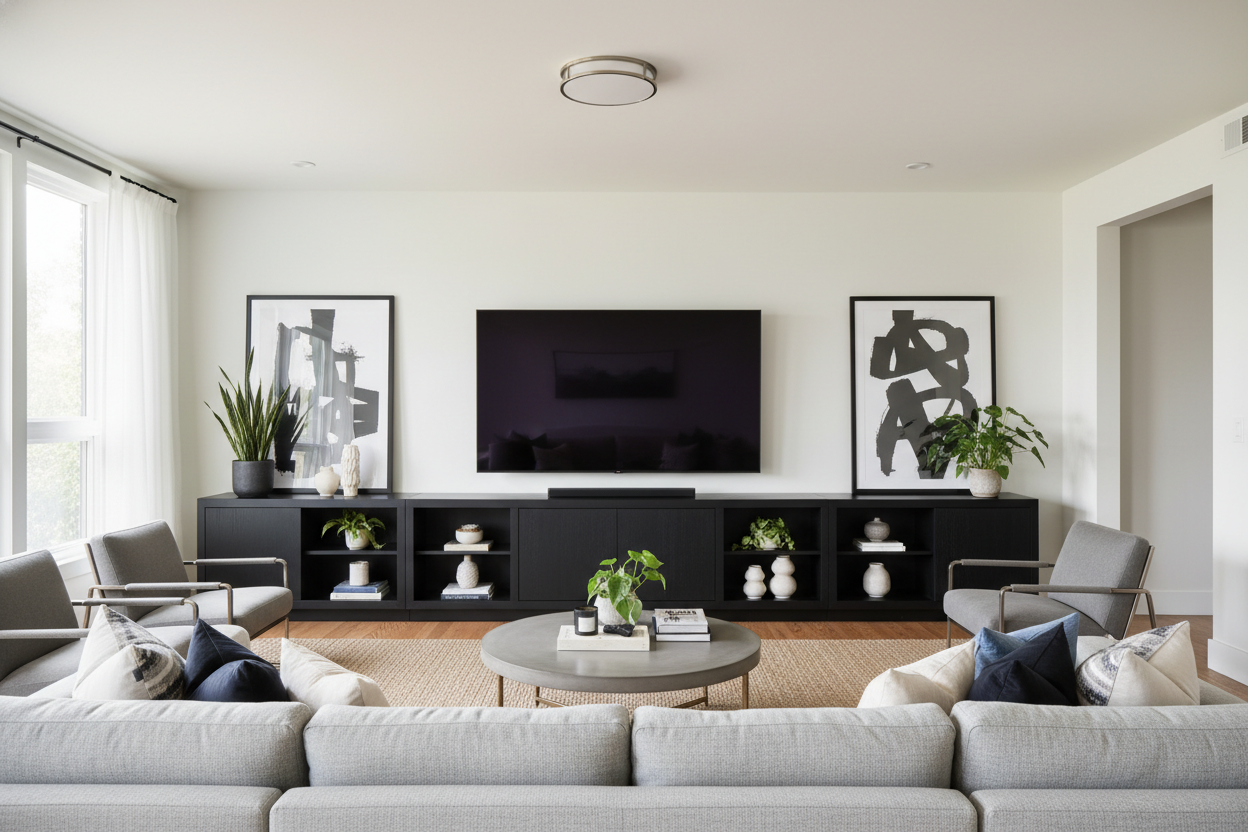
I once spent three weeks staring at a 14-foot wall in my last apartment, trying to figure out why my 'large' furniture looked like it belonged in a Barbie dreamhouse. The sofa was fine, the rug was massive, but the whole room felt unhinged. It was the media console. I had a standard 60-inch unit sitting under an 85-inch screen, and the whole setup looked like a lollipop about to tip over. That was the day I realized that if you have a big wall, you need a tv stand 90 inches wide or you might as well not have one at all.
- Scale is everything: A 90-inch console provides the visual weight needed to ground high ceilings and wide walls.
- Screen safety: It prevents the 'overhang' look where your TV is wider than its base.
- Storage goldmine: You get roughly 7.5 feet of drawers and shelving to hide the cable box graveyard.
- Custom look: It mimics the appearance of expensive built-in cabinetry for a third of the price.
The Open-Concept Curse (And Why Standard Consoles Fail)
Open-concept living is great until you realize you have no idea how to fill the space. Most people buy a standard 60 or 70-inch console and wonder why their room feels cold and unfinished. It is the 'dollhouse effect'—when your furniture is dwarfed by the volume of the room, the whole space feels accidental. When I started browsing this collection of oversized TV stands, I realized that a 7.5-foot piece of furniture acts as a second wall. It creates a definitive 'zone' in a room that otherwise has no boundaries.
Swallowing the Giant Screen: It's Just Geometry
Let's talk numbers. An 85-inch TV is roughly 74 inches wide. If you put that on a 70-inch stand, the screen hangs over the edges by two inches on each side. It looks top-heavy, cheap, and honestly, a little dangerous if you have kids or a clumsy golden retriever. You need a tv stand for tvs up to 90 inches to create a proper 'buffer' zone. Ideally, you want at least 6 to 10 inches of console extending past the TV on both sides. This creates a balanced silhouette that feels intentional rather than cramped.
Picking a 90 Inch Wide TV Console That Doesn't Look Like a Monolith
Bringing 7.5 feet of wood or MDF into a room is a big commitment. If you choose the wrong finish, it can feel like a dark hole that sucks the light out of the space. I've learned the hard way that you have to match the 'visual weight' to your room's natural light. If you have floor-to-ceiling windows, you can go heavy. If you're in a basement, you need to be strategic about your 90 inch wide tv console choice.
The Moody Anchor: Going with a 90 Inch TV Stand Black
If you want a cinematic vibe, a 90 inch tv stand black is the way to go. It’s the ultimate disguise for that 'black hole' a giant TV creates when it’s turned off. I personally love a matte black finish because it hides the inevitable dust better than a high-gloss one. Plus, black consoles are the best at hiding the spaghetti-mess of black power cords that inevitably spill out the back.
The Airy Illusion: Why a 90 Inch TV Stand White Works
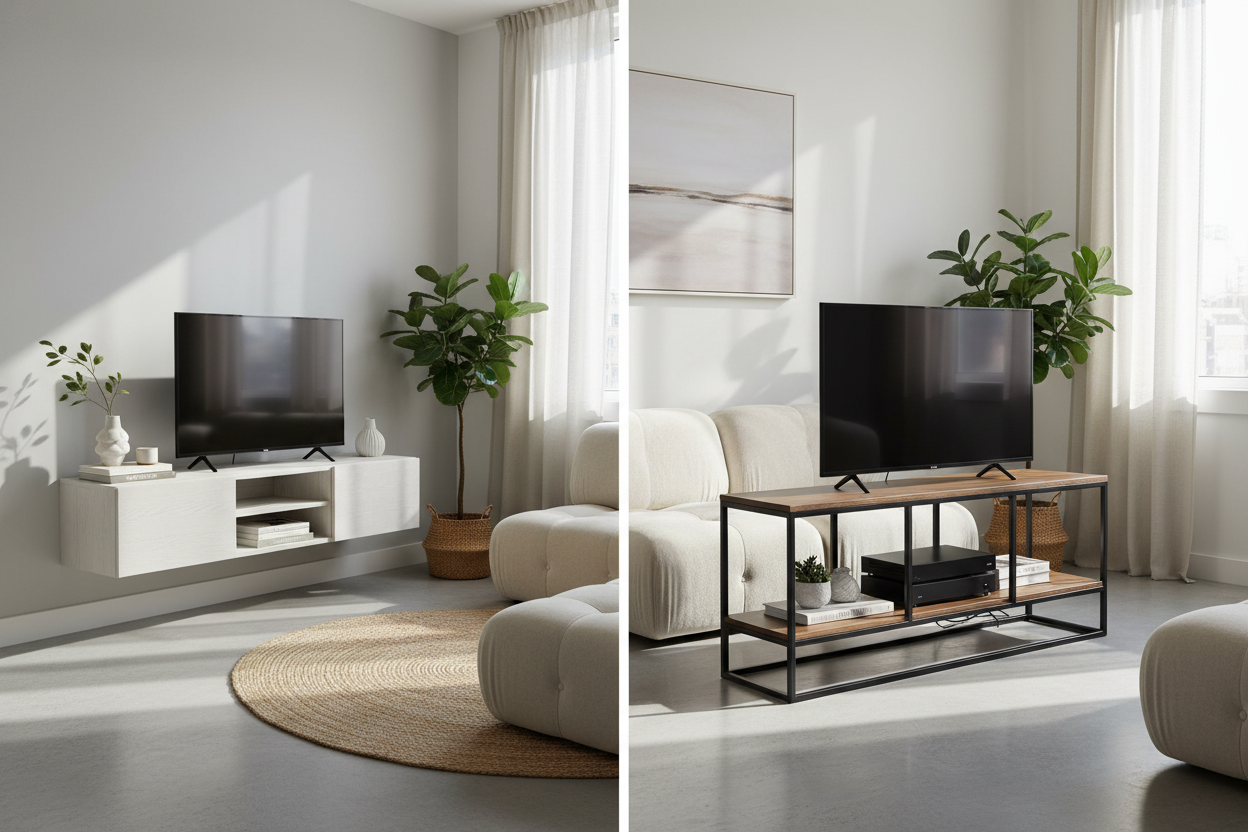
On the flip side, if your room feels a bit tight, a 90 inch tv stand white can perform a disappearing act. By matching a white console to light-colored walls, you get all that storage without the furniture feeling like a giant block in the middle of the room. I’m a huge fan of modern adjustable width options that allow you to breathe a little life into a minimalist setup without it looking like a hospital room.
Faking the Custom Built-In Look for Way Less Cash
I recently quoted a custom built-in for a client: $6,500 for basic white oak. Instead, we bought a 90 inch long entertainment center for about $1,200 and spent another $200 on high-end hardware and styling. The secret to making a standalone unit look custom is in the 'negative space.' Don't just center the TV and call it a day. I’m obsessed with styling long media consoles by offsetting the TV to one side and using the extra 2 feet of space for a stack of oversized art books and a sculptural lamp. It breaks up the horizontal line and makes the furniture look like a curated piece of the architecture.
The Wall-Mount Cheat Code for Low Ceilings
If your ceilings are low (the standard 8-foot struggle), a massive 90-inch floor unit can sometimes feel a bit squat. My favorite hack is to go for a 'floating' look. By using a wall-mounted 90-inch stand with LED, you keep the floor visible. Seeing the floor continue all the way to the baseboard tricks your brain into thinking the room is larger than it is. I installed one of these in a condo last year, and the built-in LEDs actually provided enough ambient light that we didn't even need a floor lamp in the corner.
FAQ
Is a 90-inch TV stand too big for a 65-inch TV?
Not at all. In fact, it's a pro move. It gives you plenty of room on the ends for speakers, lamps, or decor, which prevents the TV from being the only thing people see when they walk in.
Will a 90-inch console fit in a mid-sized SUV for pickup?
Almost never. Most 90-inch stands come in two or three boxes, or one box that is nearly 8 feet long. Unless you have a truck with a long bed, just pay for the delivery. Trust me on this one.
How do I stop a long TV stand from sagging in the middle?
Check the leg count. A modern 90 inch tv stand should have at least 5 or 6 legs—one in each corner and at least one (preferably two) in the center. If it only has four legs, it will eventually bow under the weight of a large TV.


Leave a comment
This site is protected by hCaptcha and the hCaptcha Privacy Policy and Terms of Service apply.