










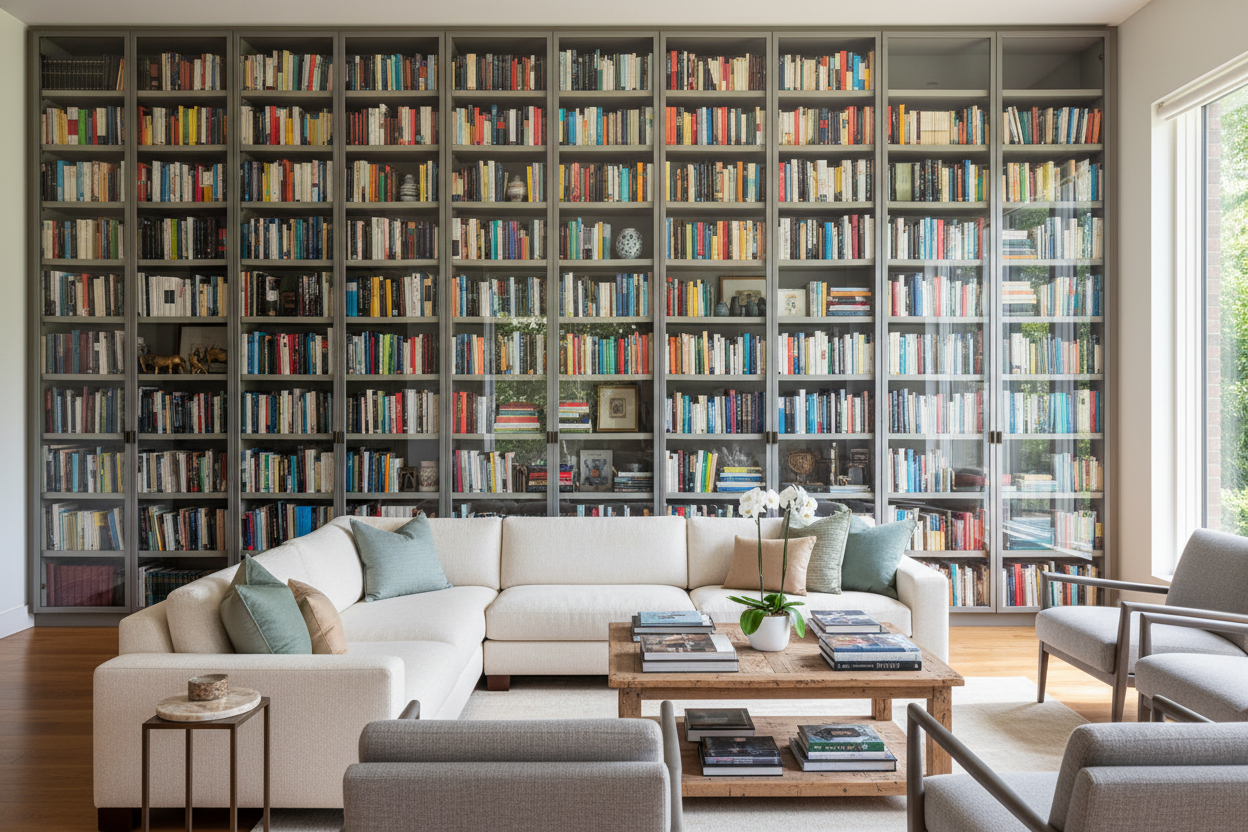
I spent years obsessing over the 'perfect' open shelving setup. I color-coded my spines, arranged my succulents, and felt very proud of my curated vibe—until I actually pulled a book off the shelf. My fingers came away gray with soot, and the top edges of my pages were yellowing faster than a cheap paperback left on a dashboard. It turns out, I wasn't displaying my library; I was slowly suffocating it.
That realization led me to my first enclosed bookcase with glass doors. I used to think glass doors were for grandmothers or stuffy law offices, but after seeing my favorite hardcovers fade under the afternoon sun, I did a total 180. Now, I won't buy a shelf without a physical barrier between my books and the world.
- Glass doors block 90% of household dust and pet dander.
- Enclosed units protect delicate paper from UV light and humidity shifts.
- They hide the 'visual noise' of mismatched spines while keeping titles visible.
- Lower drawers are non-negotiable for hiding ugly tax folders and clutter.
The Dirty Secret of 'Aesthetic' Open Shelving
Open shelving is a lie sold to us by people who have full-time housekeepers and zero pets. If you live in an old building or a busy city, your books are basically air filters. Within a month, that fine layer of gray fuzz settles into the paper fibers, and it is a nightmare to clean without damaging the dust jackets. I spent more time with a microfiber cloth than I did actually reading.
Beyond the dust, there is the issue of mental clutter. A wall of exposed books can feel heavy and chaotic in a small space. I found that switching to a unit with glass fronts helped me manage the visual chaos of an overstuffed living room. The glass adds a reflective surface that bounces light around, making the furniture feel less like a massive wooden block and more like a window into your interests.
How an Enclosed Bookcase With Glass Doors Saved My Collection
The functional shift was immediate. A closed bookcase with glass doors acts like a micro-climate for your library. It keeps the humidity relatively stable, which prevents that annoying page-curling you see in humid summers. Most importantly, it stops the 'foxing' or yellow spotting that ruins the value of collectible editions. You can see everything you own, but it's safely behind a 1/4-inch pane of tempered glass.
If you’re worried about the display looking a bit flat, consider the lighting. I’m a huge fan of adding integrated lighting to your shelves. Putting a small LED puck light or a warm strip light at the top of an enclosed cabinet makes your books look like a gallery installation. It turns a piece of storage furniture into a focal point that actually makes the room feel cozy at night.
Choosing a Cabinet That Doesn't Look Like a Museum Case
The biggest hurdle for most people is the fear that a glass-front cabinet will look sterile or 'old.' The key is the silhouette. If you go with a boxy, industrial metal frame, it might feel like a medical supply cabinet. Instead, look for architectural details that soften the look. A white arched 5 tier bookcase with glass doors is my current favorite because the curves break up the harsh right angles of a standard room.
Color choice also dictates the vibe. If you want something that feels grounded and a little more sophisticated, a moody black cabinet with glass doors creates a stunning contrast against light-colored walls. It gives off a 'dark academia' energy that makes even a basic IKEA collection look like it belongs in a Victorian study. Just make sure you choose a unit with solid hardware—flimsy plastic handles will ruin the effect instantly.
Styling the Inside (Because It's Not Just for Books)
Don't just jam books in there until there's no air left. Use the 'rule of thirds': one-third books, one-third decorative objects (think brass bookends or ceramic vases), and one-third empty space. This keeps the cabinet from looking like a storage locker. I personally prefer a bookcase with glass doors and drawers. I put my 'display' books and art pieces behind the glass at eye level, then shove my messy notebooks, charging cables, and board games into the bottom drawers where they can't hurt anyone's feelings.
How do I keep the glass from looking smudged?
Avoid 'push-to-open' mechanisms. They require you to touch the glass every single time you want a book. Choose a model with actual metal pulls or knobs. You'll only have to clean the glass once every few weeks instead of every day.
Is tempered glass worth the extra cost?
Yes, 100%. Standard glass is a safety hazard if you have kids or pets. Tempered glass is much stronger and, if it does break, it crumbles into small chunks rather than dangerous shards. Don't skimp here.
Will my books get moldy if there's no airflow?
Unless you live in a swamp and your house has zero climate control, no. Most glass doors aren't airtight; there's enough natural air exchange to keep things fresh. If you're really worried, just open the doors for ten minutes once a week when you're vacuuming.



Leave a comment
This site is protected by hCaptcha and the hCaptcha Privacy Policy and Terms of Service apply.