










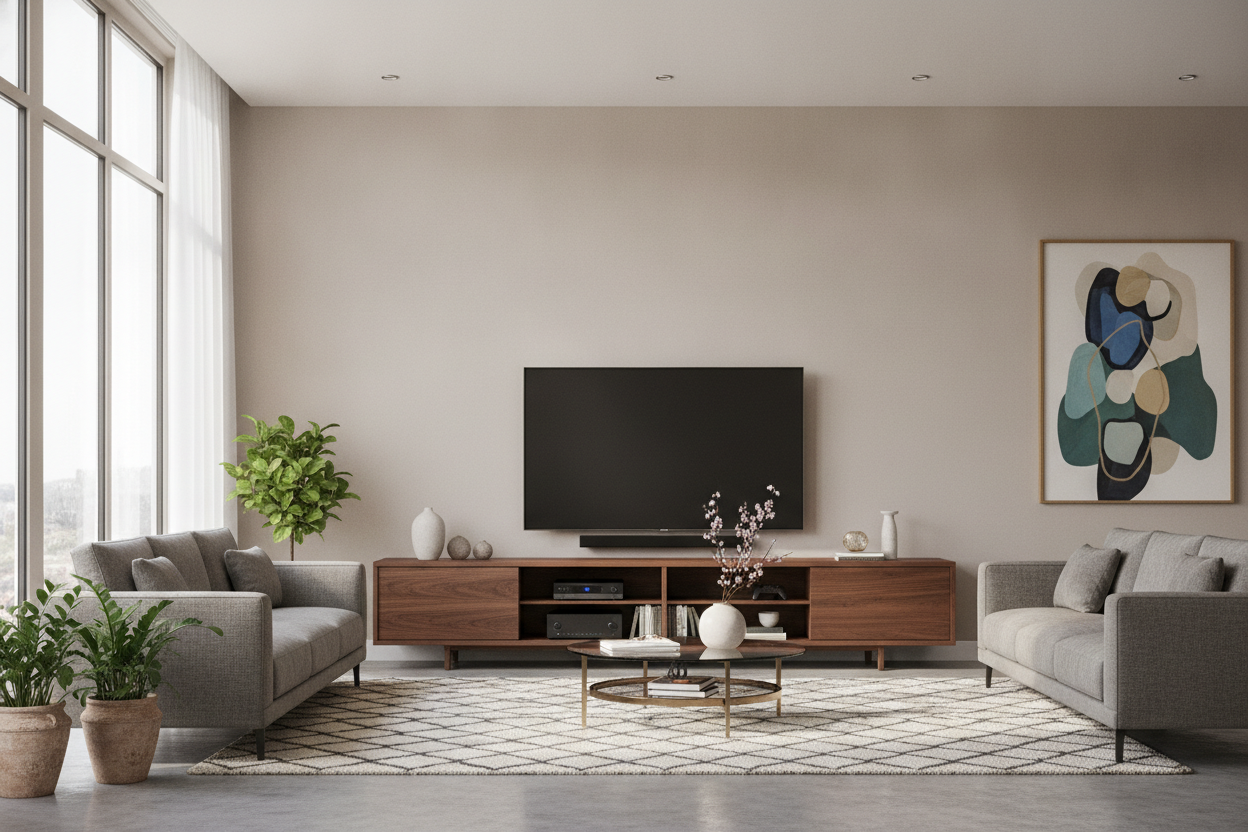
I spent years flipping mid-century dressers I found on the curb, so I thought I knew furniture. Then I bought a massive OLED and put it on a $150 'espresso' laminate stand I found online. I thought I was being savvy. One night, while watching a quiet scene in a movie, I heard a sound like a dry twig snapping. It was my console literally bowing under the pressure of my tv stand for 65 inch tv wood setup. The center of the top shelf had dipped nearly half an inch in just three months.
Quick Takeaways
- Particleboard has a 'memory'—once it sags under a 60lb TV, it never goes back.
- Real wood handles the heat from gaming consoles and receivers without peeling.
- A 65-inch screen needs visual 'weight' underneath it to avoid looking top-heavy.
- Solid wood allows for better cable management because you can actually drill into it without the whole piece crumbling.
The Day I Heard My Particleboard Console Crack
It wasn't a loud bang. It was a slow, agonizing groan of compressed sawdust giving up the ghost. I realized that my $1,200 television was being supported by what was essentially thick construction paper and glue. When I cleared the shelves to inspect the damage, the 'wood' finish stayed stuck to the bottom of my PlayStation. The heat from the console had literally fused the cheap veneer to the plastic.
That was the moment I realized that saving $200 on a stand was a move that would eventually cost me a four-figure TV. If you are putting a heavy screen on a flimsy base, you aren't decorating; you're gambling. I ended up moving the TV to the floor for two days while I hunted for a real tv stand for 65 inch tv wood replacement. My living room looked like a dorm room, but at least my screen was safe.
The 65-Inch Weight Problem Nobody Talks About
Modern TVs are lighter than the old tube monsters, sure, but a 65-inch screen still puts immense, concentrated pressure on a very specific footprint. If your TV has a center pedestal, you're putting 50 to 70 pounds of pressure on the exact midpoint of the stand—the weakest structural point. If it has legs at the ends, you're risking 'racking,' where the stand starts to lean like a house of cards.
This is why I finally decided to trust solid wood TV stands. Real timber has long fibers that distribute weight across the entire span of the piece. MDF (medium-density fiberboard) is just a pile of dust held together by resin. It has no structural integrity over long spans, which is why those cheap 70-inch consoles always look like they're frowning after a year of use.
3 Reasons I Will Never Go Back to MDF
I've assembled enough flat-pack furniture to last three lifetimes. I'm done with cam-locks that strip and back panels that are basically painted cardboard. Here is why solid construction wins every time.
No More Middle-Shelf Sag
Solid wood—whether it's mango, oak, or acacia—has a natural rigidity that composite materials can't touch. When I moved to a solid wood piece, I noticed the doors actually stayed aligned. On my old MDF unit, the sag in the middle meant the cabinet doors would rub against the frame every time I tried to open them. It felt cheap because it was cheap.
Veneer Peeling is Inevitable
Your TV produces heat. Your soundbar produces heat. Your Xbox produces a lot of heat. In a cheap console, that heat dries out the adhesive holding the paper-thin veneer to the core. Eventually, it bubbles or peels at the edges. With tv stands 65 inch wood models, the material is the same all the way through. There is nothing to peel off because the 'finish' is just stain and sealer on top of actual grain.
TV Stands 65 Inch Wood Models Anchor the Room
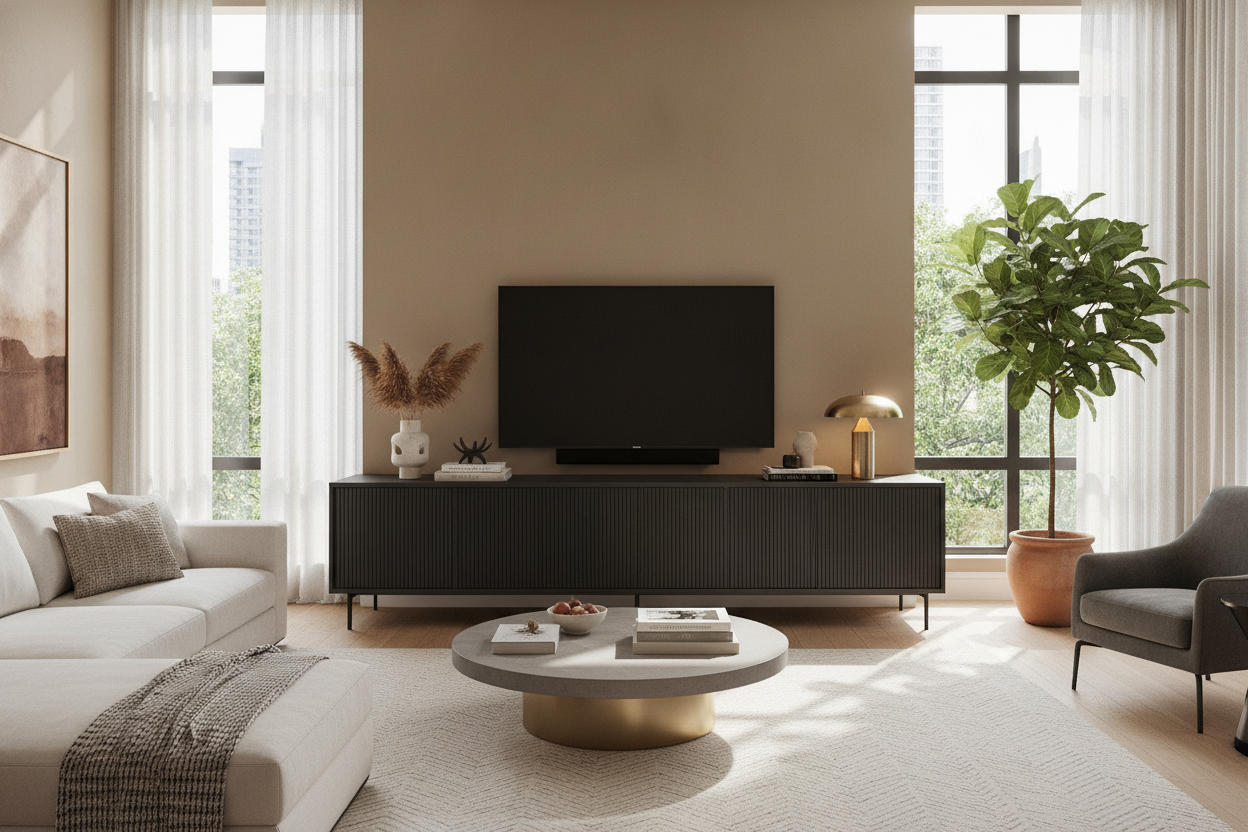
A 65-inch TV is a massive black rectangle that can easily overwhelm a room. If you put it on a thin, spindly stand, the whole setup looks precarious. A substantial piece, like a modern 3-piece entertainment center, provides the visual 'anchor' needed to balance that screen. It makes the TV look like a deliberate design choice rather than just a screen you slapped against a wall.
How to Tell if It's Actually Real Wood Before Buying
Marketing is sneaky. You'll see phrases like 'wood-like finish' or 'manufactured wood' which is just code for 'not wood.' Look for 'kiln-dried hardwood' or 'solid wood solids and veneers.' If the product weight is under 80 pounds for a large console, stay away—it’s too light to be high-quality timber. When you browse quality TV stands, check the weight capacity. A good wood console should easily support 150+ pounds, even if your TV only weighs a third of that.
FAQ
Is mango wood good for TV stands?
Yes, it's incredibly dense and sustainable. It handles the weight of large electronics easily and has a beautiful, variegated grain that hides dust better than dark-stained oak.
Can a 65-inch TV fit on a 60-inch stand?
Technically, if the legs fit, yes—but it looks terrible. Your stand should be at least 4-6 inches wider than the TV on both sides to keep the room in proportion.
How do I stop my TV stand from wobbling?
Wobble usually happens because the joints are loose or the floor is uneven. Solid wood stands usually have adjustable levelers on the feet; cheap MDF stands often don't, leaving you to shove folded cardboard under the corners.

Leave a comment
This site is protected by hCaptcha and the hCaptcha Privacy Policy and Terms of Service apply.