










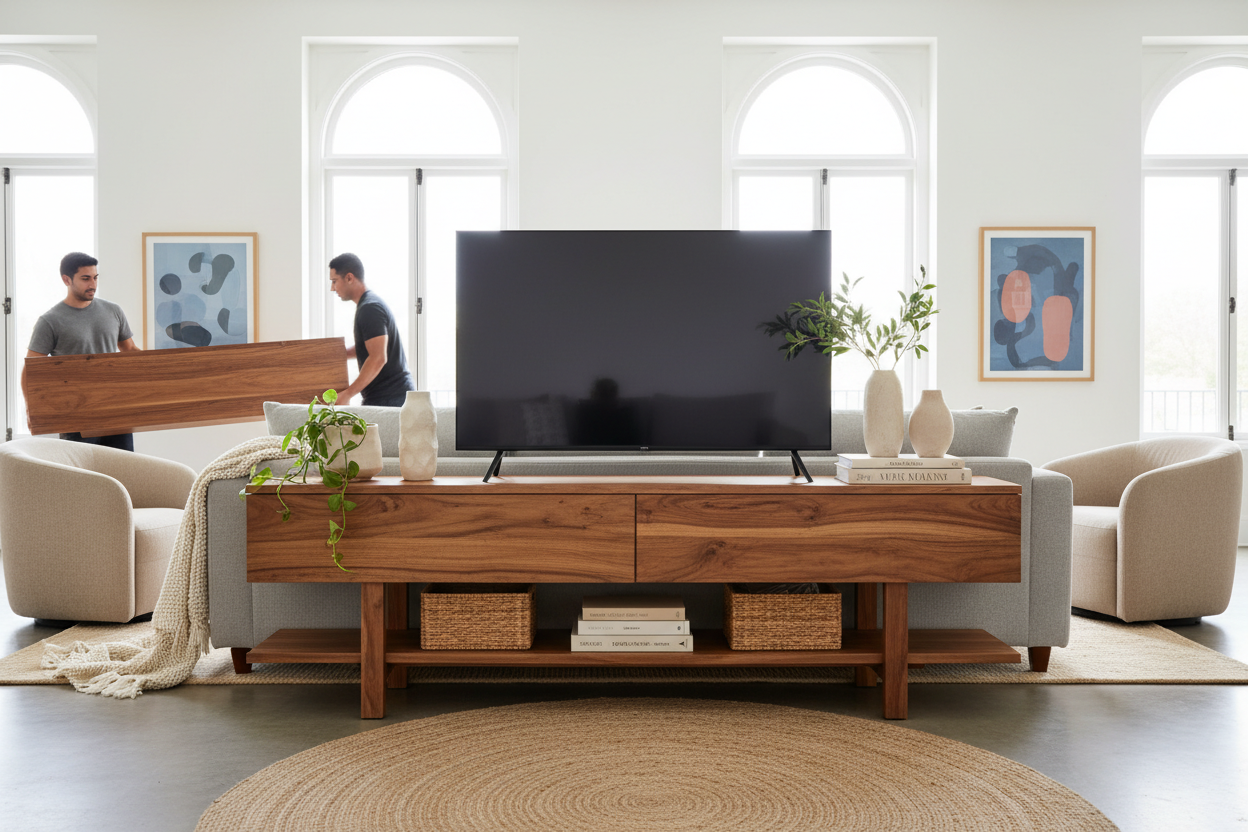
I spent five years hunting for the perfect walnut console. I finally found one, and for six months, it was fine. Then I realized it felt like a hotel lobby—clean, expensive, and totally soul-crushing. My living room was a sea of flat, honey-colored wood that had zero personality. I needed something with a pulse, which is how I ended up obsessed with mango wood tv stands.
Quick Takeaways
- Mango wood offers significantly more visual texture than walnut or oak.
- It is a sustainable byproduct of the fruit industry, making it an eco-friendly hardwood choice.
- Modern silhouettes with black metal hardware prevent the wood from looking too 'rustic.'
- Solid mango wood is incredibly dense and won't sag under the weight of 70-inch televisions.
Confession: I Was Extremely Tired of Walnut
It sounds like heresy in the interior design world, but I reached my limit with mid-century modern walnut. Don't get me wrong; the grain is beautiful, but it's predictable. Every apartment I visited looked the same. I remember ditching a sagging MDF console a few years back and thinking walnut was the final boss of furniture. I was wrong. I was craving something with knots, swirls, and color shifts that didn't look like they were printed in a factory.
That is when I started looking at a mango wood tv table. Unlike the uniform grain of walnut, a tv stand mango wood has these incredible 'spalting' patterns—natural discolorations caused by fungi that create black streaks and wild figure in the wood. It feels organic. It feels like it actually came from a tree rather than a lab. When I finally swapped my sleek console for a mango wood tv unit, the room instantly felt warmer. It wasn't just a place to put the TV; it became a piece of art that anchored the entire wall.
I’ve found that a mango wood stand works surprisingly well with other wood tones, too. You don't have to match everything perfectly because mango wood already contains so many different shades. It’s the ultimate 'bridge' piece for people who have a mix of vintage and new furniture.
Wait, What Actually Is Mango Wood?
If you're wondering why this wood is suddenly in every boutique shop from Brooklyn to London, it’s because it’s a sustainability powerhouse. Mango trees grow incredibly fast, reaching maturity in about 15 years. Once the trees stop producing fruit, the farmers harvest them and plant new ones. Instead of the wood being burned or left to rot, it’s turned into a solid mango wood tv stand.
But here is what furniture stores won't tell you about mango wood: the color variation is wild. You can have one mango wood media stand that is light tan and another from the same batch that has deep amber and charcoal streaks. This is a feature, not a bug. When you buy a mango wood tv cabinet, you are getting a unique fingerprint. It’s a dense hardwood, similar to ash or oak, which means it’s going to last a lot longer than the veneer-covered particle board you’ll find at big-box retailers.
Avoiding the 'Pirate Chest' Look (Modern Mango Shapes)
One of the biggest fears people have with an entertainment unit mango wood is that it will look too 'boho' or like something you’d find in a dusty import store. You know the look—chunky, over-carved, and slightly orange. To avoid the pirate chest aesthetic, you have to look for modern silhouettes. I personally love the next opus mango aesthetic, which focuses on clean lines and minimal ornamentation.
The key is contrast. Look for modern entertainment centers with black accents. When you pair the heavy, swirling grain of a mango wood media console with thin black metal legs or industrial hardware, it grounds the piece. It stops being 'rustic' and starts being 'architectural.' I’ve also seen some incredible next opus mango furniture that uses fluted doors or slat-work to add even more texture without looking dated.
If you are shopping for a mango tv stand, pay attention to the finish. A 'natural' or 'whitewashed' finish keeps the wood looking contemporary. Avoid anything with a high-gloss red or dark brown stain, as that hides the very thing that makes a mango wood media cabinet special. You want to see those natural imperfections. Even the next opus mango tv unit designs lean into the raw, matte look because it highlights the wood's density and character.
How I Styled My Mango Wood TV Console Without Clashing
Styling a mango wood tv console is a bit different than styling a plain white or black unit. Because the wood is so 'loud,' everything you put on or around it needs to be relatively 'quiet.' If you put a busy, colorful rug directly under a high-texture mango media console, the room is going to feel vibrating and chaotic. I learned this the hard way when I tried to pair my mango tv unit next to a vintage Persian rug—it was a visual nightmare.
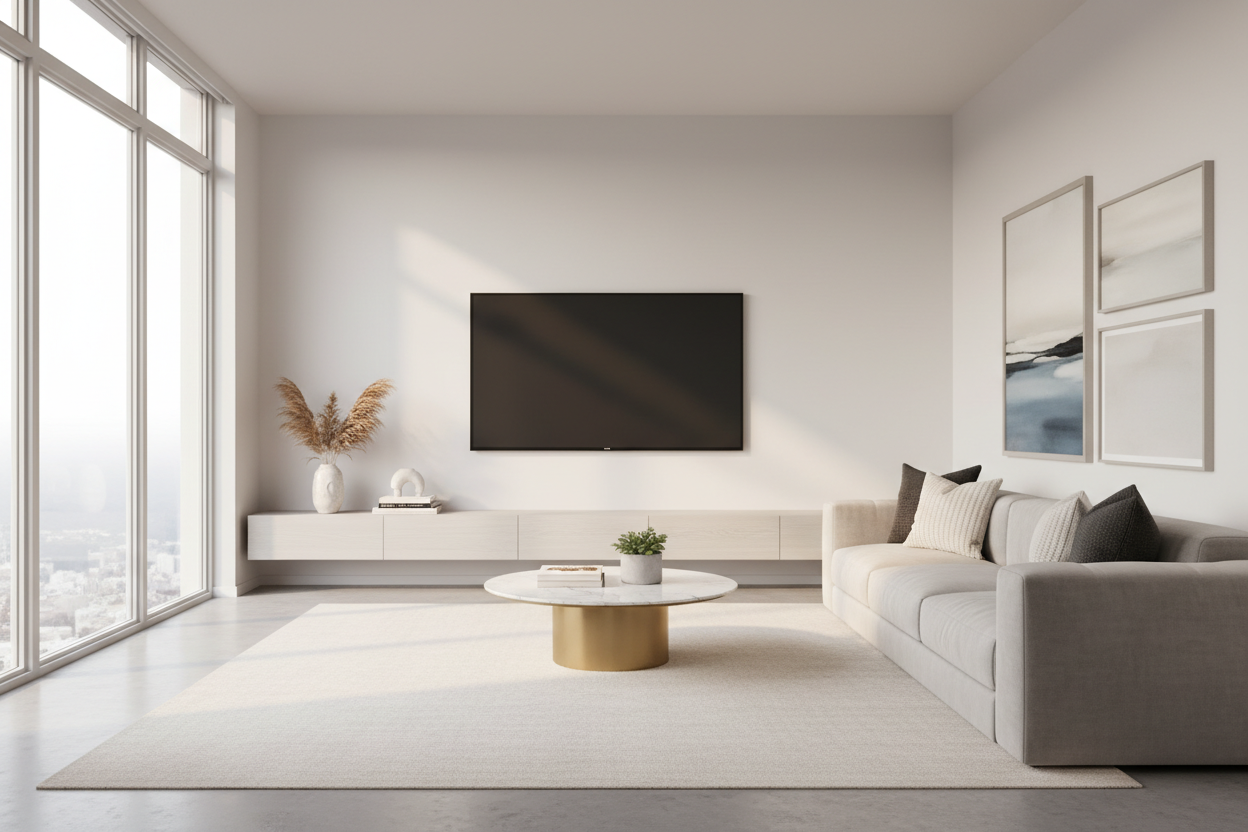
Instead, use negative space. I keep the top of my mango wood tv unit mostly clear. A single ceramic vase in a matte finish and maybe one or two coffee table books are all you need. When you browse TV stands, look for models with closed cabinetry. Being able to hide the mess of cables, gaming consoles, and routers is essential. If the wood grain is the star of the show, you don't want a tangle of black plastic wires stealing the spotlight.
Lighting also matters. Mango wood has a lot of depth, and a warm LED strip behind the mango wood entertainment center can make the grain pop at night. For smaller apartments, a mango wood corner tv stand is a lifesaver. It brings that organic warmth into a tight space without overwhelming it. Just remember to keep the surrounding walls a neutral color—think off-white, sage green, or a very muted navy. This lets the media console mango wood breathe.
The Durability Test: Will It Hold a Giant Screen?
Let’s talk practicalities. Modern TVs are getting bigger and, surprisingly, heavier if you’re using a high-end OLED or a large 75-inch panel. I’ve seen cheap MDF units literally 'smile' (sag in the middle) after just a year of holding a heavy screen. A mango wood tv stand 70-inch model won't have that problem. Because it is a solid hardwood, the internal structure is much more rigid than engineered wood.
I currently have a mango wood tv stand 65 inch setup in my den, and it feels like a tank. There is zero bowing, and the legs are rock solid. Even if you're loading up the shelves with a heavy receiver or a collection of vinyl, a solid mango wood tv stand can handle the weight. It’s the kind of furniture you buy once and keep for a decade, rather than something you toss during your next move. If you want a piece that feels substantial and looks like it cost twice what you actually paid, mango wood is the way to go.
FAQ
Is mango wood water-resistant?
It is more water-resistant than many other hardwoods, but it isn't waterproof. Always use a coaster for your drinks and wipe up spills immediately to prevent the grain from raising or staining.
Does mango wood darken over time?
Like most natural woods, it will patina slightly with exposure to sunlight, but it doesn't darken as dramatically as cherry or teak. A mango wood stand generally holds its original tone well.
How do I clean a mango wood tv stand?
Skip the harsh chemicals. A slightly damp microfiber cloth is all you need. Once or twice a year, you can use a high-quality furniture wax to keep the wood from drying out, especially if you live in a dry climate.

Leave a comment
This site is protected by hCaptcha and the hCaptcha Privacy Policy and Terms of Service apply.