










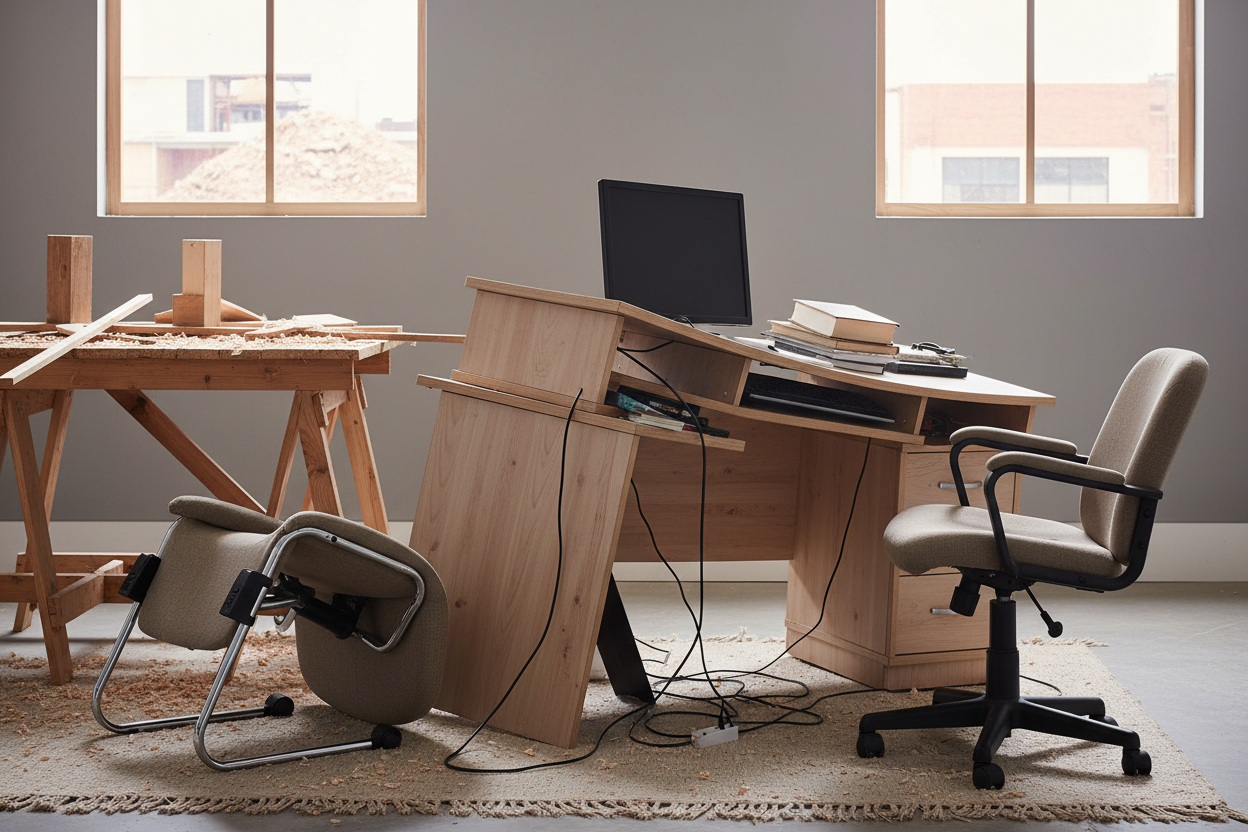
There is nothing quite as frustrating as a desk that shudders every time you type or a filing cabinet drawer that refuses to glide smoothly. We often prioritize the visual silhouette of a piece, forgetting that the structural integrity—the actual furniture work—is what dictates longevity and daily comfort. As a designer, I see clients repeatedly compromise on construction quality for a trending aesthetic, only to replace the item within two years.
Key Features of Quality Construction
- Joinery Type: Look for dovetail or mortise-and-tenon joints rather than staples or glue alone.
- Material Core: Distinguish between solid hardwoods (durable) and low-density particle board (prone to sagging).
- Hardware Quality: Ensure drawer glides are full-extension ball-bearing types, not plastic runners.
- Finish Durability: Check for catalyzed lacquer or high-performance polyurethane that resists water rings and heat.
Assessing Material Integrity
When selecting pieces for your workspace, the foundation of the design lies in the materials. While veneers can offer a sophisticated look at a lower price point, the substrate matters. High-quality furniture work utilizes a plywood or MDF core that is stable and resists warping. However, for a desk that will see eight hours of daily use, solid wood edging is non-negotiable. It protects the most vulnerable parts of the piece from chair knocks and friction.
The Role of Joinery
The method used to connect furniture components tells you everything about its lifespan. In my showroom walkthroughs, I always pull a drawer out completely. If I see staples, I advise the client to walk away. Superior furniture work relies on interlocking wood joints. These allow the wood to expand and contract with humidity changes without cracking the finish or loosening the structure.
Ergonomics and Visual Balance
Seeing furniture at work in a real-life setting is different from seeing it in a catalog. Functionality must marry form. A desk might look stunning with its sharp, minimalist angles, but if the apron (the vertical piece under the top) is too deep, it will restrict leg movement and force poor posture.
Scale and Proportion
In interior design, we talk about visual weight. A heavy, mahogany executive desk requires a room with substantial volume to avoid feeling oppressive. Conversely, in a compact study, open-frame metal and glass structures maintain an airy atmosphere. The goal is to ensure the furniture anchors the room without dominating the negative space.
Lessons from My Own Projects
I want to share a specific realization I had while sourcing for a high-end library project last year. I specified a stunning, custom-built walnut desk that looked flawless on paper. However, when it arrived, I noticed the finish was a standard oil rub rather than a conversion varnish. While beautiful, it was a nightmare for a client who drank iced coffee while working.
Within three weeks, we had condensation rings that wouldn't buff out. It was a harsh reminder that "furniture work" isn't just about the wood; it's about the chemistry of the topcoat. Now, I personally run a fingernail test on hidden areas of finishes to check for hardness, and I always ask manufacturers for the specific sheer strength of their drawer bottoms. If a drawer bottom feels flimsy when I tap it, I know it won't hold a designer's heavy sample books, regardless of how nice the exterior looks.
Conclusion
Investing in superior craftsmanship transforms a workspace from a temporary station into a permanent asset. By scrutinizing the joinery, materials, and finishes, you ensure your environment supports your productivity rather than hindering it. Look past the surface; the true value lies in how the piece is built.
Frequently Asked Questions
How can I identify real wood versus veneer?
Check the grain pattern. If the grain "wraps" perfectly over the edge or repeats an identical pattern frequently, it is likely a veneer. Real wood has end grain at the edges and natural, non-repeating variations.
Is custom furniture work worth the extra cost?
For fitted pieces like built-in shelving or oddly shaped rooms, yes. Custom work maximizes space efficiency and allows for specific ergonomic tailoring that mass-produced items cannot offer.
What is the best way to maintain wood furniture finishes?
Avoid silicone-based polishes as they build up over time. Use a slightly damp microfiber cloth for dust and a high-quality paste wax once a year to protect the seal without clouding the grain.


Leave a comment
This site is protected by hCaptcha and the hCaptcha Privacy Policy and Terms of Service apply.