










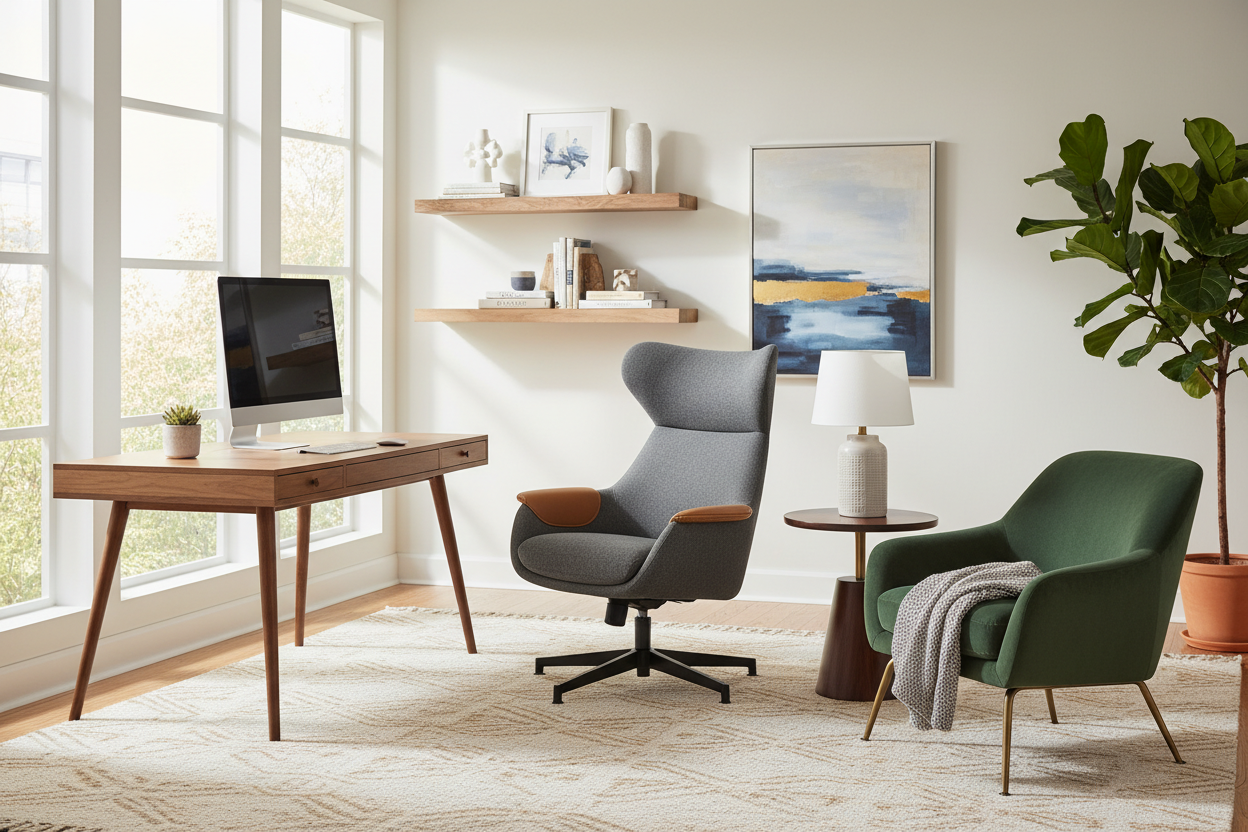
The era of the sterile, purely utilitarian workspace is behind us. As we continue to blend professional functionality with residential comfort, the demand for a dedicated armchair for home office layouts has surged. The dilemma, however, lies in the selection process. Many homeowners fall into the trap of purchasing a piece that looks stunning on a mood board but fails to deliver the support required for reviewing documents or taking a casual call. It is not just about filling a corner; it is about curating a secondary zone that invites focus without the rigidity of your primary desk setup.
Key Features to Look For
- Seat Height & Depth: Aim for a seat height of 17-19 inches to allow easy ingress and egress. Depth should support the thigh without cutting off circulation behind the knees.
- Upholstery Durability: Look for fabrics with a Martindale rub count above 20,000 for longevity in daily-use home office furniture chairs.
- Structural Integrity: Kiln-dried hardwood frames offer superior resistance to warping compared to plywood or MDF options.
- Fill Composition: High-resiliency foam wrapped in batting provides the necessary firmness for reading, unlike down-filled options which require constant fluffing.
Defining the Function: Task vs. Lounge
Before selecting a silhouette, we must define the chair's primary role. Unlike standard office desks chairs, which are engineered for eight hours of keyboard work, a workspace armchair serves as a retreat. It is where you move to read a brief, take a strategy call, or simply decompress.
For study room chairs intended for reading, a high-back wing chair offers necessary neck support and creates a psychological "enclosure" for focus. Conversely, if the chair is meant for client meetings or casual conversation, a mid-century modern club chair with a lower profile encourages engagement and keeps sightlines open.
Material Selection and Tactile Balance
In a home environment, we have the luxury of bypassing commercial-grade vinyls for materials that offer tactile richness. However, practicality remains paramount for home study chairs.
Leather vs. Fabric
Full-grain leather is a classic choice for a masculine, authoritative aesthetic. It ages beautifully, developing a patina that tells a story. However, it can be temperature-sensitive. For a softer, more acoustic-friendly option, consider a tightly woven wool blend or performance velvet. These materials absorb sound—crucial for reducing echo in video calls—and add a layer of visual warmth that rigid study chair for home designs often lack.
Spatial Planning and Flow
The placement of your armchair dictates the flow of the room. A common error is placing the chair in a way that blocks the path of travel or feels disconnected from the rest of the room. To create a cohesive vignette, anchor the chair with a dedicated floor lamp and a small side table. This transforms a floating piece of furniture into a functional "micro-environment." Ensure there is at least 30 inches of clearance around the chair to maintain an airy, uncrowded feel.
Lessons from My Own Projects
I learned the hard way about the importance of "sit-test" ergonomics during a project for a client in Chicago. We sourced a stunning, deep-seated vintage bouclé armchair for her executive library. Visually, it was a masterpiece—sculptural and inviting.
However, three weeks after installation, she called me. The issue wasn't the look; it was the pitch of the backrest. It was angled so far back that every time she sat down to read a contract, she felt like she was sliding into a nap. It required significant core strength just to stand up. We ended up having to have a custom lumbar pillow fabricated just to correct the angle. Now, when I specify an armchair for a workspace, I always check the "rake" (the angle of the backrest). If it exceeds 105 degrees, it belongs in the living room, not the office.
Conclusion
Integrating the right armchair into your workspace is an investment in your daily rhythm. It provides a necessary break from the desk without leaving the zone of productivity. By focusing on structural quality, appropriate scale, and durable textiles, you can create a space that is as high-performing as it is stylish.
Frequently Asked Questions
What is the ideal size for a home office armchair?
Ideally, look for a width between 28 to 32 inches. Anything wider tends to dominate small rooms, while anything narrower can feel restrictive. Ensure the footprint allows for traffic flow around the desk area.
Can I use a dining chair as a secondary office chair?
While possible, it is rarely recommended for comfort. Dining chairs generally lack the arm support and seat cushioning required for the longer durations of sitting associated with reading or strategizing in a home office.
How do I mix wood tones between my desk and armchair?
You do not need to match wood tones perfectly. Instead, look for a common undertone (warm vs. cool). If your desk is a dark walnut, a chair with lighter oak legs can work if the upholstery ties the color palette together.

Leave a comment
This site is protected by hCaptcha and the hCaptcha Privacy Policy and Terms of Service apply.