











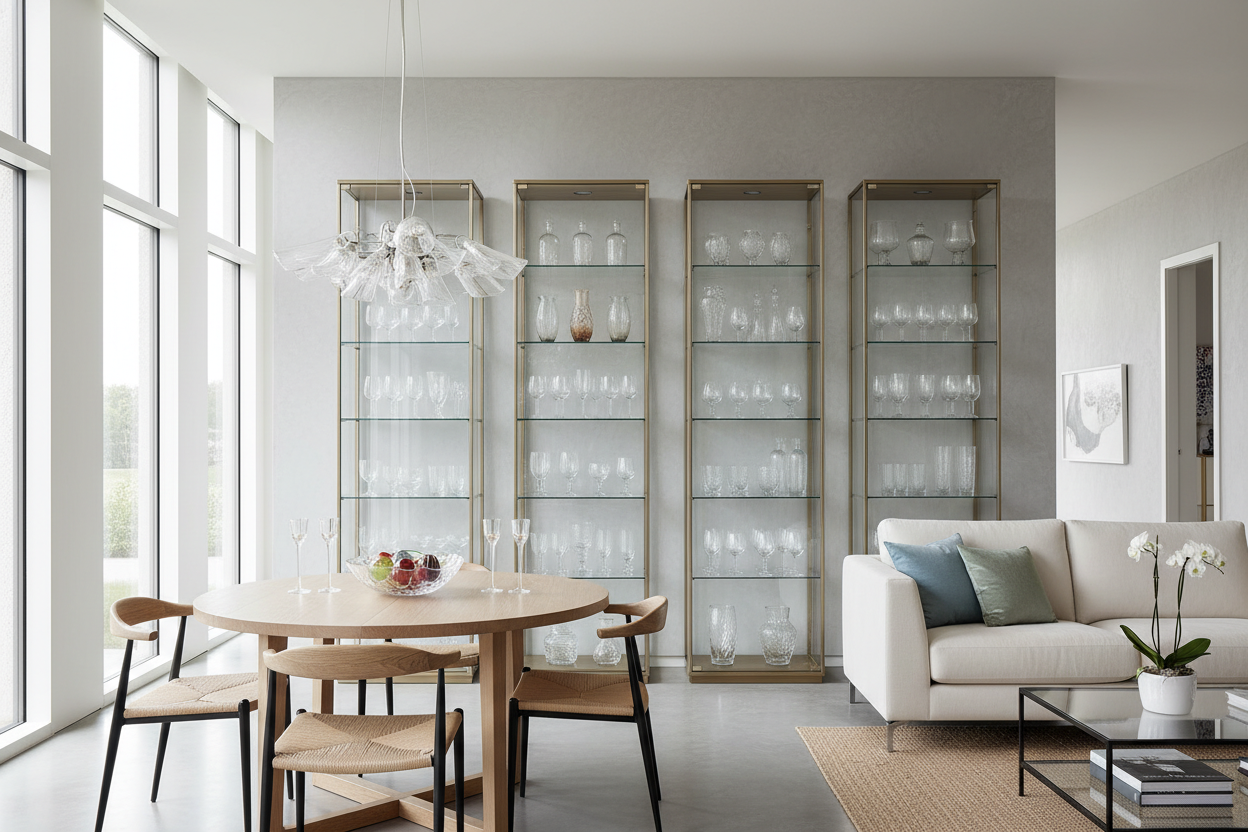
I spent three years staring at a solid oak buffet that weighed about 400 pounds and looked like a tombstone for my fine china. It was a hand-me-down, so I felt guilty getting rid of it, but it made my 12x12 dining room feel like a walk-in closet. Every time I sat down for dinner, it felt like the furniture was slowly closing in on me, absorbing every bit of natural light from the single window.
The day I finally listed that beast on Facebook Marketplace was the day my dining room started breathing again. I realized I didn't need more 'storage' in the sense of a wooden box; I needed a showcase of glass. Swapping out opaque bulk for transparency is the oldest trick in the designer handbook, but we often ignore it because we're afraid of people seeing our messy stacks of mismatched Tupperware.
- Glass reflects light rather than absorbing it, making small rooms feel significantly larger.
- Transparent doors force you to curate your collection, reducing hidden clutter.
- Metal or wood frames provide the structure needed so the piece doesn't look 'invisible.'
- Integrated lighting is the difference between a furniture piece and a gallery installation.
The 'Wood Block' Effect (Why My Dining Room Felt Like a Cave)
Most of us grew up with the idea that a dining room needs a 'set.' You get the table, the chairs, and the matching massive hutch. But in a standard modern home, these heavy, dark-stained wood blocks act like visual black holes. They dominate the floor space and stop the eye dead. If you have a room that doesn't get 10 hours of direct sunlight, a solid buffet makes the space feel heavy and dated.
My old hutch was 18 inches deep and 72 inches wide. That’s a lot of real estate for something that just sits there looking grumpy. Because the doors were solid wood, I used it to shove everything from holiday linens to old batteries inside. It wasn't functional storage; it was a graveyard for things I didn't want to deal with. The room felt cramped not because of the square footage, but because of the lack of visual 'air' around the walls.
The Pivot: Building a Showcase of Glass Instead
The moment I saw a glass-fronted cabinet in a sun-drenched studio, I knew I had to pivot. Glass allows your eyes to travel all the way to the back wall of the furniture, which effectively pushes the boundaries of the room out by nearly two feet. It’s a psychological hack that works every single time. You get the same amount of shelf space, but the footprint feels cut in half.
When I started choosing the perfect glass door cabinet, I had to be honest about my habits. I couldn't just throw junk in there anymore. But that was a benefit, not a drawback. By choosing a piece with glass on three sides, the light from my window finally reached the dark corner where the old oak monster used to live. The room immediately felt twice as bright without me even touching a paint can.
The Black Frame Trick for Grounding the Look
One mistake I see people make is going 'too' glass. If a piece is just glass and thin silver wires, it can look a bit like a retail display for cell phones. It lacks soul. You need a frame that anchors the piece to the floor. I'm a huge fan of using a black cabinet with glass doors to provide that necessary contrast. The black frame acts like a picture frame for your dishes, giving the eye a place to rest while the glass does the heavy lifting of keeping things airy.
The dark lines provide a structural 'weight' that feels intentional and modern. It bridges the gap between the traditional furniture we’re used to and the minimalist vibe we actually want. My new cabinet has a matte black steel frame that feels incredibly sturdy—no wobbling when the cat jumps on it—but because 80% of the surface area is glass, it doesn't feel like a heavy intruder in the room.
How I Styled It Without Making a Cluttered Mess
Here is the honest truth: glass cabinets require discipline. If you stack 15 plastic stadium cups in there, it’s going to look terrible. I learned this the hard way after my first week. I had to edit. I kept the white ceramic plates, the clear wine glasses, and a few wooden serving bowls. The trick is to leave 'negative space.' Don't jam things edge-to-edge.
If you're working with a smaller space, transforming your room with a 3 shelf glass cabinet is often better than a floor-to-ceiling unit. It gives you a surface on top for a lamp or a plant, which breaks up the vertical lines. I like to group items in odd numbers—three carafes here, five bowls there. It makes the cabinet look like a curated vignette rather than a storage unit. My one mistake? Trying to display my 'good' silver that was tarnished. Glass shows everything, so keep a microfiber cloth nearby for fingerprints.
Don't Forget the Glow: Why You Need Built-In Lighting
A glass cabinet without light is just a dark box at night. During the day, the sun does the work, but at 7 PM, your beautiful glassware disappears into the shadows. I initially tried those cheap battery-powered puck lights, but they fell off within a week and the light was a weird, cold blue. It looked like a hospital hallway.
I eventually upgraded to a sideboard with glass doors and LED lights built right into the frame. The difference is night and day—literally. The warm glow makes the glassware sparkle and provides a soft ambient light for the whole room, eliminating the need for harsh overhead fixtures during dinner. It makes my $5 IKEA wine glasses look like expensive crystal. If you're going to invest in glass, don't skimp on the illumination.
Is glass furniture hard to keep clean?
I won't lie to you—if you have toddlers with sticky hands, you'll be wiping the bottom panels frequently. However, for a dining room, a quick spray of glass cleaner once a week is usually all it takes to keep it looking sharp. The trade-off for the extra light is worth the two minutes of cleaning.
Will my mismatched dishes look bad?
They might. Glass display pieces work best when you have a somewhat cohesive color palette. You don't need expensive sets, but sticking to all-white, all-clear, or a specific accent color keeps it from looking like a thrift store shelf.
Is tempered glass worth the extra cost?
Yes, absolutely. Never buy a large display cabinet that doesn't specify tempered glass. It’s significantly stronger and, in the rare event it does break, it crumbles into small pebbles rather than dangerous shards. Especially if you're storing heavy stoneware, don't cut corners on the glass quality.
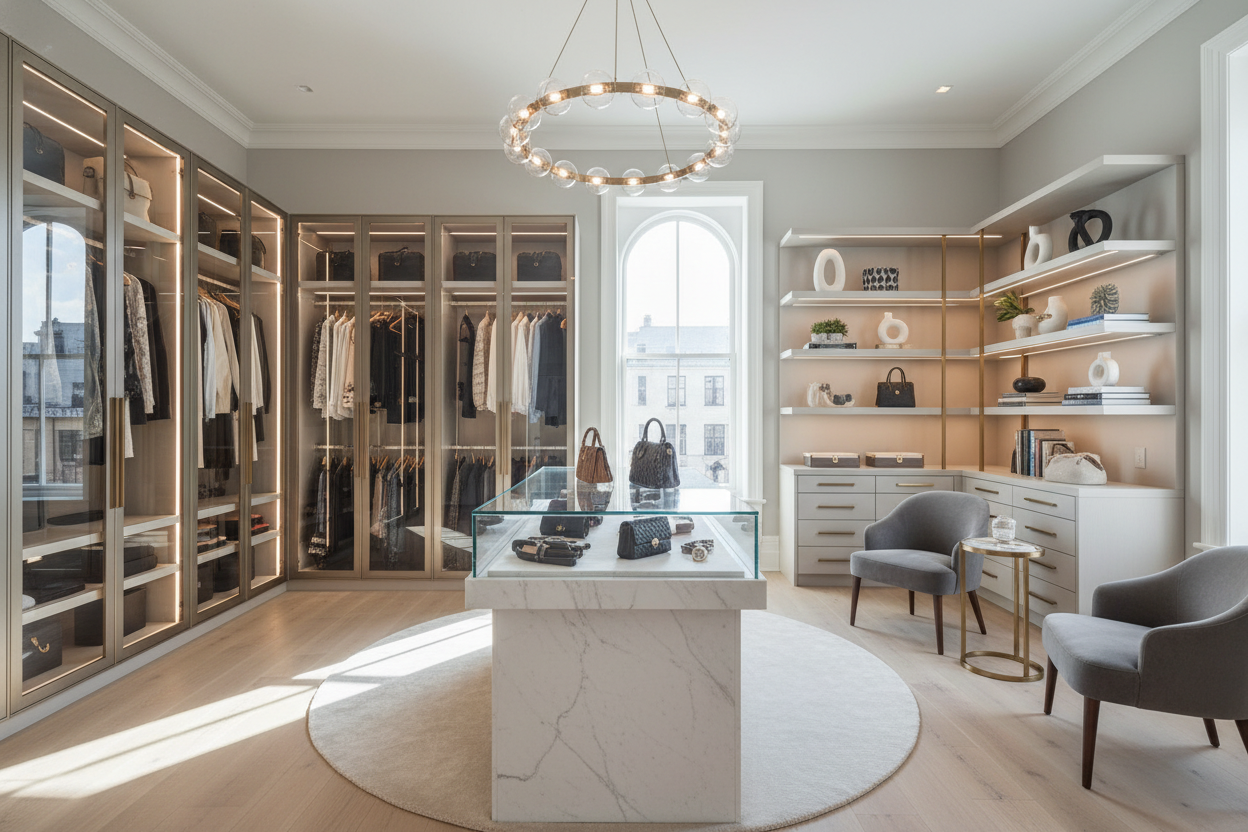

Leave a comment
This site is protected by hCaptcha and the hCaptcha Privacy Policy and Terms of Service apply.