










I once spent three months staring at a 14-foot living room wall that looked like a crime scene of 'small furniture syndrome.' I had a dinky 50-inch TV stand, two mismatched leaning bookshelves, and a basket of tangled wires that looked like a technological tumbleweed. It was messy, it was distracting, and it made my perfectly average suburban living room feel cramped. That is when I realized I was wrong about extra large entertainment wall units. I thought they were reserved for celebrities with 20-foot ceilings, but I was wrong.
Quick Takeaways
- One large unit creates less 'visual noise' than multiple small pieces of furniture.
- Vertical storage utilizes unused air space, making small footprints work harder.
- A full wall tv unit can actually make a ceiling feel higher if styled correctly.
- Integrated cable management is the only way to truly kill the 'wire spaghetti' look.
The 'Celebrity Home' Myth We Need to Bust
There is this persistent fear that if you do not live in a glass-walled mansion in the Hollywood Hills, a complete entertainment center will make your house look like a warehouse. We have been conditioned to buy 'apartment-sized' furniture that actually does us a disservice. When you put a small console on a large wall, your eye focuses on the gaps. You see the scuffs on the baseboards, the dusty outlets, and the awkward empty space. It makes the room feel unfinished.
In reality, what designers actually think is that scale is your best friend. A massive unit acts as an anchor. It defines the room. Instead of your furniture looking like it is floating aimlessly, an entire wall entertainment center creates a focal point that feels intentional. I have put 100-inch units in rooms with standard 8-foot ceilings, and the result was not a 'cramped' feeling—it was a feeling of relief. The room finally felt 'done.'
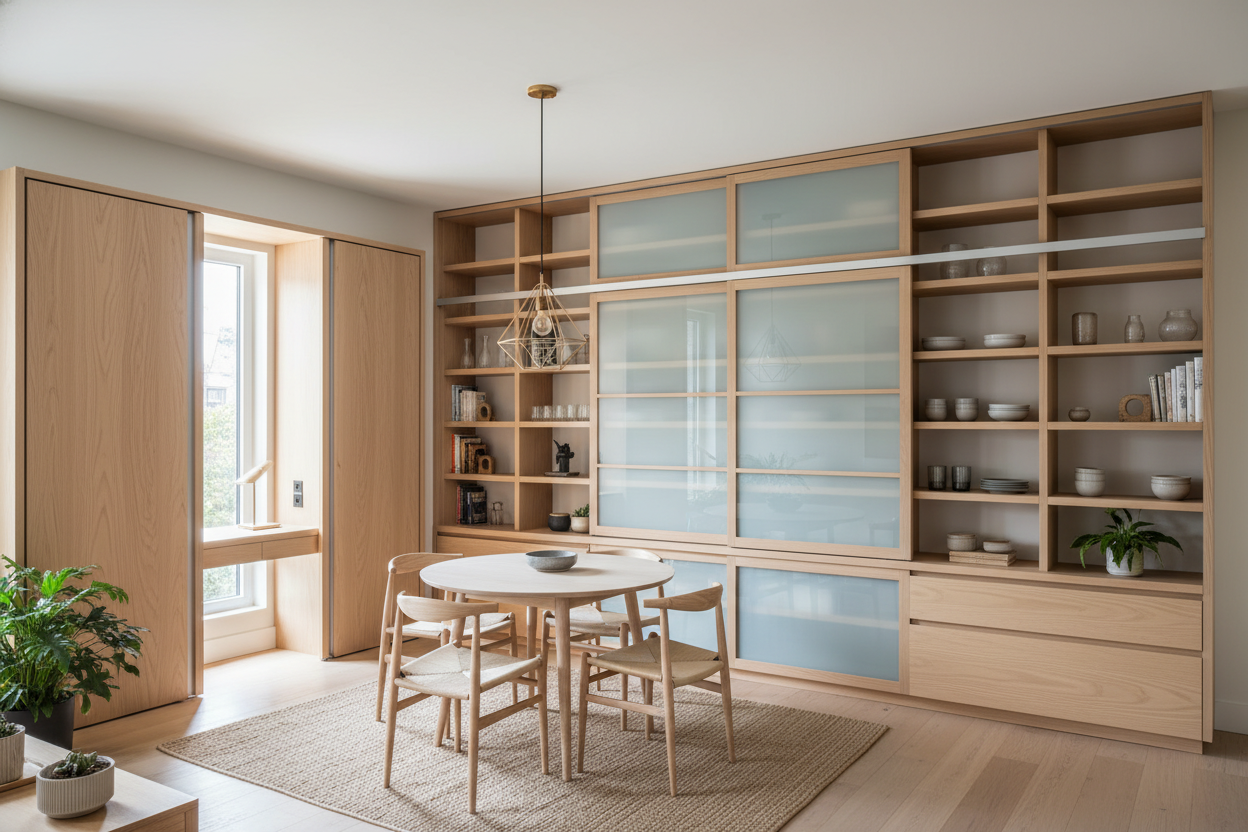
If you are worried about the 'looming' effect, avoid the dark, heavy cherry woods of the 90s. Modern high end entertainment wall units often use lighter oaks, matte whites, or even slim metal frames that provide the structure without the visual weight of a Victorian wardrobe. You are not building a fortress; you are creating a curated backdrop for your life.
Why One Giant Piece is Better Than Five Small Ones
Visual clutter is a silent stressor. Every time your eye hits a 'break' in the furniture—the gap between the TV stand and the bookshelf, or the space between the shelf and the wall—your brain has to process that transition. A media wall unit with storage eliminates those breaks. It provides a continuous line that allows your eyes to glide across the room rather than jumping over hurdles.
I learned this the hard way when I tried to 'save money' by buying three separate shelving units to flank my TV. They were all slightly different heights, the wood grains did not match, and there was a 2-inch gap between them that became a graveyard for cat toys and dust bunnies. It looked cheap because it was. Investing in a singular entertainment center with storage cabinets solved the problem instantly. It hid the router, the gaming consoles, and my husband's questionable collection of vintage remote controls behind closed doors.
When everything has a dedicated home inside a storage entertainment wall units, you spend less time tidying and more time actually enjoying your home. You are trading five pieces of 'okay' furniture for one piece of 'stellar' furniture. It is the furniture equivalent of a tailored suit versus a bunch of separates that do not quite fit. The footprint is often nearly the same, but the utility is tripled.
Will an Entire Wall Entertainment Center Swallow My Room?
This is the most common question I get. The answer is: only if you choose the wrong color and layout. If you have a 12x12 room, a floor-to-ceiling unit in charcoal black will feel like a black hole. But a unit with a mix of closed cabinetry at the bottom and open shelving at the top creates a 'breathing' effect. You want the bottom to be heavy to ground the piece, while the top remains airy.
Pro tip: use LED strip lighting in the shelving 'cubbies.' It adds depth and prevents the unit from looking like a flat wall of wood. If the unit has a back panel, make sure it matches your wall color or is a light neutral. This keeps the 'depth' of the room intact. You want to feel like the unit is part of the architecture, not a giant box pushed against the wall.
Faking the Look of High End Entertainment Wall Units
We all want that $15,000 custom built-in look, but most of us do not have the budget (or the desire) to deal with contractors and sawdust for three weeks. A well-chosen tv entertainment wall unit with storage can get you 95% of the way there. The secret is in the styling. If you fill every square inch of the shelves with plastic bins, it will look like a storage locker. If you treat it like a curated gallery, it looks like a million bucks.
I suggest mixing your tech with book media storage and personal decor. Stack books both vertically and horizontally. Leave some empty space—what designers call 'white space'—so the eye can rest. When you mix a high-end textured vase next to your soundbar, the soundbar suddenly looks like a design choice rather than just a piece of plastic. You are aiming for a 'library' vibe, not a 'Best Buy showroom' vibe.
Another trick is to choose a unit that spans at least 80% of the wall width. If you go too small, it looks like a standalone piece of furniture. If you go wide, it mimics the look of a custom architectural feature. It is about tricking the eye into seeing the unit as part of the house itself.
How to Measure for a Full Wall Entertainment Unit (Without Crying)
Measuring is where most people fail, and it usually happens because they forget that houses are rarely perfectly square. First, measure your wall at the top, middle, and bottom. Walls often lean or bow, and you do not want to realize your 120-inch unit is 1/4 inch too wide for the bottom half of the wall. Always leave at least a 2-inch buffer on the sides if you are not doing a true wall-to-wall 'built-in' look.
Next, account for your baseboards. Most furniture measurements are for the 'top' of the unit, but your baseboards might stick out an inch from the wall. If the unit does not have a baseboard cutout, it will sit an inch away from the wall, leaving a gap that looks sloppy and collects dust. I once had to saw a notch into a brand-new $2,000 unit because I forgot this. It was heartbreaking.
Finally, find your outlets. There is nothing worse than assembling a full wall entertainment unit only to realize you have covered the only power source for your TV. Many units have pre-drilled holes, but they never line up perfectly with where your builder put the plugs. Mark your outlet heights on the wall and compare them to the unit's shelf heights before you hit 'buy.'
Personal Experience: The Ceiling Fan Incident
A few years ago, I bought a gorgeous, 90-inch tall media wall unit with storage. I measured the width three times. I checked the depth. I was so proud of myself. Then, I spent six hours assembling it, only to realize that when I stood it up, the top crown molding was exactly 1/2 inch too tall to clear my ceiling fan blades. I had to choose between the unit and the fan. The fan lost (I live in a cold climate anyway), but the lesson remained: check your vertical clearances, including light fixtures and vents.
FAQ
Can I put a large wall unit in a rental?
Yes, as long as it is freestanding. Just make sure you anchor it to the wall for safety. You will have a few small holes to patch when you move, but it is much easier to fix than a full custom built-in.
How much larger should the unit be than the TV?
Ideally, your TV should have at least 3 to 5 inches of 'breathing room' on all sides within its nook. If the TV is squeezed in too tight, it looks cramped and can actually overheat.
Do these units make a room darker?
They can if they are dark wood and cover a large surface area. To avoid this, choose a unit with integrated lighting or a light finish, and keep your wall colors bright.

Dejar un comentario
Este sitio está protegido por hCaptcha y se aplican la Política de privacidad de hCaptcha y los Términos del servicio.