










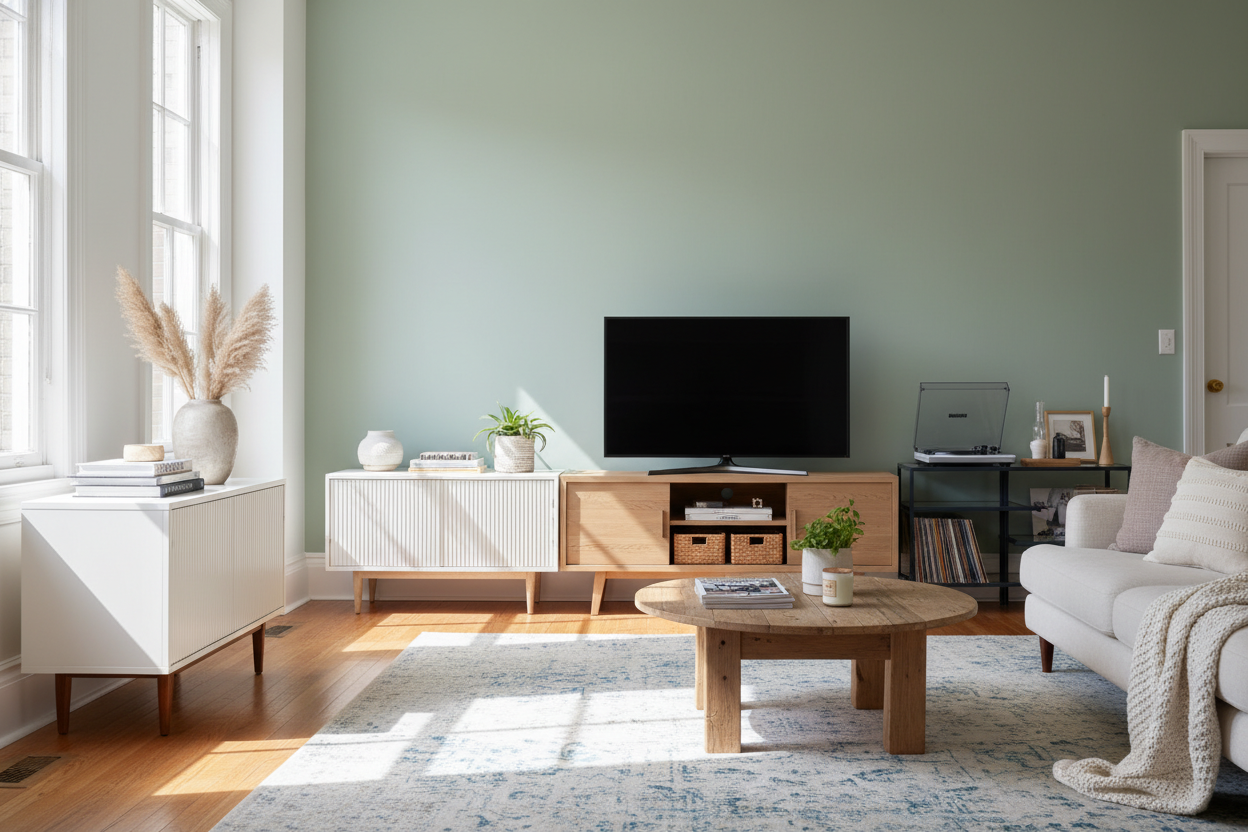
I spent three weeks staring at a blank wall in my living room, convinced that custom built-ins were the only way to make the space feel finished. Then the quote came back: $5,200 for some MDF and a few days of labor. I almost fell off my chair. That is a down payment on a car, not a place to put my Xbox.
The secret the design world doesn't want you to know is that clever tv cupboard designs can mimic that high-end, architectural look for a fraction of the cost. You just have to know what details to look for. I have spent years testing consoles and storage units, and I am here to tell you: you do not need a contractor to get a bespoke living room.
- Measure for the gap: Ensure your unit has a baseboard cutout so it sits flush against the wall.
- Visual Weight: Choose a unit that covers at least 60% of the wall width to avoid it looking like an island.
- Texture is Key: Fluted panels or wood grain help a piece feel like furniture, not a plastic box.
- Cable Reality: Built-ins require drilling into studs; cupboards just need a well-placed cord hole.
The $5,000 Quote That Made Me Rethink Everything
I called a local carpenter because I wanted that seamless, floor-to-ceiling look you see in high-end magazines. He walked in, tapped the drywall, and told me that because of my HVAC vents and the weird placement of my outlets, it was going to be a complex job. Complexity, in the world of home renovation, is just code for expensive.
It hit me that if I ever wanted to move my living room layout—or if TVs suddenly got 20 inches wider—I would be stuck with a permanent monument to 2024 design. Freestanding furniture isn't just cheaper; it is an exit strategy. I decided to find a piece that had the weight and presence of a built-in without the permanent commitment to my mortgage.
How to Fake the Custom Look Without the Contractor
The biggest giveaway that a piece of furniture is off the shelf is the gap between the back of the unit and the wall. Most houses have baseboards that push furniture out by an inch or two. Look for units with a plinth base or a recessed back. This allows the top of the cupboard to sit flush against the drywall, which is the number one rule for faking a built-in look.
I eventually chose a cupboard TV design that didn't require me to open up the walls or hire an electrician. By choosing a unit that was nearly the same height as my windowsills, the lines of the room stayed clean and intentional. If you want that floor-to-ceiling vibe, you can even add a matching floating shelf six inches above the unit to bridge the visual gap to the ceiling.
3 TV Cupboard Designs That Actually Look Expensive
If you want to avoid the college dorm aesthetic, you need texture. Fluted wood panels are my current obsession. They catch the light and create shadows that make a piece look like it was hand-carved by a craftsman. A modern TV cabinet table with storage that features clean lines and hidden hardware will always look more expensive than something with bulky, cheap-looking plastic pulls.
Look for integrated handles or push-to-open mechanisms. When you remove the visual clutter of hardware, the furniture starts to look like part of the architecture. Another pro tip: choose a unit with a consistent wood grain across the doors. It shows a level of attention to detail that you usually only find in custom shops where they book-match the veneers.
The Cable Management Reality Check
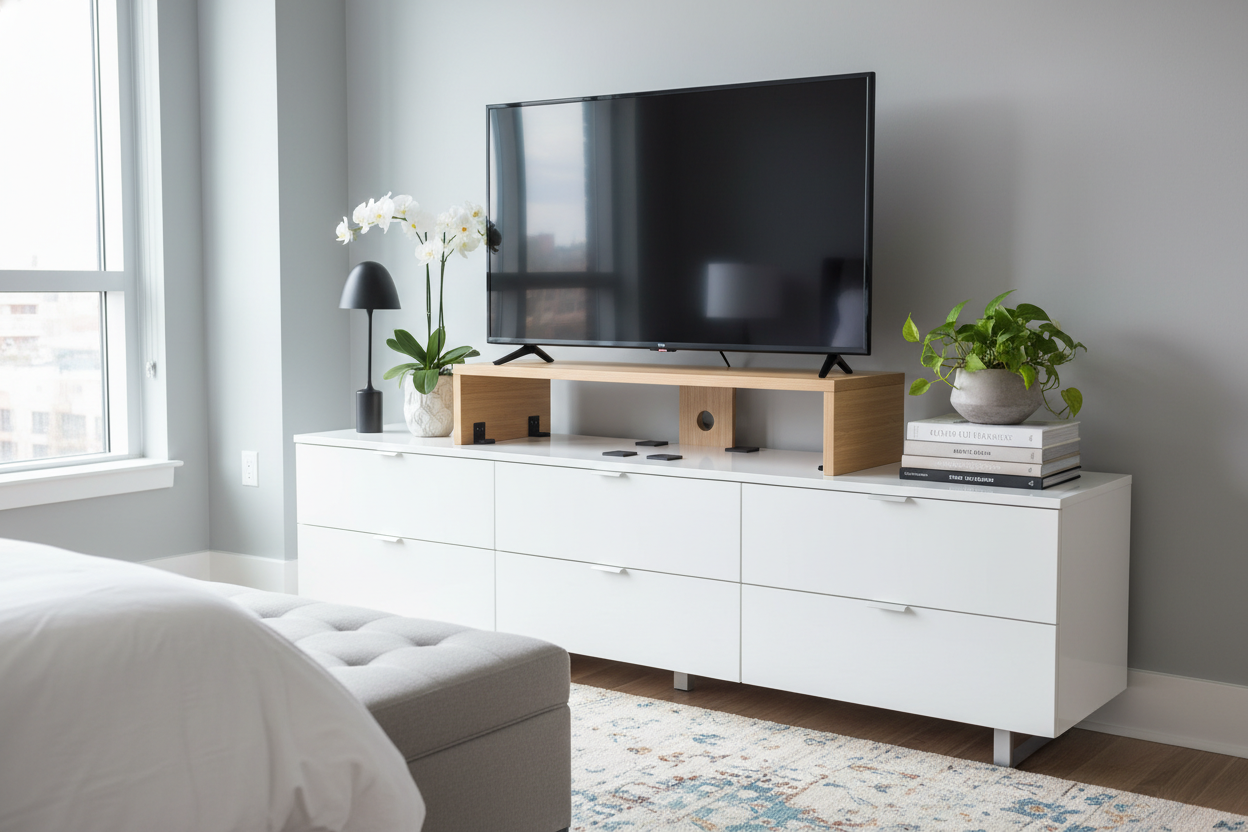
We have all seen those minimalist living rooms where the TV is floating on a white wall with zero wires in sight. In reality, that person probably spent $800 on an electrician to hide those cords behind the drywall. A large TV cabinet with spacious storage solves this problem instantly without the dust and the bills.
I once tried to DIY a behind-the-wall cable kit and ended up hitting a stud I didn't know was there. It was a disaster of drywall dust and frustration. Now, I just look for cupboards with ventilated back panels and pre-drilled cable ports. It keeps the PlayStation from overheating and keeps the spaghetti of wires tucked away where nobody—including my judgmental mother-in-law—can see them.
Why Going Dark Might Be Your Best Move
When the TV is off, it is just a massive, soul-sucking black rectangle. If your furniture is light oak or white, that black screen stands out like a sore thumb. By choosing a black cabinet with glass doors, you create a cohesive dark zone that absorbs the TV's footprint. It is a classic interior design trick for making the tech feel like part of the decor rather than an intrusion.
I went with a charcoal grey unit in my last apartment, and it was the best design decision I made. The glass doors allowed me to display some vintage ceramics, which added a layer of personality that softened the techy feel of the soundbar. It is about balance—making the room feel like a library that happens to have a TV, rather than a home theater that happens to have some books.
Can I make a cheap TV cupboard look like wood?
You can use high-quality wood grain contact paper, but it is a massive pain to get the corners right. Better to buy a unit with a real wood veneer. If you are stuck with laminate, a matte spray paint in a dark color does wonders for hiding that plastic sheen.
How high should my TV cupboard be?
Your eyes should be level with the middle of the screen when you are sitting down. Usually, that means a cupboard height of 20 to 28 inches. Do not mount your TV near the ceiling; your neck will thank you later.
How do I stop the unit from wobbling on carpet?
Most decent units come with adjustable leveling feet. If yours didn't, use some wooden shims tucked under the front. Just make sure you anchor the unit to the wall studs so it doesn't tip forward when you open the heavy doors.

Dejar un comentario
Este sitio está protegido por hCaptcha y se aplican la Política de privacidad de hCaptcha y los Términos del servicio.