










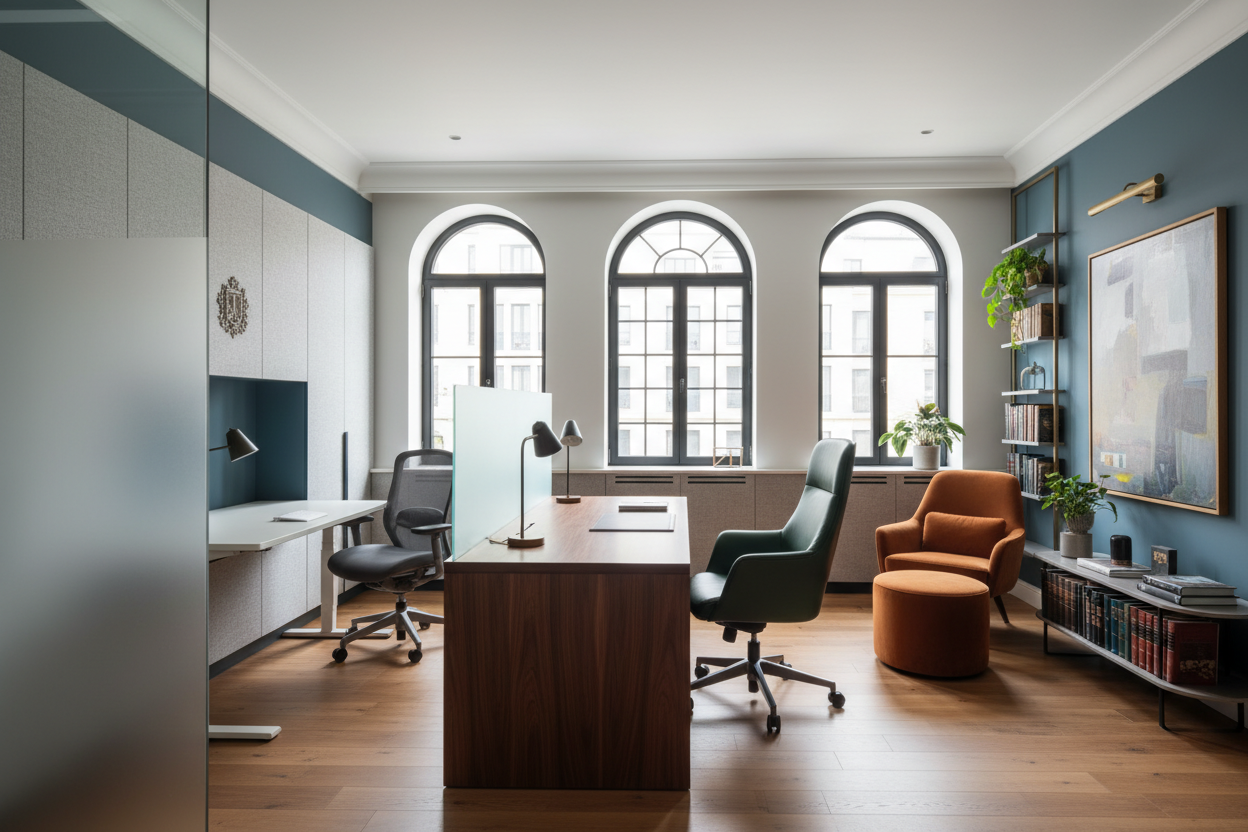
Designing a workspace within your residence is more than just placing a desk in a corner; it is about curating an environment that fosters clarity, focus, and professionalism. Whether you are an expat managing complex paperwork for the uk immigration home office or a consultant seeking a quiet sanctuary, the design of your room dictates your efficiency. A well-appointed study anchors your day, providing a psychological boundary between leisure and labor.
Quick Decision Guide: Key Features to Look For
- Ergonomics First: Prioritize chairs with lumbar support and adjustable seat depth to prevent fatigue during long administrative sessions.
- Surface Area: Ensure your desk depth is at least 75-80cm to accommodate monitors and physical paperwork simultaneously.
- Lighting Temperature: Opt for bulbs between 3000K and 4000K; this reduces eye strain while maintaining a warm, residential feel.
- Acoustics: Incorporate soft furnishings (rugs, curtains) to dampen echo, crucial for video calls.
- Material Durability: Choose hardwoods like oak or walnut for longevity over veneer, which can chip easily.
Establishing the Layout and Flow
The placement of your furniture dictates the energy of the room. In British interior design, we often look for the "command position." ideally, your desk should face the door but not be directly in line with it. This allows you to see who enters without feeling exposed.
Avoid placing your screen directly opposite a south-facing window, as the glare can be debilitating. Instead, position the desk perpendicular to the window. This setup invites natural light to wash across your workspace, illuminating documents—such as those important forms for the united kingdom immigration home office—without blinding you.
Choosing Materials: The British Aesthetic
Solid Wood vs. Veneer
For a workspace that exudes permanence and authority, solid wood is the superior choice. Oak offers a traditional, robust grain that hides minor scratches well, while walnut provides a darker, more sophisticated silhouette suitable for high-end interiors. While veneer is cost-effective, it lacks the tactile warmth and the ability to be refinished over time.
Textiles and Upholstery
Your office chair does not need to look like it belongs in a corporate cubicle. Look for performance velvets or top-grain leathers. These materials age beautifully, developing a patina that tells a story. A leather chair, for instance, adds a layer of seriousness and comfort, contrasting the often sterile nature of administrative tasks like dealing with the department of home affairs uk bureaucracy.
Lighting: Layering for Function and Mood
Never rely on a single overhead pendant. A sophisticated lighting scheme involves three layers: ambient, task, and accent. Start with a central fixture for general illumination. Add a dedicated task lamp with an articulating arm for your desk surface—brass finishes are particularly trending right now. Finally, use accent lighting, such as a picture light over a bookshelf or a floor lamp in the corner, to soften the shadows and reduce contrast eye strain.
Lessons from My Own Projects
I recall a project in a narrow Victorian terrace in Islington where space was at an absolute premium. The client wanted a massive, executive-style desk to handle their legal work. We ordered a stunning mahogany piece, but I made a critical oversight: I didn't account for the turning radius of the narrow hallway leading to the study.
We actually had to hire a specialist hoist team to bring the desk in through the first-floor window. It was a stressful afternoon, but it taught me a valuable lesson: always measure the path of delivery, not just the final destination. Once installed, however, the desk was magnificent. One thing I noted after six months, though, was that the high-gloss finish they insisted on was a magnet for fingerprints. If you are someone who is bothered by smudges, always opt for a matte or satin wax finish. It hides the daily wear much better and feels warmer to the touch.
Conclusion
Creating a functional home office is an investment in your peace of mind. By selecting the right materials, mastering your lighting, and planning your layout carefully, you transform a simple room into a powerhouse of productivity. Don't settle for temporary solutions; build a space that respects the work you do.
Frequently Asked Questions
What is the ideal desk height for a home office?
The standard desk height is between 73cm and 75cm. However, if you are taller or shorter than average, consider an adjustable sit-stand desk to ensure your elbows remain at a 90-degree angle while typing.
How do I make a small box room feel like a luxury study?
Use vertical space. Floor-to-ceiling joinery draws the eye up, making the ceiling feel higher. additionally, painting the walls and the shelving the same color (color-drenching) creates a seamless, expansive look.
Is a rug necessary in a home office?
Yes, for both aesthetics and acoustics. A rug anchors the desk visually and absorbs sound, preventing that hollow "echo" often found in spare rooms with hard flooring.

Dejar un comentario
Este sitio está protegido por hCaptcha y se aplican la Política de privacidad de hCaptcha y los Términos del servicio.