










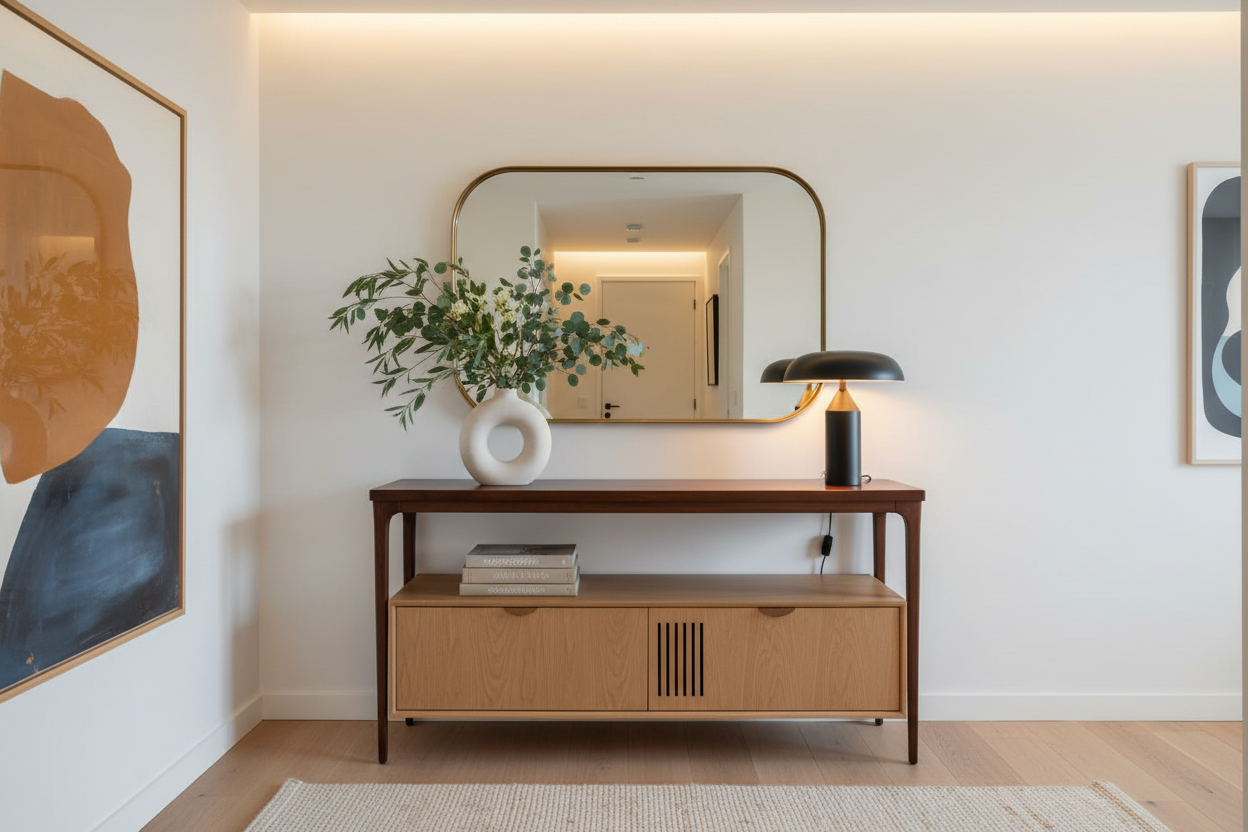
Transforming the dead space at the end of a corridor requires a shift in perspective. You aren't just filling a gap; you are creating a destination for the eye. The most effective approach to styling an end of hall table is to prioritize scale over clutter, ensuring the piece acts as a visual anchor that shortens the perceived length of the tunnel while adding functionality. A well-chosen console or demi-lune table stops the hallway from feeling like an endless runway and provides a specific spot for lighting and art to interact.
Many homeowners ignore this square footage, leaving it blank or dumping a laundry basket there, but this is prime real estate for establishing the tone of your home. Because the space is usually narrow, the furniture you select needs to be deliberate. It isn't about storage as much as it is about creating a vignette that says the house is finished, considered, and welcoming.
My Battle with the Bowling Alley
I learned the hard way that you cannot just shove any piece of furniture into this spot. In my first home, the upstairs landing had a long, narrow corridor leading to the master bedroom. It felt like a bowling alley. In an attempt to fix it, I dragged a heavy, solid oak chest to the end wall. It was a disaster. The piece was too deep, making the approach feel claustrophobic, and the dark wood sucked all the light out of an already dim space.
I eventually swapped that heavy chest for a slender, open-legged metal console. The difference was immediate. Seeing the floorboards continue underneath the table made the space feel airy rather than blocked off. I added a tall, slender lamp and a piece of abstract art with bright yellows, and suddenly, walking down that hall wasn't a chore—it was a pleasant transition. That experience taught me that visual weight is just as important as physical dimensions when selecting a table for end of hallway areas.
Getting the Proportions Right
The biggest mistake people make is choosing furniture that protrudes too far into the walking path. Standard console tables are often 16 to 18 inches deep, which can be aggressive in a standard 36-inch wide hallway. You generally want to hunt for pieces that are 10 to 12 inches deep. This allows you to walk up to the table without feeling like you are going to clip your hip on the corner.
If your hallway is particularly boxy or angular, consider a demi-lune table. These are half-moon shaped tables that sit flush against the wall but have a curved front. The lack of sharp corners improves the flow of traffic and softens the harsh lines of a long corridor. If you prefer a rectangular aesthetic, look for an end of hallway table with open legs or a glass top. These materials allow light to pass through, preventing the "dead end" visual effect that solid cabinetry often creates.
The Art of the Vignette
Once you have the furniture physically in place, the challenge shifts to styling. You are essentially creating a still-life painting that guests view from a distance. Since this spot is viewed head-on, symmetry often works best. A pair of matching buffet lamps on either side of the table frames the space beautifully and provides necessary ambient light.
However, if you prefer a more relaxed, organic look, asymmetrical styling can be dynamic. Try placing a tall lamp on the left side and balancing it with a grouping of lower objects—like a stack of books or a low bowl—on the right. The key is to vary the heights so the eye travels up and down rather than scanning a flat line.
The wall space above the table is just as critical as the surface itself. A large mirror is a classic choice for an end of hall table because it reflects light and can make a short hallway feel longer. However, if your hallway is already very long, a mirror might just reflect the empty tunnel behind you, doubling the "bowling alley" effect. In those cases, a large piece of art or a gallery wall arrangement is superior. It provides a colorful termination point that draws you in.
Lighting the Dark Corners
Hallways are notoriously difficult to light. Overhead can lights often cast harsh shadows, making the space feel clinical. This is where your table becomes a functional asset. By placing a lamp on the table, you introduce a middle layer of light that is warm and inviting. If you do not have an outlet nearby, battery-operated lamps have come a long way in terms of design and battery life, or you can install a picture light above your artwork to wash the wall in a soft glow.
The goal is to create a glow that beckons you down the hall. A warm light at the end of a corridor triggers a psychological sense of safety and comfort. It transforms a transition space into a part of the home where you might actually want to pause.
Functionality Meets Decor
While aesthetics are the primary driver for this specific zone, a table for end of hallway usage can still serve a purpose. If this hallway leads to bedrooms, the table can hold a small tray for jewelry or watches removed before bed. If it leads to a back door, it might serve as a secondary landing strip for keys. However, be wary of clutter. Because this is a focal point, any mess left here is magnified. Keep functional items hidden in small decorative boxes or bowls to maintain the polished look.
You should also consider the flooring beneath the table. A runner rug leading up to the table acts as a visual arrow, directing the eye straight to your focal point. Ensure the runner stops a few inches before the table legs to keep the look clean and intentional, rather than making it look like the furniture is accidentally pinning the rug down.
What If a Table Doesn't Fit?
Sometimes, despite your best efforts, the architecture simply won't allow for a piece of furniture on the floor. You might have a radiator, a return air vent, or a hallway so narrow that even 10 inches is too much. In this scenario, a floating shelf is a brilliant alternative. Mounted at console height (about 30 to 32 inches off the floor), a shelf gives you the surface area for styling without eating up floor space. You get the visual benefit of an end of hallway table without the physical footprint.
Frequently Asked Questions
How tall should a table be at the end of a hallway?
Standard console height is usually between 30 and 36 inches. For a hallway, leaning toward the 30 to 32-inch range is often better as it keeps the sightlines open and prevents the furniture from feeling like a barricade, especially if the ceilings are standard height.
Can I use a chest of drawers instead of a table?
You can, provided you have the depth for it. A chest of drawers offers great storage, but it is visually heavier than a table with legs. To make this work, ensure you have excellent lighting and perhaps a mirror above it to counteract the bulkiness of the piece.
How do I stop the table from looking cluttered?
Employ the "one in, one out" rule for this surface and use containers. If you need to drop keys or coins here, place a specific ceramic bowl or lidded box on the table to catch them. This hides the mess while keeping the items accessible.

Dejar un comentario
Este sitio está protegido por hCaptcha y se aplican la Política de privacidad de hCaptcha y los Términos del servicio.