










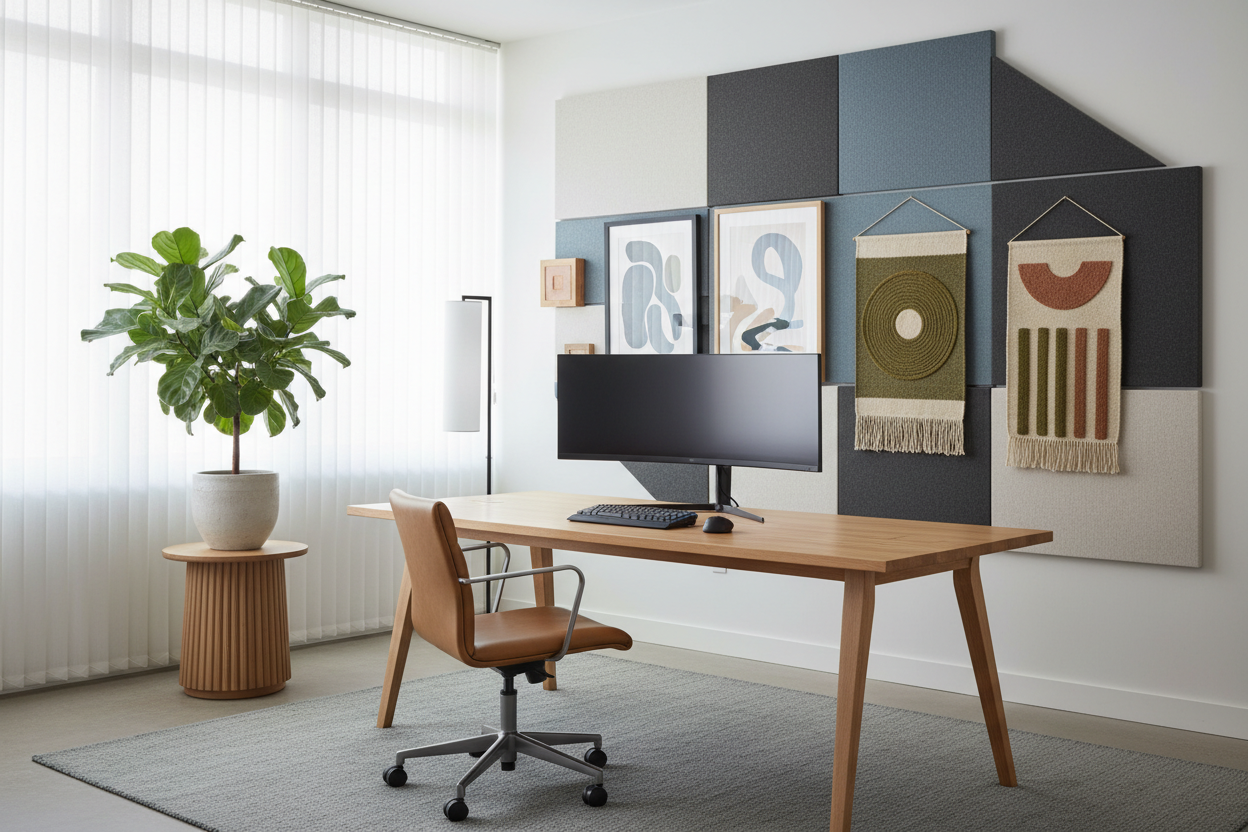
There is nothing quite as draining as staring at a blank, sterile expanse of drywall while trying to innovate. In my years designing corporate HQs and home offices, I have found that the difference between a room that feels temporary and one that commands respect often comes down to vertical styling. We aren't just talking about filling a void; we are talking about **office wall hangings** that dictate the mood, acoustics, and perceived value of your environment.
Key Features to Consider Before Buying
- Acoustic Performance: In echo-prone offices, prioritize textiles, canvas, or felt-backed pieces over glass-framed art to dampen sound.
- Scale and Proportion: The piece should span roughly two-thirds to three-quarters of the width of the furniture sitting below it (e.g., your desk or sofa).
- Visual Weight: Darker, textured materials add weight and ground a space, while lighter, minimalist metals create an airy feel.
- Mounting Integrity: Ensure the hanging hardware is rated for commercial use, especially for heavy sculptural pieces in high-traffic zones.
Selecting Materials: Beyond the Canvas
When clients ask for wall hangings for office spaces, their minds usually go straight to framed prints. However, as a specialist, I urge you to think about texture. A flat image behind glass can feel clinical. To introduce warmth and sophistication, look toward mixed media.
Textiles and Fiber Art
Woven tapestries or macramé structures act as excellent sound absorbers. In a video conference era, these matte surfaces are superior because they don't reflect ring lights or window glare, ensuring your background looks professional rather than distracting.
Metal and Wood Sculptures
For a more executive or industrial aesthetic, metal wall sculptures create dynamic shadows that change throughout the day as natural light shifts. However, be mindful of "visual clutter." If your desk is messy, a complex metal geometric piece on the wall can make the room feel chaotic. In these instances, a solid wood relief offers a calmer, grounded focal point.
Mastering Scale and Placement
The number one error I see in DIY office design is "floating postage stamp" syndrome—hanging a small piece of art on a massive wall. It makes the ceiling feel lower and the furniture look disjointed.
If you have a large executive desk, the wall hanging needs to anchor it. If you cannot find a single piece large enough, consider a triptych (a three-piece set). This allows you to cover significant square footage while maintaining a cohesive narrative. When hanging, the center of the artwork should generally sit at eye level, which is approximately 57 to 60 inches from the floor, not higher.
Color Psychology in the Workspace
Your choice of decor dictates the energy of the room. High-contrast, bold geometric patterns can stimulate creativity and energy—great for a brainstorming corner. Conversely, for the wall directly behind your monitor (where your eyes rest when you look up), opt for biophilic tones—moss greens, deep blues, or natural wood grains. These reduce eye strain and lower cortisol levels, fostering deep work.
Lessons from My Own Projects
I learned a hard lesson about texture maintenance during a project for a tech startup in Austin. We installed a stunning, oversized, rough-hewn wool tapestry in their main conference room. Visually, it was a masterpiece—it softened the concrete walls perfectly.
However, I didn't account for the specific airflow of their HVAC system. Within six months, the texture of the wool had grabbed onto every dust particle in the air. Because it was a delicate weave, the cleaning crew couldn't just vacuum it. I had to personally go in with a specialized upholstery brush to clean it before a board meeting. Now, when I specify textured wall hangings, I always check the ventilation and recommend materials that can withstand a standard vacuum attachment. It’s a small detail, but it saves you from having a "dirty" looking focal point six months down the line.
Conclusion
Your office is a machine for productivity, but it shouldn't look like a factory. By carefully selecting decor that balances scale, acoustics, and aesthetics, you create an environment that supports your workflow. Treat your walls as part of your team—they should be working to make you look and feel better.
Frequently Asked Questions
How do I choose wall hangings for a small office?
In compact spaces, avoid dark, heavy tapestries that absorb light. Opt for vertical orientations to draw the eye upward, making the ceiling appear higher, or use mirrors to reflect light and create depth.
What is the best way to hang heavy office decor without damaging walls?
For heavy items, standard nails won't cut it. Use French cleats (z-clips) for a flush, secure mount that distributes weight evenly. If you cannot drill studs, high-weight rated toggle bolts are the next best option for drywall stability.
Can I mix different styles of wall hangings?
Yes, but maintain a common thread. If you mix a vintage map with a modern metal sculpture, ensure they share a color palette or a similar framing material (e.g., black matte metal) to prevent the space from looking cluttered.

Dejar un comentario
Este sitio está protegido por hCaptcha y se aplican la Política de privacidad de hCaptcha y los Términos del servicio.