










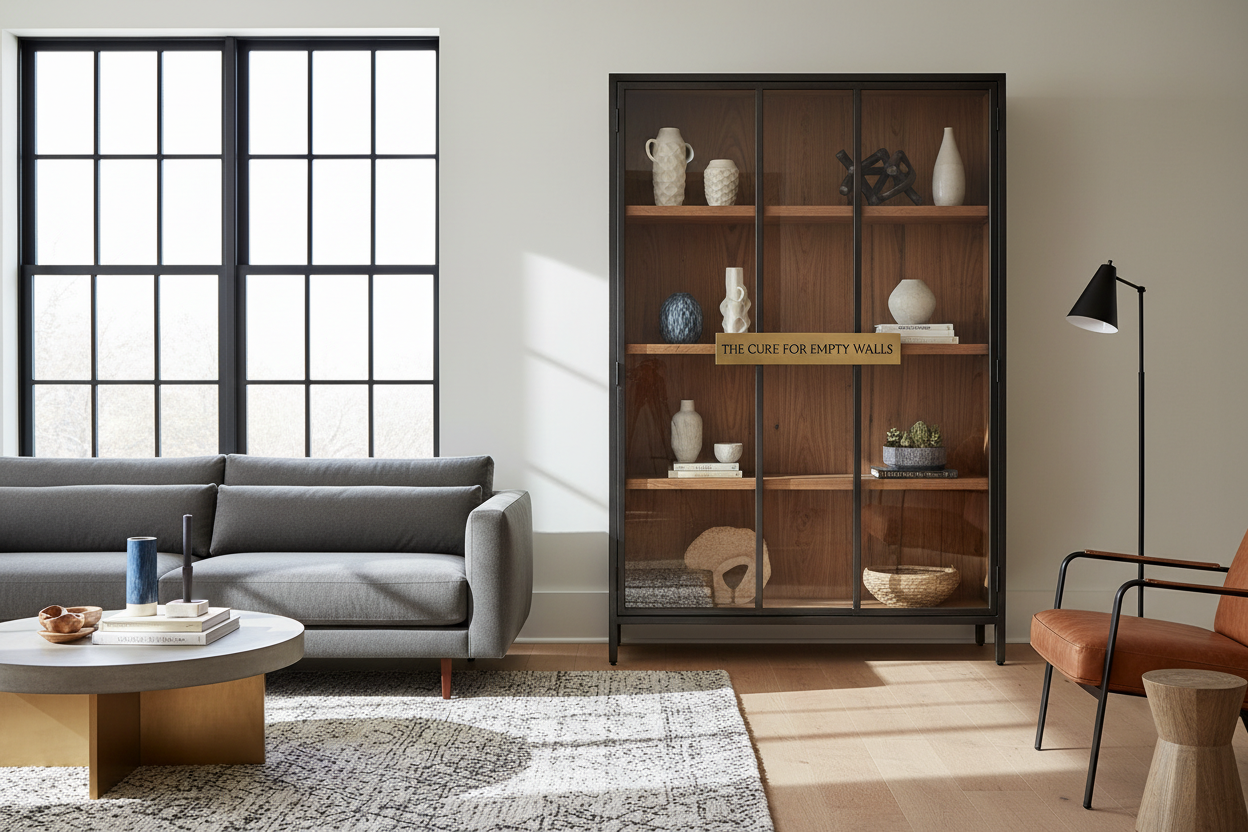
We have all stared at that one awkward, empty wall in the dining room or living area. A floating shelf feels too flimsy, but a massive solid oak bookcase feels too heavy. This is exactly where a metal and wood display cabinet shines. It strikes a balance between airy and grounded, giving you a place to showcase your favorite items without swallowing the room whole.
Finding the right piece can be tricky when you are navigating different materials, proportions, and styles. By the end of this guide, you will know exactly what to look for, where to place it, and how to style it so your room looks curated rather than cluttered.
Quick Decision Guide
- Measure your ceiling height: Leave at least 12 to 18 inches of negative space between the top of the cabinet and the ceiling to avoid a cramped look.
- Check the doors: If you hate dusting, opt for an iron and glass display cabinet over an open-shelving unit.
- Mind the 60/40 styling rule: Fill shelves with 60 percent books and objects, leaving 40 percent empty space to let the pieces breathe.
- Anchor it: Metal bases are heavy, but top-heavy styling requires proper wall anchoring, especially in homes with kids or pets.
Balancing Visual Weight
Adding a wood and metal display cabinet to your space introduces a strong focal point. The trick is making sure it does not fight with your existing furniture.
Pairing with Your Current Decor
If your room is heavy on upholstered pieces and plush rugs, the rigid lines of a metal frame provide much-needed contrast. Conversely, if you already have an industrial-leaning space, choose a cabinet where warm wood tones dominate the metal accents to prevent the room from feeling cold. Pay attention to the wood finish; a light ribbed oak softens the look, while a dark walnut leans mid-century modern.
Placement and Clearances
A common mistake is cramming a tall piece of furniture into a tight corner. These cabinets need room to breathe.
Navigating Tight Footprints
If you are working with a narrow hallway or a compact apartment, consider a metal wall display cabinet. Hanging the unit frees up floor space while still providing that stylish mix of materials. For freestanding units, ensure you have at least 36 inches of clearance in front of the cabinet if it has swinging doors, allowing you to access your items comfortably without bumping into a sofa or dining chair.
The Truth About Materials and Build Quality
Not all metal and wood combinations are created equal. The price gap between big-box store finds and designer pieces usually comes down to joinery and material thickness.
Spotting Quality Construction
Look closely at the metal welds. High-quality pieces feature smooth, ground-down joints, whereas cheaper items often have bubbly, messy spot welds. For the shelving, solid wood is ideal, but high-grade engineered wood with a thick veneer is perfectly acceptable and less prone to warping in humid climates. If you opt for an iron and glass display cabinet, confirm that the glass is tempered. Standard glass is a safety hazard if a door slams too hard.
Lessons from My Own Projects
A few years ago, I sourced a gorgeous, massive industrial cabinet for a client's suburban living room. It looked incredible in the showroom. But once we got it into their home, the matte black iron frame completely absorbed the natural light in the corner, making the room feel noticeably smaller. We ended up having to install internal LED puck lights just to brighten the piece up.
I also learned the hard way about open shelving versus closed doors. I love the accessibility of open metal and wood shelves, but after living with one in my own home, the weekly dusting became a chore. If you live in an older home or have pets, I strongly recommend choosing a piece with glass doors. You get the visual openness without the constant maintenance.
Frequently Asked Questions
How do I style the shelves without looking cluttered?
Group items in odd numbers, usually threes or fives. Mix vertical items, like stacked books, with horizontal or sculptural pieces like a textured ceramic bowl. Always leave intentional negative space between groupings.
Is this style too industrial for a traditional home?
Not at all. To make it work in a traditional space, choose a cabinet with brass or warm bronze framing instead of matte black, and opt for classic wood tones like cherry or mahogany. The silhouette should be refined rather than chunky.
How do I clean and maintain the materials?
Use a lightly damp microfiber cloth for the metal frame to avoid scratching the finish. For the wood shelves, a gentle wood cleaner is best. Avoid harsh chemical sprays, which can strip wood veneers and leave streaks on powder-coated metal.

Dejar un comentario
Este sitio está protegido por hCaptcha y se aplican la Política de privacidad de hCaptcha y los Términos del servicio.