










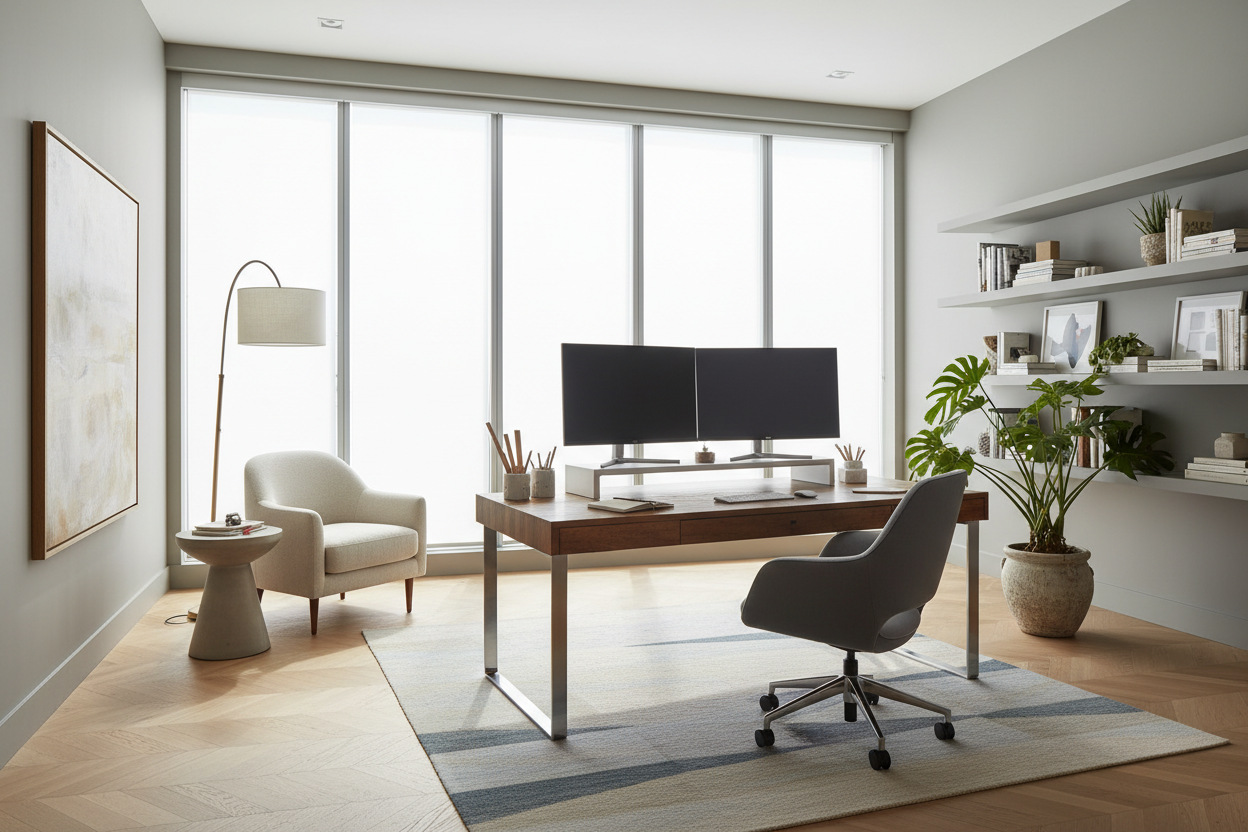
We often underestimate how profoundly our environment dictates our output. You might find yourself staring at a blank wall, feeling uninspired, or shifting constantly in a chair that doesn't quite support you. The distinction between a cubicle and a sanctuary lies in the intention behind the design. When we talk about the office inside, we aren't just discussing furniture placement; we are talking about curating an ecosystem that sustains your focus and reflects your professional identity.
Key Features of a High-Performance Workspace
- Ergonomics First: Prioritize chairs with lumbar support and adjustable armrests over purely sculptural pieces.
- Lighting Layers: Combine ambient overhead lighting with focused task lighting to reduce eye strain.
- Material Tactility: Choose surfaces (wood, matte laminate) that feel good to the touch and resist glare.
- Acoustic Control: Incorporate rugs, curtains, or acoustic panels to dampen echo and background noise.
- Spatial Flow: Ensure clear pathways to prevent the room from feeling cramped or cluttered.
Translating Inspiration into Reality
Clients often come to me with folders full of images of office interior design, hoping to replicate a specific vibe. While these office interior design photos are excellent starting points, the challenge lies in adaptation. A sprawling executive suite layout won't translate directly if you are working with a compact room. When reviewing office interior design pics, look for common threads: Are you drawn to the minimalism of floating shelves or the warmth of dark wood libraries?
Use office interior decoration photos to analyze the details, not just the whole. Notice how a well-placed floor lamp softens a corner, or how a specific rug anchors the desk. This is how you move from merely looking at office design images to understanding the mechanics of the space.
Materiality and Texture
The tactile experience of your office is just as critical as the visual. When browsing office interior decoration pictures, you might see sleek glass desks. However, in practice, glass can be cold to the touch and acoustically reflective. For a sophisticated, durable finish, I often recommend solid wood or high-quality veneers like walnut or white oak. These materials age beautifully and bring a sense of warmth that counters the sterility of computer screens.
The Importance of the Background
In the era of video conferencing, your interior office background is essentially your business card. Avoid the mistake of having a cluttered bookshelf or a blinding window directly behind you. Look at office interior background examples that feature curated shelving or textured wallpaper. The goal is a backdrop that provides visual interest without distraction.
Space Planning for Functionality
If you are working with limited square footage, searching for a small office interior design photo gallery can be incredibly helpful. The trick to small spaces is verticality. Utilize wall-mounted storage to keep the floor plan open. Ensure your desk is positioned to command the room—ideally facing the door (the "power position") rather than staring at a wall, which can feel confining.
When analyzing office design ideas pictures, pay attention to the negative space. The most luxurious offices are never overcrowded. They allow room for movement, which psychologically translates to room for thought.
Lessons from My Own Projects
I want to share a specific realization I had while designing a home office for a tech executive. We were obsessed with the aesthetic seen in a high-end design office photo—specifically, a stunning, high-gloss lacquer desk. It looked incredible in the showroom.
However, two weeks after installation, I got a call. The issue wasn't the look; it was the usability. The high-gloss finish acted like a mirror, reflecting the overhead recessed lighting directly into his eyes, causing massive headaches. Furthermore, every single fingerprint and dust mote was visible, turning his workspace into a source of anxiety rather than focus. We ended up swapping it for a honed marble top with a leather writing pad. The lesson? Always test how your materials interact with light before committing. A matte finish is almost always the superior choice for a horizontal work surface.
Conclusion
Designing the office inside your home or commercial space is an investment in your own efficiency. By moving beyond just collecting office interior images and understanding the principles of light, material, and flow, you can create a space that doesn't just look good in an office design pic, but feels right to work in every single day.
Frequently Asked Questions
How do I make a small office look bigger?
Use light colors on the walls and choose furniture with exposed legs. This allows light to flow underneath the furniture, increasing the sense of floor space. Mirrors can also double the visual depth of the room.
What is the best lighting for an office?
Layered lighting is essential. Start with general ambient light (ceiling fixtures), add task lighting (a desk lamp) for focused work, and consider accent lighting (led strips on shelves) to add depth and warmth.
How do I choose the right desk size?
Measure your room and ensure you have at least 30 to 36 inches of clearance behind the desk for your chair. The desk surface should be large enough to hold your computer and documents without feeling cluttered, but not so large that it dominates the room.
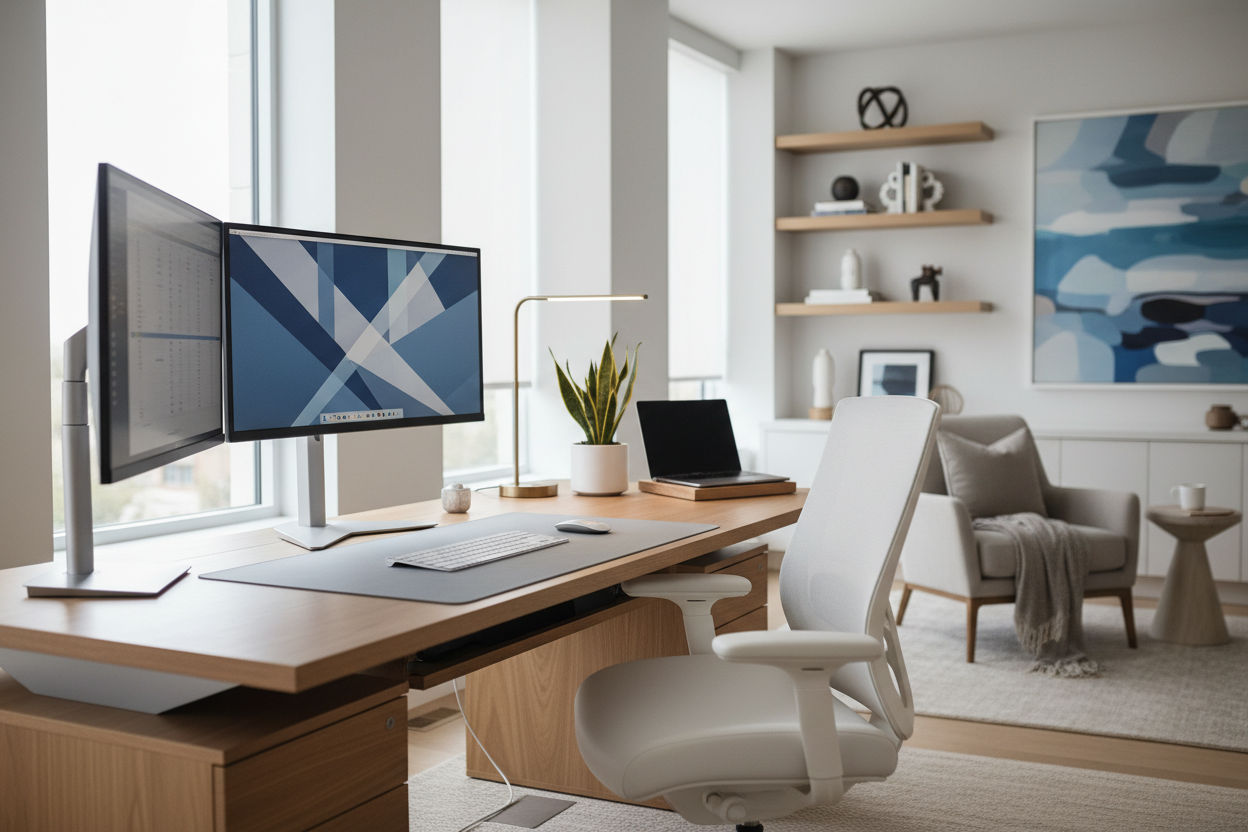


Dejar un comentario
Este sitio está protegido por hCaptcha y se aplican la Política de privacidad de hCaptcha y los Términos del servicio.