










I remember staring at my 450-square-foot studio, tape measure in hand, feeling like I was playing a losing game of Tetris. My sofa was too big, my desk was too small, and my TV was sitting on a stack of old magazines because I couldn't find a console that didn't swallow the room whole. That changed when I finally landed on a 48 in entertainment center.
- 48 inches is the magic width for 43- to 50-inch TVs.
- It leaves enough 'negative space' to avoid the dreaded dorm room aesthetic.
- Floating models are the ultimate hack for tiny floor plans.
- Closed storage is non-negotiable for hiding the cable rat's nest.
The Goldilocks Furniture Rule for Tight Apartments
Most people think bigger is better for 'presence,' but in a small apartment, a 72-inch console turns your living area into a big-box retail showroom. Too small, and it looks like a nightstand that got lost on its way to the bedroom. Finding a piece that solves your living room puzzle means looking at the geometry of your specific walls.
A four-foot footprint is the Goldilocks zone. It is wide enough to anchor a wall without blocking the path to your kitchen or making you shimmy past it sideways. I learned this the hard way after tripping over the corner of a bulky mid-century sideboard for six months. When I swapped it for a 48-inch unit, the room finally felt like it could breathe.
It is about the 2:3 ratio. You want your furniture to occupy enough space to feel intentional, but leave enough floor visible so you don't feel claustrophobic. Anything under 40 inches usually looks flimsy; anything over 55 inches in a studio is an ego trip your square footage can't afford.
Why a TV Console 48 Inches Wide is the Sweet Spot
Let's talk math. A standard 50-inch TV is actually about 44 inches wide. If you put that on a tv console 48 inches wide, you get exactly two inches of breathing room on either side. It looks balanced, symmetrical, and expensive.
When I was browsing for a new entertainment center, I realized that those extra four inches of 'overhang' on larger units were exactly what made my previous layout feel cluttered. A 48-inch base creates a clean vertical line from the edge of the screen to the floor.
This width also fits perfectly between most standard window frames or next to a closet door. In my current place, my console sits between a radiator and a floor lamp with about half an inch to spare. It looks custom-built for the space, even though it came out of a flat-pack box.
Floating vs. Freestanding: Reclaiming Floor Space
If your floor is already a sea of rugs and chair legs, go vertical. A floating tv stand wall mounted media console is a massive win for small spaces. Seeing the floor continue underneath the furniture tricks your brain into thinking the room is larger than it is.
I personally went with a freestanding model because my landlord has a 'no holes' policy that they actually enforce. However, I chose one with tall, tapered legs. If you can see at least six inches of floor beneath the unit, the footprint feels lighter. Heavy, plinth-style bases that sit flush on the carpet can make a 48-inch unit feel like a 60-inch unit.
Another tip: if you go the floating route, make sure you have a plan for the wires. There is nothing that ruins a high-end look faster than a black cord dangling like a vine against a white wall. Use a cord cover or, if you're brave, fish them through the drywall.
How to Style It Without Looking Like a Dorm Room
To avoid the 'first apartment' vibe, hide your junk. Use a 48-inch unit with solid doors rather than open shelving. You don't need to see your PlayStation, your router, and your collection of half-dead remote batteries. If you want a more modern look, a high gloss led tv stand console table adds a bit of depth and ambient light that keeps the unit from feeling like a heavy block of wood in the corner.
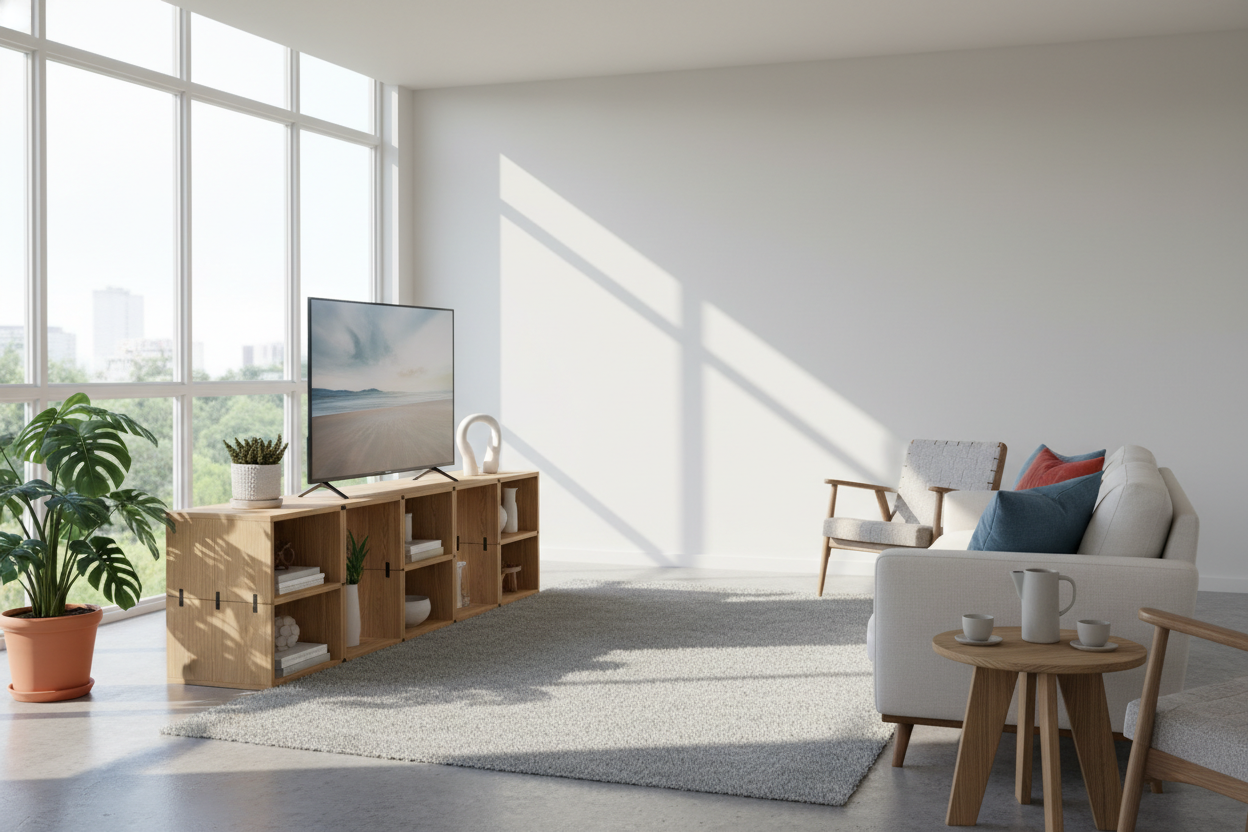
I keep my styling simple: one tray for coasters, one stack of coffee table books, and maybe a small plant. Avoid the temptation to flank the TV with speakers or tall vases; it creates too much visual noise on a compact surface. Let the 48-inch width be the hero.
Will a 55-inch TV fit on a 48-inch stand?
Physically, yes, as long as the TV's legs are centered. However, the screen will hang over the edges of the console. It looks top-heavy and a bit precarious. I'd recommend sticking to a 50-inch screen or smaller for a 48-inch base.
Is a 48-inch console too small for a large living room?
If you have a 20-foot wall, a 48-inch unit will look like a postage stamp. This size is specifically designed for apartments, bedrooms, or secondary dens. In a massive open-concept space, you'll want something closer to 70 or 80 inches.
How high should I mount a 48-inch console?
Aim for eye level. For most standard sofas, the center of your TV should be about 42 inches from the floor. This means your console should usually be between 18 and 24 inches tall.


Dejar un comentario
Este sitio está protegido por hCaptcha y se aplican la Política de privacidad de hCaptcha y los Términos del servicio.