










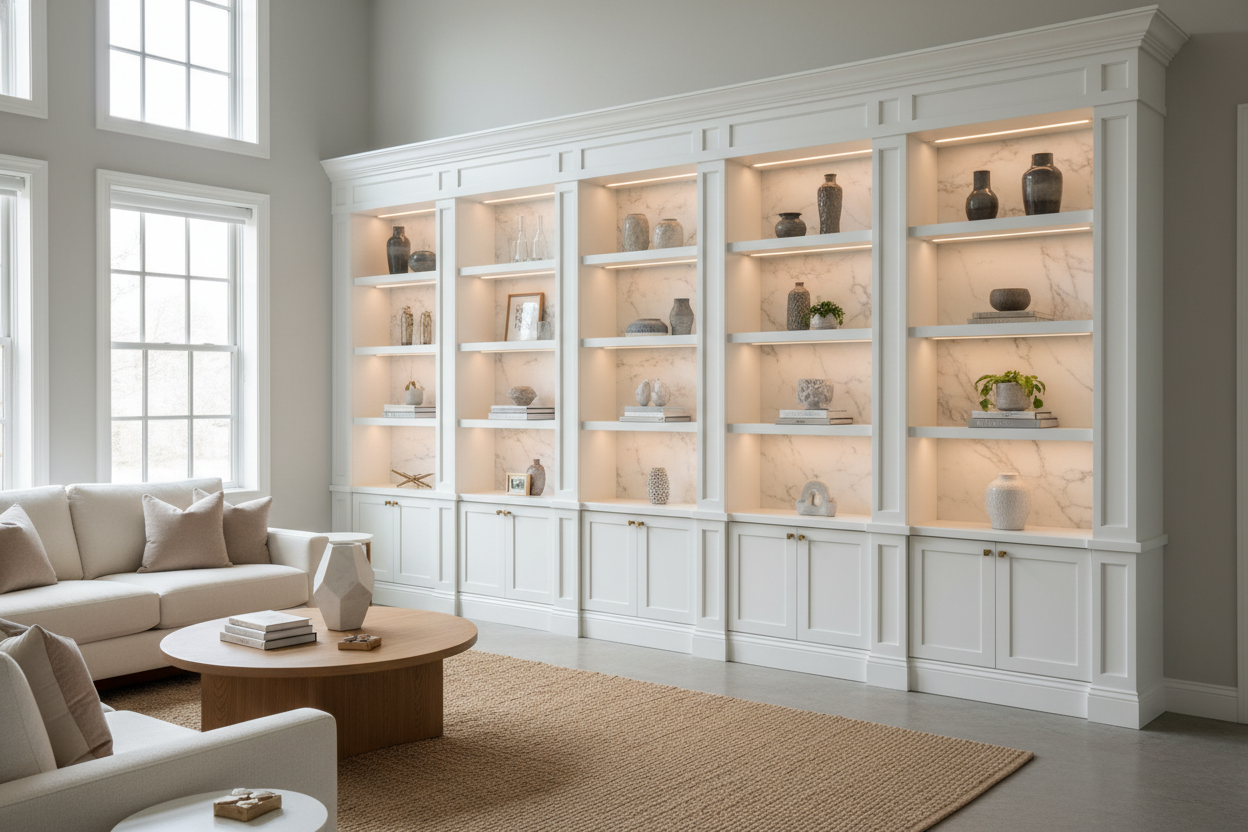
I spent three hours last Tuesday scrolling through high-end auction sites, staring at a vintage 19th-century apothecary cabinet. The price tag was $4,200, not including the $600 white-glove shipping fee. I looked at my collection of mid-century ceramics, then back at my bank account, and realized I needed a better plan. The dream of custom cabinetry is great, but affordable display cases are the reality for those of us who also enjoy paying our rent on time.
Quick Takeaways
- Swap out generic zinc or plastic hardware for solid unlacquered brass or matte black steel.
- Install COB LED strip lighting instead of cheap battery-powered puck lights to avoid hot spots.
- Add texture to the backing board with peel-and-stick grasscloth or linen-look wallpaper.
- Always prioritize tempered glass and check the weight of the unit before buying.
The Custom Cabinetry Myth
There is this persistent idea in the interior design world that if a piece of furniture arrives in a flat box, it is somehow unworthy of holding your prized possessions. I am here to tell you that is nonsense. Most 'bespoke' cabinets you see in glossy magazines are essentially MDF boxes with a nice veneer and great lighting. The secret isn't the wood; it is the execution. You can absolutely house a $500 vase in a $200 cabinet if you know how to dress it up.
I have seen plenty of custom builds that look clunky because the proportions are off. On the flip side, I have seen mass-produced units that look like gallery fixtures because the owner took twenty minutes to hide the visible cam locks and upgrade the hinges. Don't let the 'heirloom' marketing convince you that you need to spend thousands just to keep the dust off your books.
The Sobering Reality of Display Case Cost
When you start looking at the average display case cost, the sticker shock is real. A solid oak cabinet from a high-end retailer usually starts at $1,800. Why? You are paying for the labor of assembly, the shipping of a heavy, pre-built item, and a massive retail markup. When I realized that half of that cost was just logistics, I pivoted to budget-friendly alternatives that I could assemble and modify myself.
The price of raw materials has skyrocketed, but the 'big box' manufacturers buy in such bulk that they can still offer glass and wood-look finishes for a fraction of the price. The trade-off is usually the hardware and the lighting. If you are willing to spend $50 on your own upgrades, you can bridge the gap between a 'cheap' look and a 'custom' finish without the four-figure investment.
Navigating Cheap Display Cases for Sale
Not all budget furniture is created equal. When you are hunting for cheap display cases for sale, the first thing I check is the shipping weight. If a 72-inch tall cabinet weighs 40 pounds, it is made of low-density paperboard and will wobble the second you close the door. I look for units that weigh at least 80-100 pounds; that weight usually indicates higher-density MDF or actual tempered glass panels that provide structural integrity.
I also check the shelf support system. Plastic pegs are a dealbreaker for me. I always look for metal pins or, better yet, adjustable tracks. There are definitely red flags to watch out for when you are shopping online, like 'acrylic' windows disguised as glass or descriptions that use the word 'wood-like' without specifying the base material. If the listing doesn't mention 'tempered glass,' keep scrolling.
My 3 Rules for Elevating Budget Cabinets
First, kill the hardware. The knobs that come in the box are almost always the cheapest part of the build. I go to a hardware specialist and buy heavy, solid brass pulls. The tactile experience of opening a heavy door with a quality handle immediately tricks your brain into thinking the whole unit is expensive. It is the easiest $20 upgrade you will ever make.
Second, lighting is everything. Most budget cases don't come with lights, or they come with those terrible blue-toned puck lights. I buy warm-white (2700K) COB LED strips. These provide a continuous glow without the 'dotted' look of cheap LEDs. I hide the strips behind the front face frame of the cabinet so the light washes backward onto the objects. It creates depth that makes the cabinet look like a built-in fixture.
Third, fix the back panel. Most affordable cases have a flimsy, fold-out cardboard back. I never leave these bare. I buy a roll of peel-and-stick grasscloth wallpaper and cover the panel before sliding it into place. This adds a high-end texture and hides the fact that the back is essentially thick paper. A large sideboard display buffet is the perfect candidate for this treatment because it combines the 'display' look up top with hidden storage below, making it look like a custom piece of millwork.
Finding a Large Display Case for Sale That Doesn't Look Corporate
The biggest struggle with finding a large display case for sale is avoiding the 'retail' aesthetic. You don't want your living room to look like a T-Mobile store or a jewelry kiosk. To avoid this, I look for pieces with architectural interest—think arched tops, fluted details, or framed glass doors rather than frameless ones. The frame provides a visual boundary that feels residential and cozy.
If you have a massive wall to fill, don't buy one giant, industrial-looking unit. Instead, buy two or three identical smaller units and bolt them together. This creates the illusion of a massive custom library wall. If you are dealing with a weird corner, a large display cabinet corner shelf can turn an awkward dead zone into a focal point. The key is to match the height of the unit to other elements in the room, like your window frames or door headers, so it feels intentional.
The Final Verdict on Mixing High and Low
I have a friend who keeps a collection of rare, first-edition books inside a cabinet she bought for $150. Most people assume the cabinet cost as much as the books because she styled it with intention. The bottom line is that your furniture should be a stage for your life, not a drain on your savings. By focusing on the details—the weight, the hardware, and the light—you can make budget pieces punch way above their weight class.
Personal Experience: The Wobbly Cabinet Lesson
In 2019, I bought the cheapest glass cabinet I could find on a flash-sale site. It looked great in the photos, but when it arrived, the 'glass' was actually thin plastic and the whole thing swayed when my cat walked past it. I ended up spending more money trying to stabilize it with L-brackets than I would have spent on a decent mid-range unit. Now, I always check the material specs first. If it doesn't say 'tempered glass' and 'engineered wood,' I don't touch it. I'd rather have one solid, well-modified budget piece than three flimsy ones.
FAQ
Can I paint a laminate display case?
Yes, but you can't just slap latex paint on it. You need a high-quality shellac-based primer like Zinsser BIN first. This sticks to the slick surface and prevents the paint from peeling off in sheets later.
How do I hide the wires for my cabinet lighting?
I use a 1/2-inch spade bit to drill a hole in the bottom or back panel, then run the wires behind the unit. Use adhesive cord clips to keep everything tight against the corners so you don't see any 'spaghetti' through the glass.
Are glass shelves safe for heavy items?
Check the weight rating! Most tempered glass shelves in budget units are rated for 15-20 pounds. If you have heavy art books or cast-iron sculptures, consider swapping the glass for 3/4-inch wood shelves or reinforced acrylic.


Dejar un comentario
Este sitio está protegido por hCaptcha y se aplican la Política de privacidad de hCaptcha y los Términos del servicio.