










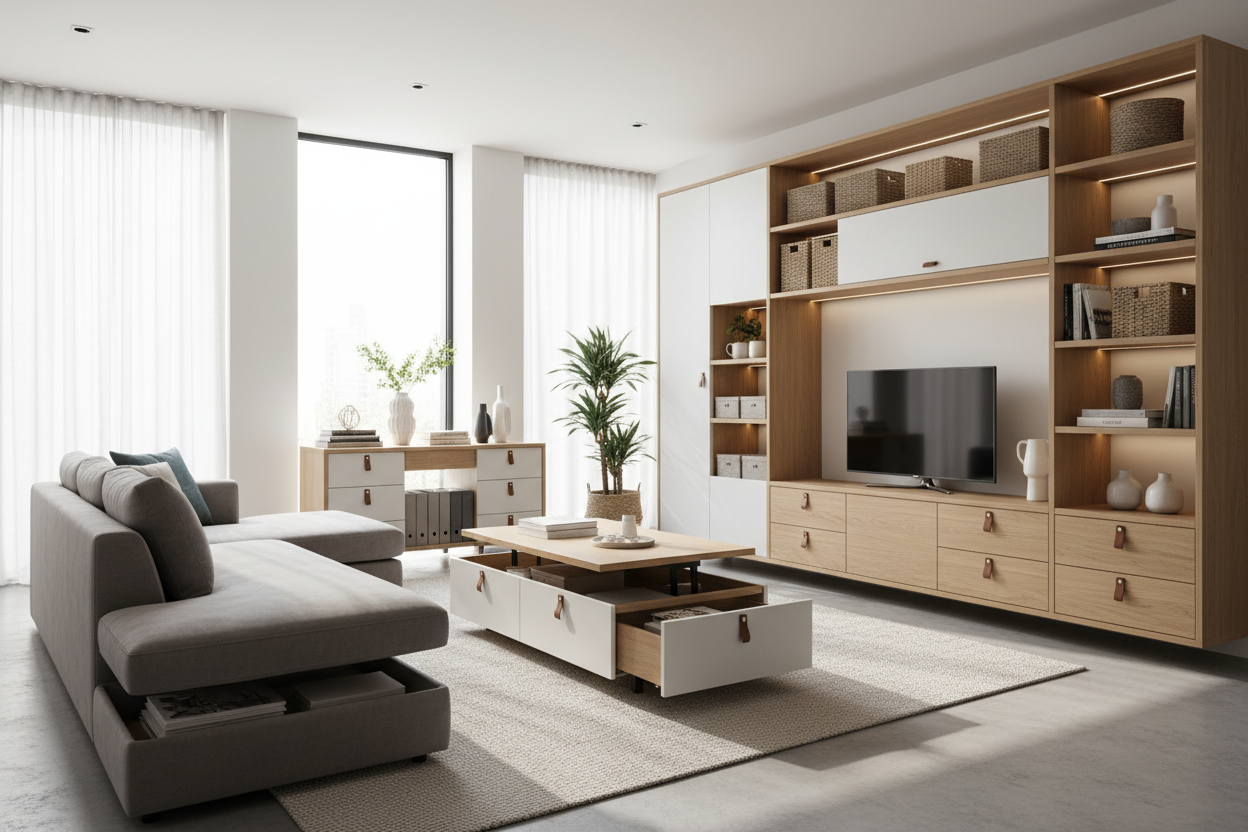
I spent three years buying every 'aesthetic' acrylic bin and seagrass basket I saw on Instagram. My pantry looked like a high-end laboratory, but my living room still felt like a chaotic yard sale. It took a particularly messy Saturday morning for me to realize that buying more containers doesn't actually solve a clutter problem; it just gives you more things to dust. The real solution isn't another bin—it's investing in furniture with storage that actually hides the gear you use every day.
Quick Takeaways
- Decorative baskets often create more visual noise than they solve.
- Closed storage furniture is the only way to achieve a truly 'clear' surface.
- Entryways are the biggest clutter magnets and need the sturdiest solutions.
- Look for kiln-dried hardwood frames over flimsy particle board for pieces you'll actually sit on.
The Problem With 'Visible Storage' (And Why Baskets Aren't Helping)
We’ve been sold a lie that if we just find the right weave of wicker, our clutter will magically become a 'vibe.' It won't. Open baskets are just junk drawers with better lighting. You can still see the tangled charging cables and the half-finished knitting projects peeking out. It creates what I call 'textured clutter.'
The shift happens when you stop looking for containers and start looking for home furniture storage that features solid doors or deep drawers. The goal is a visual reset. When everything has a literal door to hide behind, your brain stops processing the mess. This is the core of mastering furniture and storage—if you can see it, it’s not really stored; it’s just on display.
The Entryway Epiphany: Hiding the Shoe Mountain
My entryway used to be a graveyard for sneakers. I had one of those $20 wire racks that sagged under the weight of three pairs of boots and eventually started scratching my hardwood floors. It looked cheap, and it felt cheap. Every time I walked through the front door, the first thing I saw was a pile of dirty soles.
I finally got fed up and swapped the rack for a corner wooden bench with storage. It changed the entire energy of the house. Suddenly, the shoes were tucked away in dedicated compartments, and I had a solid place to sit and pull on my boots. I opted for a piece with a 2-inch thick seat cushion and solid wood legs—none of that hollow metal tubing. It’s a piece of furniture first and a storage unit second, which is exactly how it should be.
Sneaking Work-From-Home Gear Into Plain Sight
If you're working from a corner of your living room like I am, you know the struggle of trying to relax while staring at a printer and a stack of tax returns. A standalone metal filing cabinet screams 'corporate cubicle' and ruins the cozy atmosphere you've worked hard to build. This is where integrated unit furniture becomes a lifesaver.
I’m a huge advocate for using a corner desk with large storage to reclaim your space. You want something that tucks into the angle of the room but offers enough cabinet space to swallow your laptop, monitors, and cords when the clock hits 5 PM. Look for desks with cord management ports—those little plastic grommets are the difference between a clean setup and a 'cable waterfall' behind your furniture storage.
How to Stop Dual-Purpose Pieces From Looking Bulky
The biggest fear people have with storage furniture is that it will look like a heavy, monolithic block of wood that eats the whole room. It’s a valid concern. If every piece of furniture in your room goes all the way to the floor without legs, the space will feel cramped and dark. The trick is to look for pieces with 'tapered legs' or 'negative space' underneath.
You can also hack the look of more affordable pieces. I’ve seen people style IKEA furniture with storage by swapping out the plastic handles for heavy brass hardware and adding a custom wood top. It breaks up the 'big box' feel and makes the piece look like a bespoke built-in. Always balance a heavy storage base with something light on top—like a slim lamp or a glass vase—to keep the room feeling airy.
Where to Start Your Stealth Storage Overhaul
Don't try to replace every table in your house at once. Start with the room that stresses you out the most. For most of us, that's the living room or the entryway. Look for the 'clutter hotspots'—the places where mail, shoes, and remotes naturally migrate—and target those first.
When you're ready to make the jump, go browse dedicated storage furniture and look for pieces that serve at least two purposes. A coffee table should have drawers; a bench should have a flip-top; a desk should have a cabinet. Once you stop treating storage as an 'add-on' bin and start treating it as a requirement for your furniture, your home will finally start to feel as organized as your Pinterest boards.
Personal Experience: The Ottoman Mistake
I once bought a 'bargain' storage ottoman made of thin MDF covered in faux leather. Within six months, the hinges had literally pulled out of the soft wood because I used it every day. I learned the hard way: if a piece of furniture is doing double duty, it’s working twice as hard. Don't skimp on the materials. Now, I only look for kiln-dried hardwood or high-quality plywood. It costs more upfront, but it doesn't end up in a landfill by Christmas.
Frequently Asked Questions
Is storage furniture more expensive than regular furniture?
Usually, yes. Adding drawers, hinges, and reinforced frames costs more in labor and materials. However, you have to factor in the money you aren't spending on endless plastic bins and organizational 'systems' that don't actually work.
How do I make sure a storage piece won't overwhelm a small room?
Look for pieces with legs! If you can see the floor underneath the furniture, your brain perceives the room as being larger. Avoid 'to-the-floor' cabinetry in tiny apartments.
What is the best material for long-lasting storage furniture?
Kiln-dried hardwood is the gold standard because it won't warp. If you're on a budget, high-grade plywood is significantly better than particle board or MDF, which tend to crumble under the weight of heavy books or constant use.

Dejar un comentario
Este sitio está protegido por hCaptcha y se aplican la Política de privacidad de hCaptcha y los Términos del servicio.