










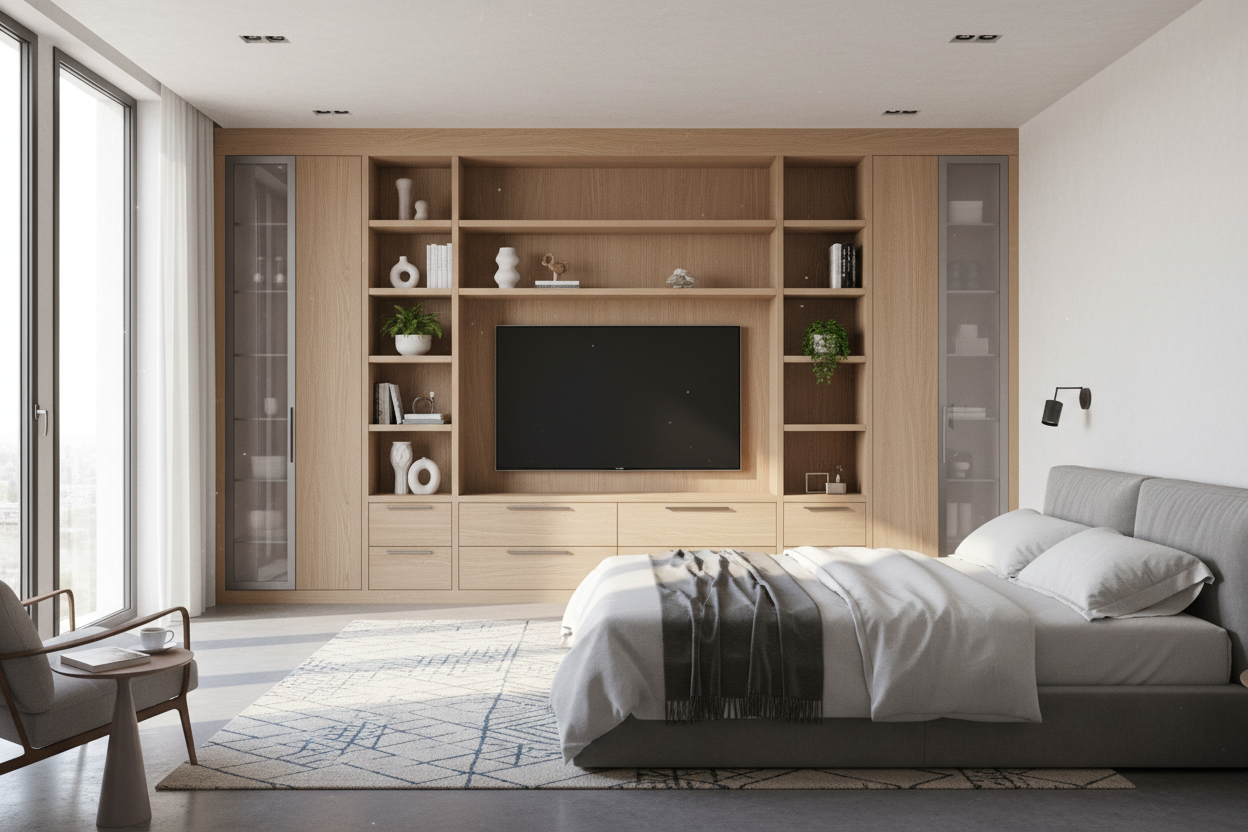
I spent three years staring at a 42-inch TV perched on a dresser that was four inches too short and two shades of wood off from my nightstands. It felt like a 2-star motel in a town you only visit for a funeral. The cables were a literal rat's nest, and the screen felt like it was floating in a sea of beige wall. Finally getting real multimedia units changed the entire energy of the room.
Quick Takeaways
- Standard living room consoles are usually too low for bed-height viewing.
- Cable management is the difference between a 'suite' and a 'dorm room.'
- A wider unit makes a small TV look intentional rather than cheap.
- Vertical storage helps reclaim floor space in tight primary bedrooms.
The 'Cheap Motel' Effect (And Why We Keep Doing It)
We pour all our design energy into the living room because that is where guests sit. The bedroom becomes the 'junk drawer' of furniture. We shove a leftover dresser at the foot of the bed, plop a massive screen on top, and wonder why we can't relax. It’s a wobbly, mismatched setup that screams temporary living.
I realized my bedroom felt chaotic because there was no visual anchor. When your TV is just 'sitting' there, it feels like an appliance. When it is integrated into a wall media storage unit, it becomes architecture. I stopped seeing a black plastic rectangle and started seeing a finished room.
Why a Wall Media Storage Unit Changes the Whole Vibe
There is a psychological shift that happens when you frame a television intentionally. In my living room, I noticed how much more 'expensive' the house felt when I upgraded the main area. I realized I spent just as much time in bed as on the sofa, so why did I treat my modern wall cabinet for living room storage like a king and my bedroom like a peasant?
Anchoring the screen with proper cabinetry grounds the space. It stops the 'floating' look. By using a wall media storage unit that spans a decent portion of the wall, you create a focal point that rivals the bed. It makes the room feel balanced instead of heavy on one side.
The Tricky Math of Bedroom Wall Units With TV
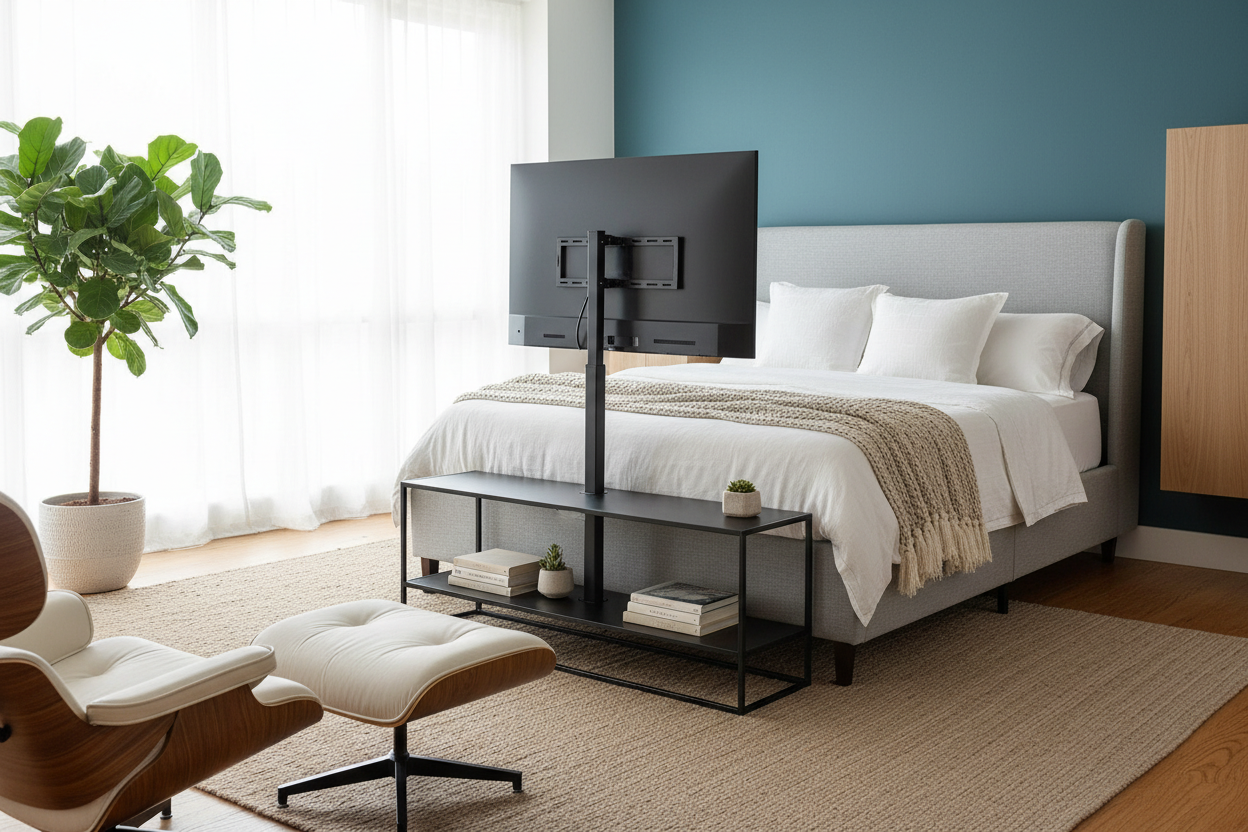
Here is where most people fail: ergonomics. If you buy a standard 20-inch high console, you will be straining your neck over your toes to see the screen. You need height. Most mattresses sit 25 to 30 inches off the floor. To watch comfortably while propped up on pillows, the center of your screen needs to be significantly higher than it would be in a lounge setup.
I looked for a media center with strong storage that sat at least 30 inches high. This height allows the TV to clear your feet and the footboard. I personally tested three different heights using stacks of books before committing. Don't guess this part—your neck will hate you if you do.
Sneaking in Extra Media Wall Storage
The best part of a dedicated unit isn't the TV—it's the stuff you can hide. My nightstands used to be overflowing with half-read books, charging cables, and spare remotes. It was visual clutter that kept me awake. Multimedia units with closed doors are a godsend for this.
I started using the lower cabinets as a dedicated book media storage zone. It moved all my nighttime reading and tech accessories into one cohesive place. Now, when I go to sleep, the only thing on my nightstand is a lamp and a glass of water. The 'noise' of the room is gone.
Faking the Built-In Look Without the Contractor
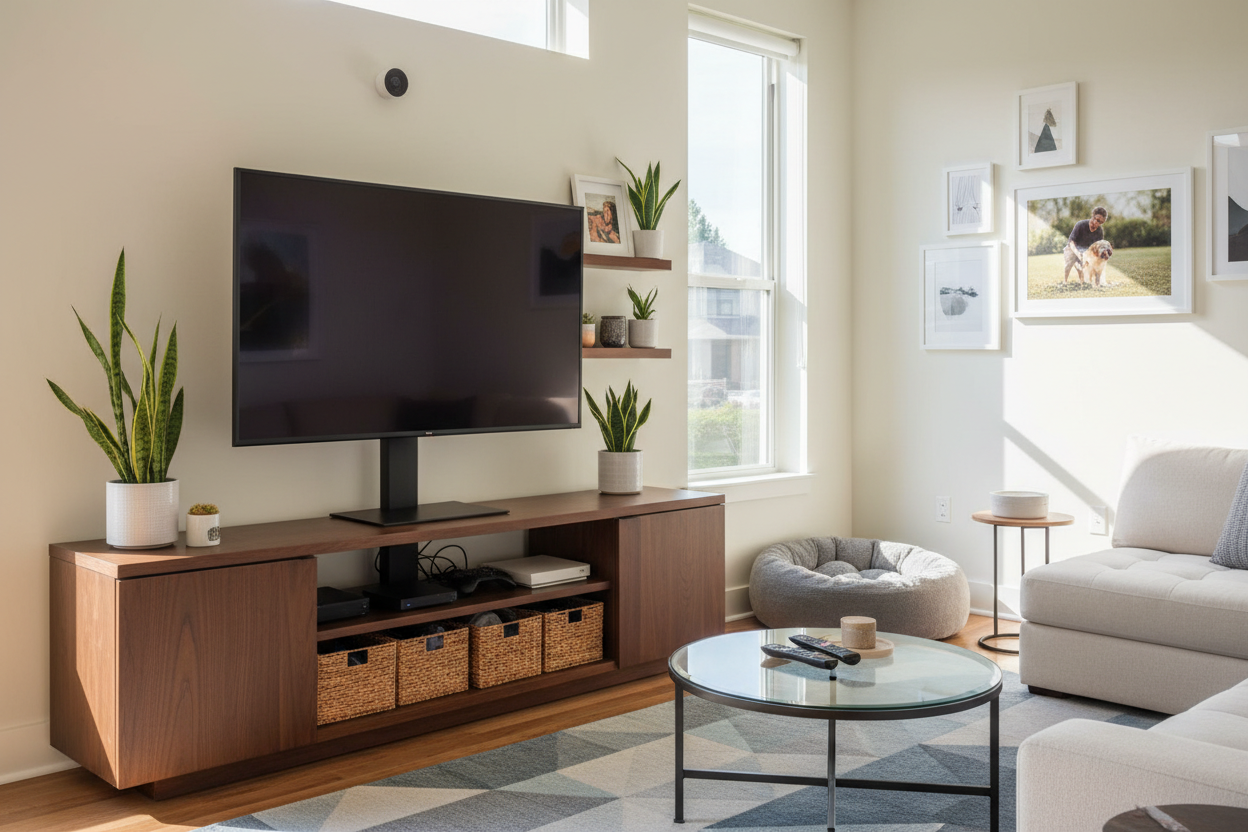
You do not need to spend $5,000 on a custom carpenter to get a high-end look. The secret is scale. If you have a large wall, don't put a tiny stand in the middle. I’ve found that using a long, substantial sideboard cabinet buffet often works better than a traditional 'TV stand' because it has the height and the visual weight of a built-in.
My biggest mistake in my first apartment was buying a unit that was exactly the width of the TV. It looked puny. Go wider. If your TV is 50 inches, get a unit that is at least 65 or 70 inches. It gives the eye a place to rest and makes the whole setup look like it was designed for the house, not just bought on a whim.
Frequently Asked Questions
How high should a bedroom TV be?
Ideally, the center of the screen should be at eye level when you are sitting up in bed. Usually, this means the base of the TV should be about 30 to 35 inches off the floor, depending on your mattress height.
Can I use a regular dresser as a media unit?
You can, but dressers are often too deep (20+ inches), which eats up floor space. Dedicated media units are usually 14-16 inches deep, which keeps the walkway at the foot of the bed clear.
How do I hide the messy wires?
Look for units with pre-drilled cable management holes. If you’re mounting the TV above the unit, use a plastic cord cover painted the same color as your wall for a clean, 'no-wire' look.

Dejar un comentario
Este sitio está protegido por hCaptcha y se aplican la Política de privacidad de hCaptcha y los Términos del servicio.