










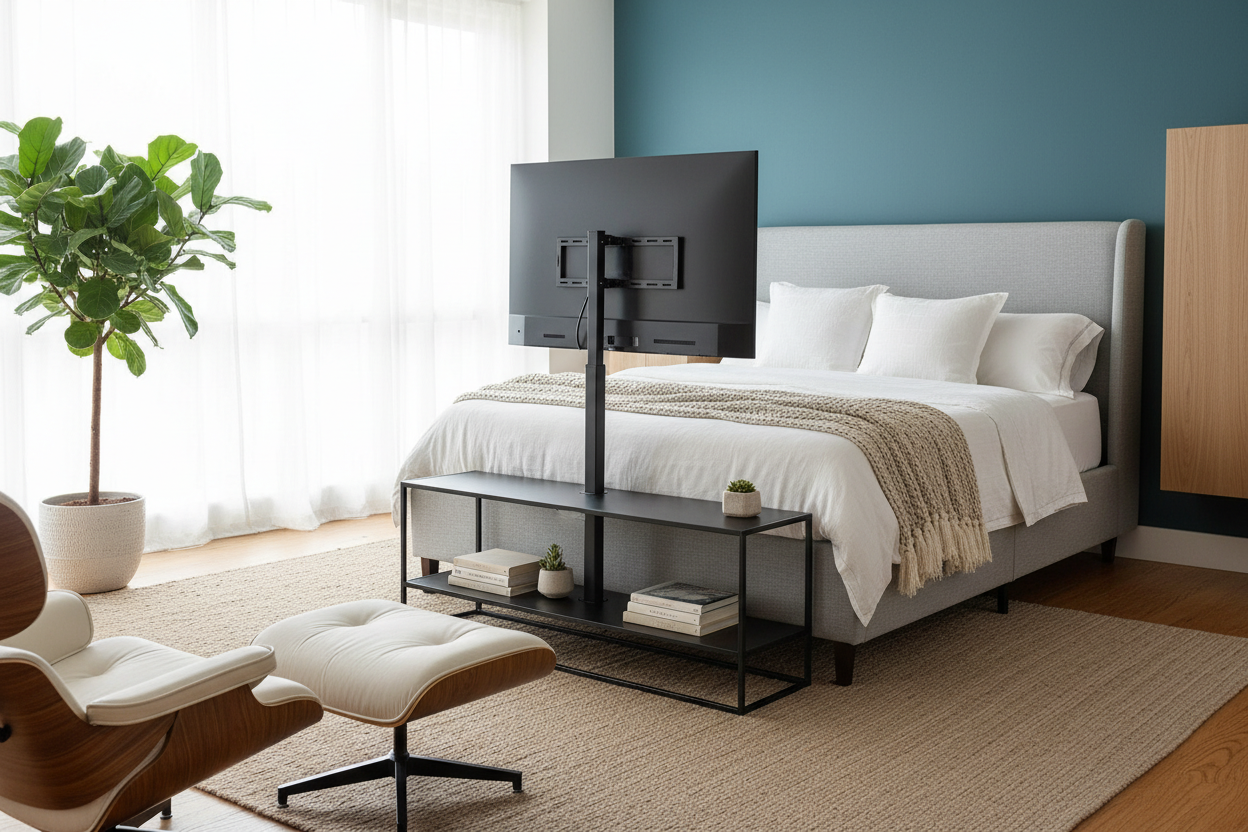
I spent three months staring at the ceiling because my 14-inch platform mattress plus an 8-inch box spring meant my TV sat roughly at the level of my shins. I tried stacking books. I tried a $400 dresser that ended up being made of compressed sawdust and wobbled every time I walked past. Finally, I got a tall tv stand mount, and my chiropractor finally stopped sending me Christmas cards.
Quick Takeaways
- Standard consoles are 20-30 inches high; you need at least 50 inches for a high bed.
- Tipping hazards are real—don't trust a top-heavy dresser with a 50-pound screen.
- Integrated mounts hide the 'cable spaghetti' nightmare.
- No drilling means you keep your security deposit and your sanity.
The 'Dresser Balance' Is Terrible for Your Posture (And Your Screen)
We've all done it. You move into a new place, realize you have nowhere to put the TV in the bedroom, and shove it on top of the tallest dresser you own. It feels like a solution, but it's actually a disaster for your spine. Dressers are built for socks, not for ergonomics. When you're propped up against a headboard, your natural eye line is significantly higher than when you're sitting on a sofa.
Beyond the neck crick, there's the safety issue. A flat screen perched on a dresser is a tipping hazard waiting to happen. Most bedroom furniture isn't weighted to support a top-heavy tech setup, especially if you have a cat that thinks the top of the TV is a heated perch. It’s a precarious balancing act that usually ends with a cracked panel or a strained trapezius muscle.
Why a Tall TV Stand Mount is the Ultimate Bedroom Hack
The beauty of a tall tv stand with mount is that it takes up almost zero floor space while giving you the height of a wall-mounted unit. These stands usually feature a heavy steel base that slides right under your bed frame or sits flush against the wall. It’s the natural evolution of traditional Tv Stands, which are usually designed for living rooms where the seating is low and the vibe is different.
The integrated mount is the real hero here. It allows you to swivel the screen—essential if you’re a side-sleeper—and keeps all those ugly black power cords tucked inside the main pillar. You get the clean, floating look of a high-end hotel room without having to patch six holes in the drywall when you move out.
Finding the Sweet Spot: How High Should Your Screen Actually Be?
In a living room, the rule is 'eye level while seated.' In a bedroom with a high mattress, that rule goes out the window. If you're using a tall tv mount, you want the center of the screen to be roughly 50 to 60 inches from the floor. This allows you to lean back against your pillows without tucking your chin into your chest like a disgruntled turtle.
I recommend sitting in bed, propped up exactly how you usually watch, and having a friend mark the wall where your eyes naturally land. Most people are shocked to find their 'sweet spot' is nearly five feet up. A standard console simply cannot reach those heights without looking like a ridiculous tower of furniture.
What to Look for When Ditching the Dresser
Don't just buy the cheapest skinny pole you find. Look for a base made of solid steel or tempered glass that weighs at least 25-30 pounds. If the base is too light, the whole thing will lean forward like it's tired. You also need to verify the VESA pattern—that's the square of screw holes on the back of your TV—to make sure it actually fits the mounting plate.
I’m a big fan of models that include a small shelf. Even in a minimalist setup, you probably have a streaming stick or a remote that needs a home. It’s worth reading about Why I Swapped My Console for a TV Stand With Mount and Shelves to see how much of a difference that extra six inches of storage makes for bedroom clutter.
My Bedroom Finally Feels Like a Luxury Hotel Room
Once I got the screen at the right height, the whole room felt different. It wasn't just about the neck pain—though that disappeared within a week—it was about the intentionality of the space. The room no longer looked like a dorm room where I’d just 'made it work.' It looked like a grown-up suite.
The best part? I didn't have to hunt for studs in my 1920s plaster walls. I've been down that road before, and I used a tv stand with mount because my wall studs betrayed me during my last renovation. Save yourself the hardware store runs and the drywall dust. Get the height you need, keep your security deposit, and finally watch your shows in peace.
FAQ
Will a tall stand fit behind my dresser?
Most have a flat, low-profile base designed specifically to slide under furniture or sit tight against the baseboard, so yes, you can usually 'layer' it behind a low dresser if you need the storage.
Is it hard to assemble alone?
It's doable, but mounting the actual TV onto the stand is a two-person job unless you want to risk a very expensive 'oops' moment. The rest is just a few hex bolts.
Can these stands hold a 75-inch TV?
Check the weight rating. Most tall stands are rated for up to 55 or 65 inches. For a 75-inch monster, you'll need a heavy-duty version with a wider base to prevent tipping.

Dejar un comentario
Este sitio está protegido por hCaptcha y se aplican la Política de privacidad de hCaptcha y los Términos del servicio.