











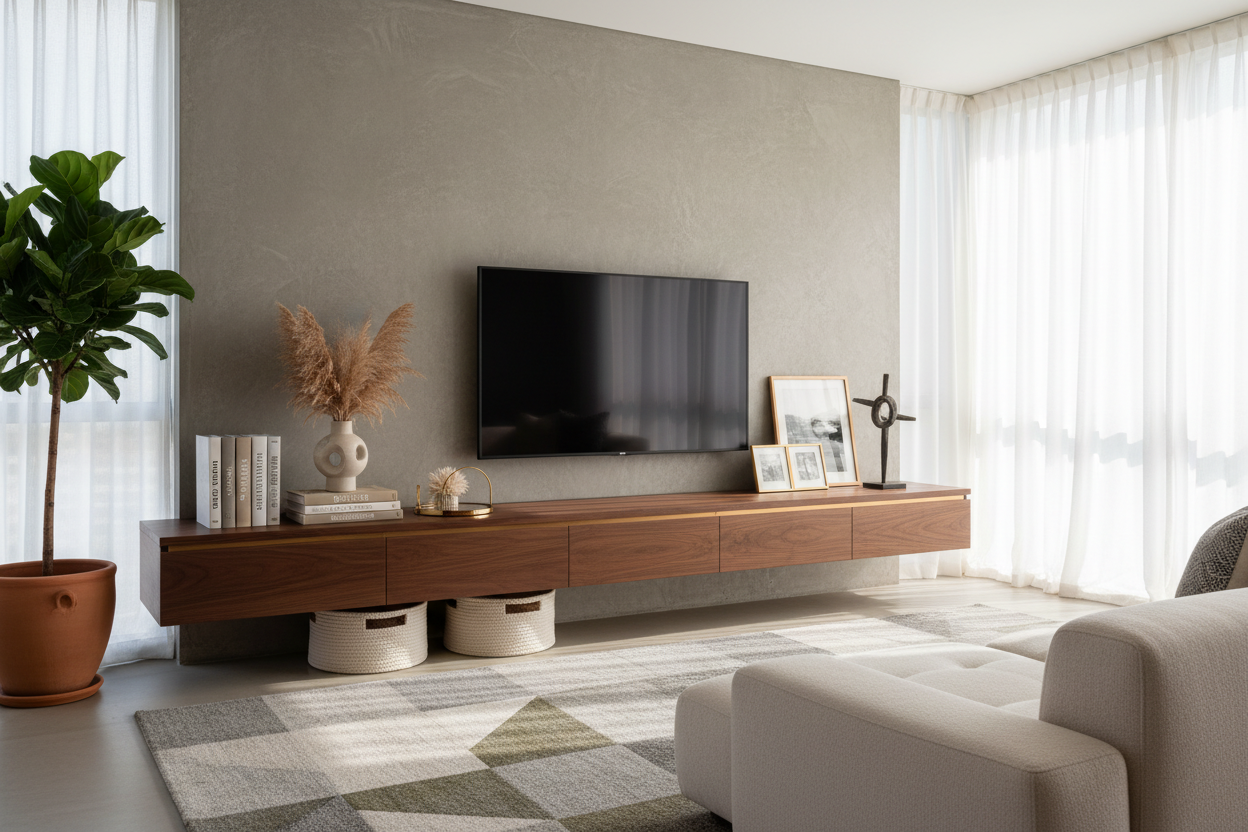
We've all been there: you spend weeks curating the perfect living room layout, selecting the right textiles and seating, only to have a massive black rectangle on the wall dictate the entire vibe of the room. The media wall is notoriously tricky to design around. Finding the right piece to anchor your screen without making the room feel like a sports bar is a common hurdle.
When sourcing television stands & consoles for clients, my goal is always to make the technology feel intentional rather than intrusive. In this guide, I will walk you through exactly how to size, style, and select a piece that grounds your living space, hides the inevitable mess of cords, and stands up to daily life.
Quick Decision Guide
- Size up: Your console should be at least 20 to 25 percent wider than your TV to maintain proper visual weight.
- Check eye level: The center of your screen should sit at eye level when seated, which usually dictates a console height of 20 to 28 inches.
- Prioritize cord management: Look for built-in routing holes and removable back panels; drilling your own voids warranties and weakens the structure.
- Mix materials: Soften the harshness of electronics with natural textures like cane, warm woods, or matte metal hardware.
Getting the Proportions Right
The Golden Width Rule
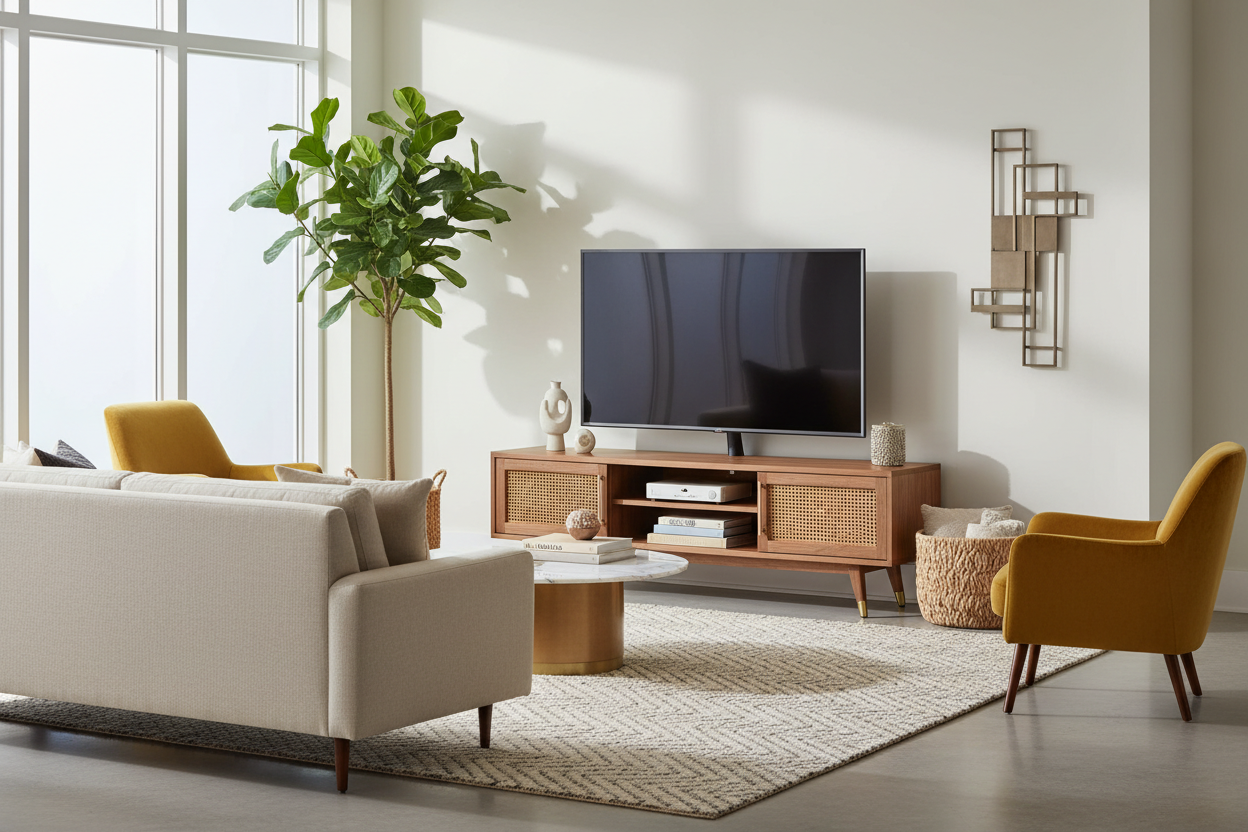
The most common mistake I see in North American living rooms is a TV that overhangs its base. It creates a top-heavy, unbalanced silhouette that makes the whole room feel slightly chaotic. As a general rule, if you have a 65-inch TV, you need a console that is at least 70 to 80 inches wide. That negative space on either side is crucial—it gives you room for a structural table lamp, a stack of design books, or a trailing plant to soften the technology.
Viewing Height Matters
Ergonomics play a huge role in media room design. If you are craning your neck to watch a movie, the room isn't functioning properly. Measure the seat height of your sofa—most sit around 18 inches off the ground. When seated, your eye level will likely be between 40 and 44 inches. You want the middle of your screen to hit that exact mark. This usually means passing on those ultra-low modernist benches unless your seating is equally low-slung.
Blending Tech with Your Decor
Hiding the Clutter
Open shelving looks fantastic in showroom catalogs, but in a real home, it quickly becomes a graveyard for gaming controllers, streaming boxes, and tangled wires. I always push clients toward closed storage. Fluted wood doors, woven cane fronts, or frosted glass allow infrared remotes to work while hiding the visual noise. If you are comparing different tv stands & consoles, prioritize drawers for small accessories and adjustable interior shelving for bulkier receivers.
Investing in the Right Materials
Your media unit is going to hold heavy, expensive equipment and deal with constant interaction. Solid wood offers the best longevity and can be refinished, but high-quality wood veneers over an MDF core are often more stable in climates with wild humidity swings—like cold midwestern winters and humid summers. Avoid paper-thin laminates; peeling edges are the fastest way to make a room look cheap.
Lessons from My Own Projects
A few years ago, I fell in love with a stunning, low-profile slatted walnut console for a client's mid-century modern family room. It looked incredible on installation day. But I learned a hard lesson about practicality six months later. The slatted front allowed dust to settle directly onto the matte black gaming consoles and receivers inside, and wiping between those tiny wooden slats became a weekly nightmare for the homeowners.
Additionally, the piece had tiny, rigid cutouts for cables. When the client tried to upgrade their receiver, the new plugs wouldn't fit through the pre-drilled holes. I had to hire a carpenter to modify the back panel on-site. Now, I refuse to specify any media unit that doesn't feature generous, easily accessible cord management and solid doors in high-dust environments.
Frequently Asked Questions
What size console do I need for a 55-inch TV?
A 55-inch TV is roughly 48 inches wide. To maintain proper proportion, look for a console that is at least 60 inches wide. This provides about six inches of breathing room on either side.
Are floating consoles a good idea for small spaces?
Yes, floating units free up floor space, making a tight room feel much larger. However, you must ensure your wall studs can handle the combined weight of the console and the equipment. They also require in-wall cable routing to look their best, which can be an invasive project for renters.
How do I style the top of a media console without blocking the screen?
Keep decor low and asymmetrical. A shallow decorative bowl on one side for keys or remotes, paired with a short stack of books and a low-profile plant on the other, adds personality without obstructing the sensor or the screen.

Dejar un comentario
Este sitio está protegido por hCaptcha y se aplican la Política de privacidad de hCaptcha y los Términos del servicio.