










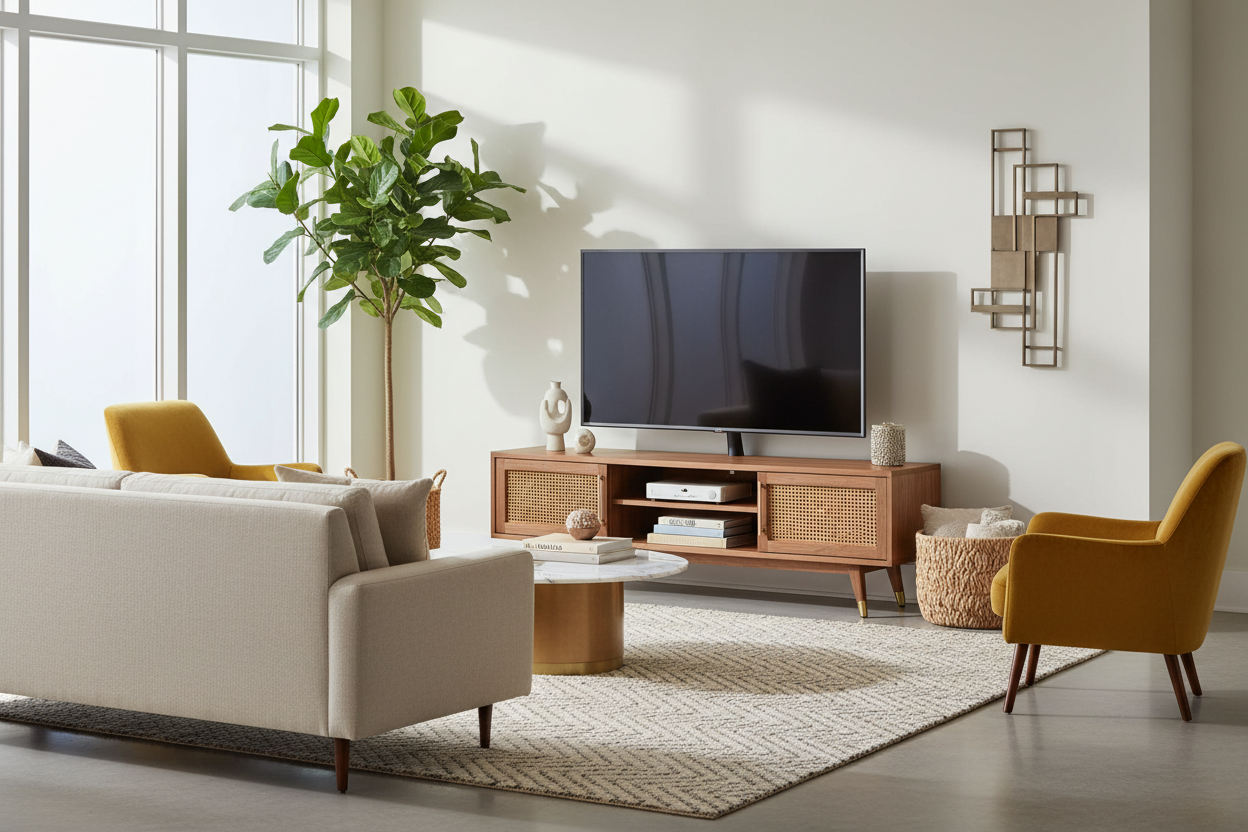
We've all stared at that massive black rectangle in the living room and wondered how to make it feel less like an electronics showroom. TVs are visual voids, and slapping them on top of a generic, boxy console only makes the problem worse. If your living space feels cold or disconnected, bringing in a modern vintage tv stand is one of the most effective ways to ground the room with warmth and character.
In this guide, I'll walk you through how to choose a console that actually fits your floor plan, the materials that survive daily life, and the styling tricks that make a retro-inspired piece feel intentionally curated rather than outdated.
Quick Decision Guide
- Scale matters: Your TV stand should be at least 6 to 8 inches wider than your television on both sides to maintain proper visual weight.
- Check the depth: Ensure a minimum depth of 15 inches if you plan to store modern gaming consoles or receivers behind closed doors.
- Ventilation is non-negotiable: Vintage-inspired designs often feature solid fronts; look for discreet rear cutouts to prevent electronics from overheating.
- Mix, don't match: Pair warm wood tones with contrasting textures like matte black metal or woven cane to keep the look current.
Material & Build Quality
Solid Wood vs. High-Quality Veneer
When clients ask for a mid-century or retro look, they usually picture solid walnut or teak. While solid wood is the gold standard for durability, a high-quality wood veneer over an MDF core is often a smarter choice for North American homes. Why? Because solid wood expands and contracts with our drastic seasonal humidity shifts, which can warp long console doors. A well-constructed veneer provides that rich, authentic grain pattern while remaining structurally stable year-round.
Space Planning & Layout
Nailing the Proportions
One of the most common mistakes I see in suburban family rooms is a massive 75-inch screen teetering on a dainty retro modern tv stand. The silhouette of mid-century and vintage-inspired furniture is naturally lighter, often sitting on tapered or hairpin legs. To anchor a large modern television, you need a console with enough mass. If you have an open-concept layout, pull the stand slightly away from the wall to let the piece breathe, and ensure you leave at least 36 inches of walkway clearance between the console and your coffee table.
Style & Coordination
Blending Eras Seamlessly
The magic of a vintage-inspired piece is its ability to warm up a stark, contemporary room. If your home leans heavily into sleek, modern lines, introducing a console with fluted wood details, brass hardware, or cane webbing adds necessary friction. The goal isn't to create a 1960s time capsule. Pair your warm-toned wooden stand with a textured linen sofa or a stark, architectural floor lamp. This tension between old-world texture and modern minimalism is what gives a room that high-end, collected-over-time aesthetic.
Designer's Honest Take
A few years ago, I sourced a stunning, authentic tambour-door credenza for a client's media room. It was an absolute showstopper. The rich teak wood brought the exact vintage charm we wanted. But I learned a hard lesson about mixing old storage with new tech.
Those beautiful, slatted wooden doors completely blocked the infrared signals for their cable box and sound system. Furthermore, the vintage piece had zero cable management. I ended up having to hire a carpenter to drill custom ventilation and wire-routing holes into the back of a very expensive antique. If you are buying a true vintage piece—or even a lower-end modern replica—always verify that your remotes will work through the doors, or be prepared to invest in an IR repeater system. Sometimes, the charm of a vintage silhouette comes with serious functional headaches.
Frequently Asked Questions
What size modern vintage TV stand do I need?
Always measure your TV diagonally, but measure your stand horizontally. A good rule of thumb is that your console should be about 20 percent longer than the width of your TV. For a 65-inch TV (which is roughly 57 inches wide), look for a stand that is at least 68 to 72 inches long.
Do slatted or cane doors block remote control signals?
It depends on the density of the material. Wide slats and loosely woven cane usually let IR signals pass through without issue. However, tightly woven rattan or solid wood tambour doors will block signals, requiring you to open the doors while watching TV or buy a cheap IR repeater.
How do I hide cables on an open-back retro stand?
Many retro designs feature open shelving or spindle backs. To hide the inevitable mess of black cords, use a cable management box that matches your wall color, or bundle the wires together in a sleek, paintable cord cover routed straight down the back leg of the console.

Dejar un comentario
Este sitio está protegido por hCaptcha y se aplican la Política de privacidad de hCaptcha y los Términos del servicio.