










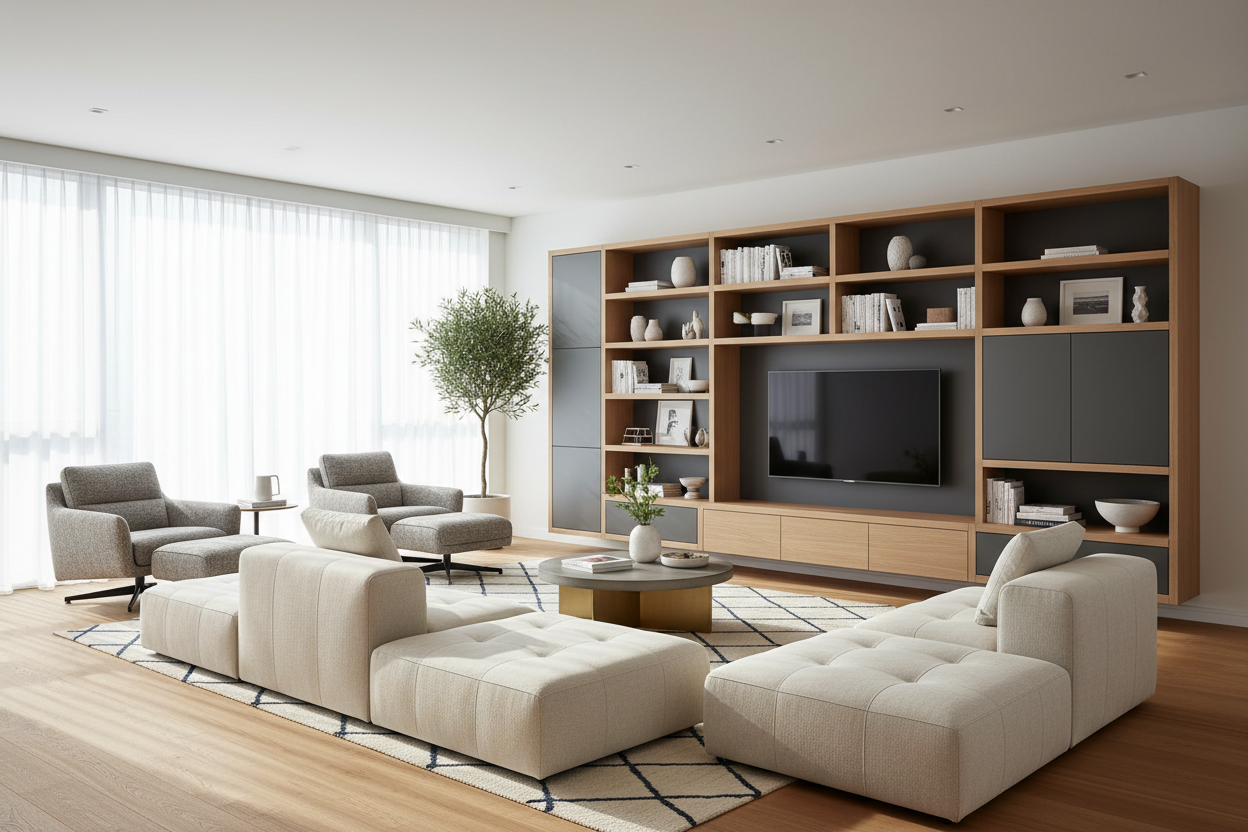
Last Saturday at 2 PM, I found myself sweating, heart racing, and trying to slide a 200-pound oak sideboard across my rug because I decided the living room felt 'unbalanced.' This is my life. I’m a serial rearranger. I’ve lived in six apartments in eight years, and every single time, I’ve had to rethink how I store my tech and books.
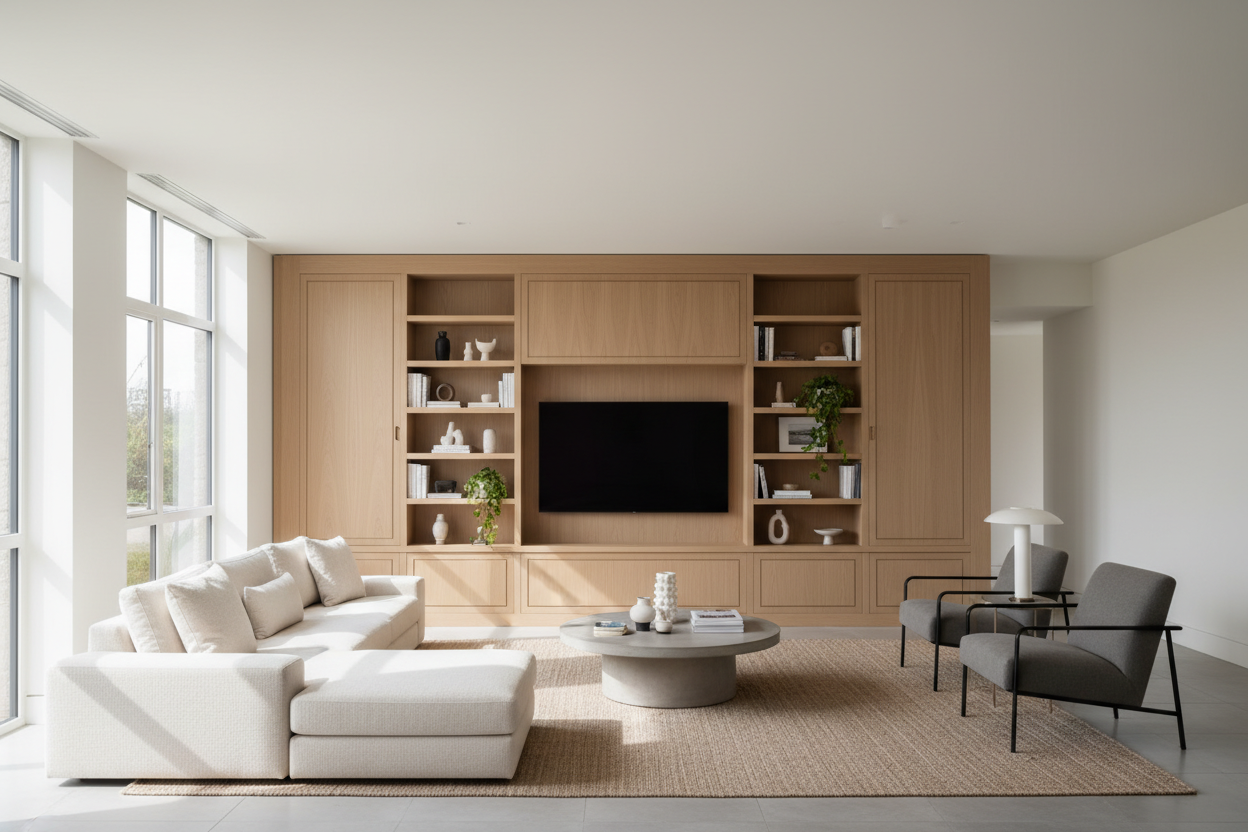
I used to pine for those floor-to-ceiling custom built-ins you see in architectural digests. They look expensive because they are—usually upwards of $8,000 for a decent wall. But then I realized: if I commit to a permanent structure, I’m stuck with that layout until I sell the house. That’s why I finally pivoted to a modular entertainment wall. It gives me the high-end look without the architectural handcuffs.
- Modular systems grow with you—start with a base and add towers as your book collection or plant obsession expands.
- They are significantly cheaper than custom carpentry but look miles better than a basic, stand-alone TV stand.
- Portability is the secret weapon; you can literally take your 'built-ins' with you when you move to a new place.
- Cable management is the biggest hurdle, so look for units with pre-drilled ports or open backs to hide the bird's nest of wires.
The Permanent Built-In Dream vs. My Constant Need to Rearrange
We’ve all been there: staring at a blank wall, imagining a perfectly flush, floor-to-ceiling library with a centered TV. It’s the Pinterest dream. But for someone like me who views a room as a constant work in progress, a permanent installation is a nightmare. I once spent three weeks researching a floating wall mounted media console because I wanted that airy, off-the-floor vibe, but I realized a single piece wouldn't cut it for my growing collection of vinyl and gaming consoles.
The problem with static furniture is that it dictates your life. If you buy a massive, one-piece wall unit, that wall is claimed forever. Modular systems break that cycle. They allow you to be indecisive. If I want to move the TV to the corner next spring to catch the morning light, I can just unclip the units and move them. No drywall repair or professional contractor required.
Why a Modular Media Wall Actually Makes Sense
A true modular media wall isn't just a couple of bookshelves pushed together. It’s a system of interchangeable parts—think of it as Legos for adults who care about interior design. You usually start with a low-profile base and then layer in vertical towers, bridge shelves, or hanging cabinets. The beauty is in the customization.
I always tell people to invest in expandable modular storage pieces that use a consistent mounting or joining system. This way, if you move from a 600-square-foot studio to a three-bedroom house, your furniture doesn't become obsolete. You just buy two more towers and a bridge shelf, and suddenly your 'apartment' furniture looks like a custom modular tv wall system designed for a much larger space.
Building My Modular TV Wall System (Without Losing My Mind)
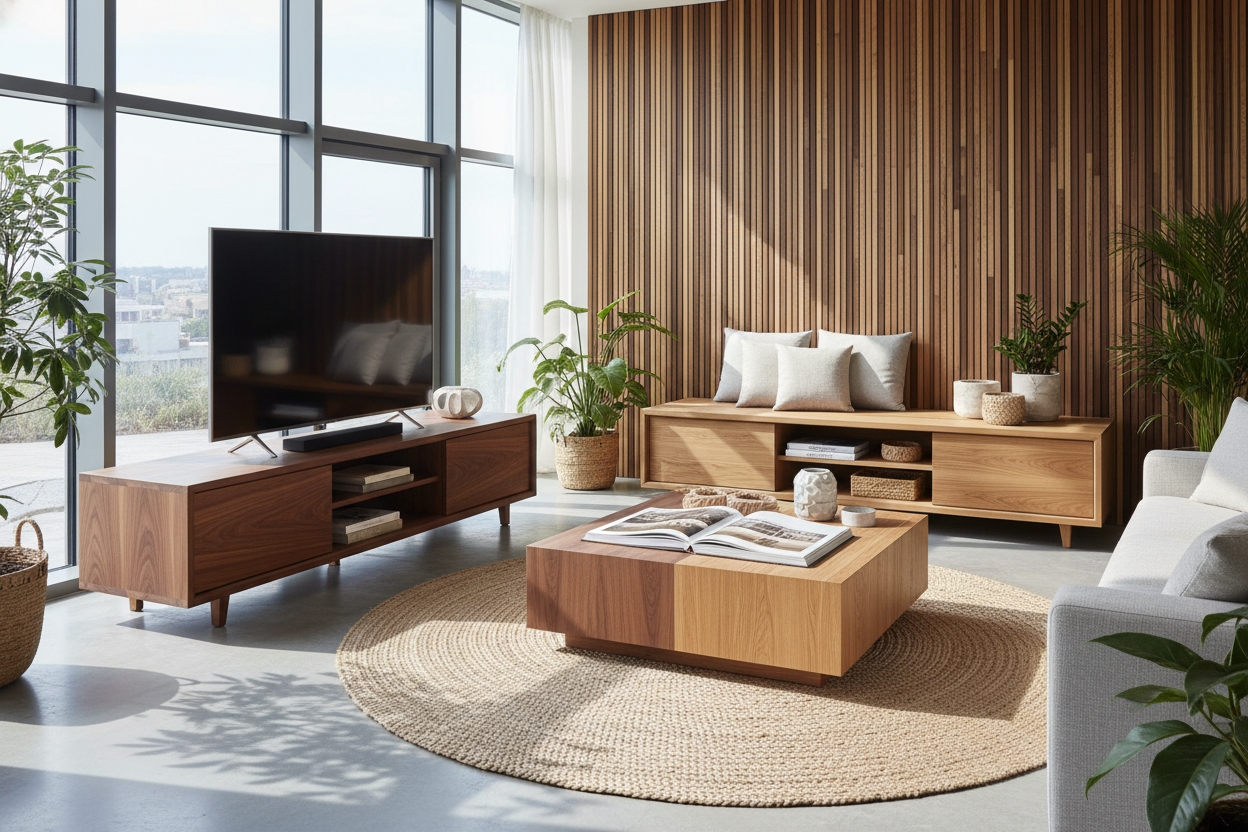
When I finally sat down to map out my current setup, I didn't just wing it. I used blue painter’s tape on the wall to mark out where the main components would sit. I knew I wanted a mix of closed storage (to hide the ugly plastic routers) and open shelving for the 'pretty' stuff. I started with a 90-inch wall mounted and freely arranged tv stand as my anchor. It gave the whole wall a grounded, intentional look that felt like it was part of the house.
From there, I added asymmetrical shelving above. Don't feel like you have to make it perfectly symmetrical; that can actually look a bit stiff. A heavy cabinet on the left balanced by a lighter, open shelf on the right creates visual interest that feels more like a curated gallery. Just make sure your base unit is rated for the weight of your TV—most 65-inch screens weigh about 50-60 lbs, and you don't want your 'freely arranged' stand to become 'freely falling.'
The Dark Side of Flexibility: Dealing with Cables
Here’s the honest truth: moving your furniture is easy, but moving your tech is a headache. Every time I shift my modular tv wall system, I’m reminded that I have too many wires. The more pieces you have, the more gaps there are for cords to peek through. It’s the one area where custom built-ins actually win because they have hollow cavities specifically for wiring.
To combat this, I’ve become a bit of a Velcro-strap fanatic. If you want to hide all your messy tech cords, you have to be proactive. I use adhesive cord clips along the back edges of the modular frames. My rule of thumb: if a cord is visible from the sofa, the whole 'high-end' look is ruined. It takes an extra 20 minutes during the rearrange, but it’s the difference between a professional-looking space and a cluttered mess.
3 Rules for Styling a Setup That Changes Every Season
First, keep your 'anchor' pieces neutral. My base cabinets are a matte white, which lets me swap out the decor and even the wall color without a clash. Second, vary your heights. If every modular piece is the same 30-inch height, the room feels flat and uninspired. Use a tall pier unit on one end to draw the eye upward and add some drama.
Lastly, leave some 'negative space.' You don't need to fill every single shelf with books or knick-knacks. A modular wall can look cluttered very quickly if you treat it like a storage unit. Leave a few sections empty or with just a single, oversized object. It makes the whole system feel more like architecture and less like a collection of boxes. Trust me, your eyes need a place to rest.
Is modular furniture as sturdy as solid wood?
It depends on the material. High-grade MDF with a thick veneer can be incredibly stable and resistant to warping, which is actually better for long shelves. If you’re buying cheap particle board, it’ll sag under the weight of books within a year. Always check the weight ratings per shelf before you load up that encyclopedia set.
Can I mount modular units to any wall?
Standard drywall with studs is fine, but if you’re doing a floating setup, you MUST hit the studs. Do not trust drywall anchors with a 75-inch TV and three cabinets full of heavy glassware. If you have plaster walls, I'd suggest using a professional installer to ensure the weight is distributed correctly.
How do I make modular pieces look like one unit?
The secret is the gap. Use the joining hardware provided by the manufacturer to cinch the units together tightly. If they aren't perfectly level, the gaps will scream 'separate pieces.' Use a level and adjustable feet to get everything flush, and it will look like a single, custom piece of furniture.

Dejar un comentario
Este sitio está protegido por hCaptcha y se aplican la Política de privacidad de hCaptcha y los Términos del servicio.