










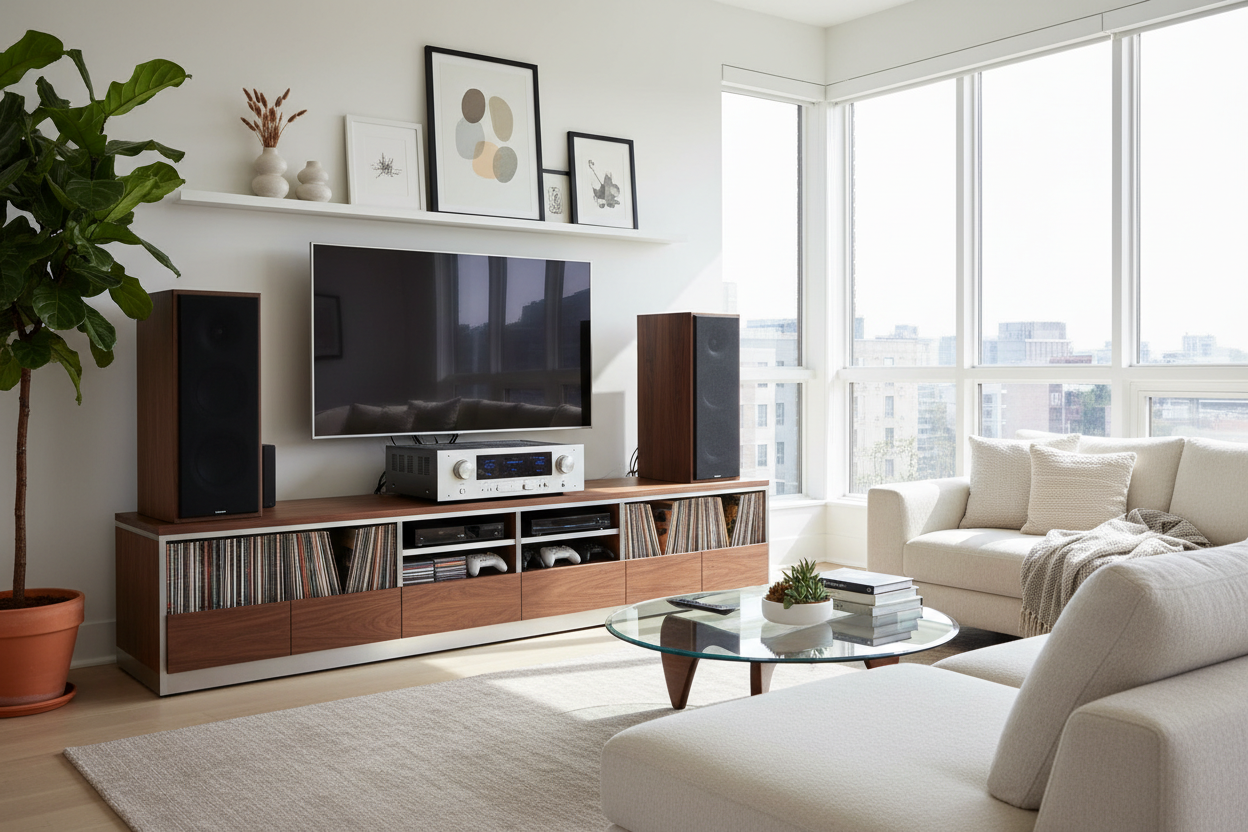
I remember staring at my living room floor about two years ago, and it looked like a Best Buy had exploded in my house. My partner had just salvaged this massive 1970s Marantz receiver that weighed about forty pounds, and I had a sleek, spindly sideboard that was currently bowing in the middle under the pressure. It was a disaster of tangled RCA cables and heat-warped wood. Finding a stereo tv cabinet that doesn't look like a server rack from a 1990s data center is surprisingly difficult.
- Deep shelves are non-negotiable for vintage amps.
- Always check the weight capacity of the middle shelf.
- Ventilation is the difference between a party and a house fire.
- Removable back panels save your sanity during setup.
The Audiophile vs. Decorator Turf War
It is the classic living room struggle. One person wants high-fidelity sound that requires massive, heavy components; the other wants a room that doesn't look like a frat house basement. For a long time, I thought I had to choose between a 'tech-heavy' look or a 'pretty' look that didn't actually function. A proper tv and stereo cabinet is the only way to broker peace in this scenario.
The goal is to hide the 'ugly' parts of the hobby—the thick cables, the dusty power strips, and the glowing LEDs—while making the music accessible. You want a piece that says 'I have taste' while secretly housing enough power to rattle the windows. It’s about creating a focal point that respects the gear without letting it take over the entire aesthetic of the room.
Why Your Basic Console Is Crushing Your Gear
Most 'media units' you find at big-box retailers are built for a thin Roku and maybe a soundbar. They are often only 14 inches deep. My receiver is 17 inches deep, and that is before you even plug in the cables. If you try to force it, you end up making tv stand and cabinet mistakes like cutting jagged holes in the backboard with a kitchen knife just so the door will close.
Beyond depth, there is the weight issue. Cheap MDF or thin plywood will sag within months if you put a heavy amplifier on it. A dedicated tv and stereo stand is built with center support legs or thicker kiln-dried hardwoods to handle the literal gravity of a high-end audio setup. I once saw a glass-topped unit shatter because someone underestimated the weight of a vintage tube amp. Don't be that person.
The 3 Non-Negotiables for TV Stereo Cabinet Furniture
When you are hunting for tv stereo cabinet furniture, you have to look past the finish and the hardware. First, you need a minimum internal depth of 18 to 20 inches. This allows for the 'cable bend radius'—those thick speaker wires need space to curve without snapping. Second, you need adjustable shelving. Audio components are never a standard height; you need to be able to drop a shelf to fit a chunky receiver and raise another for a slim CD player.
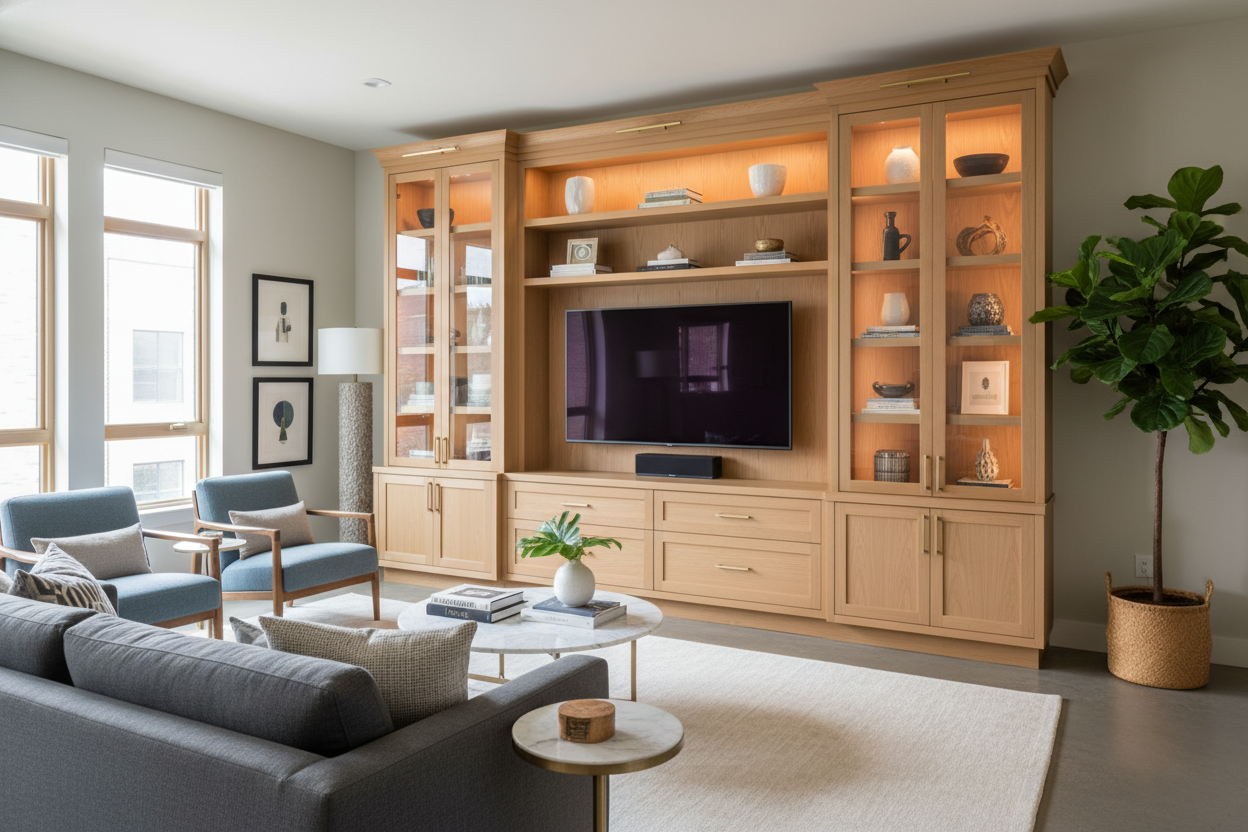
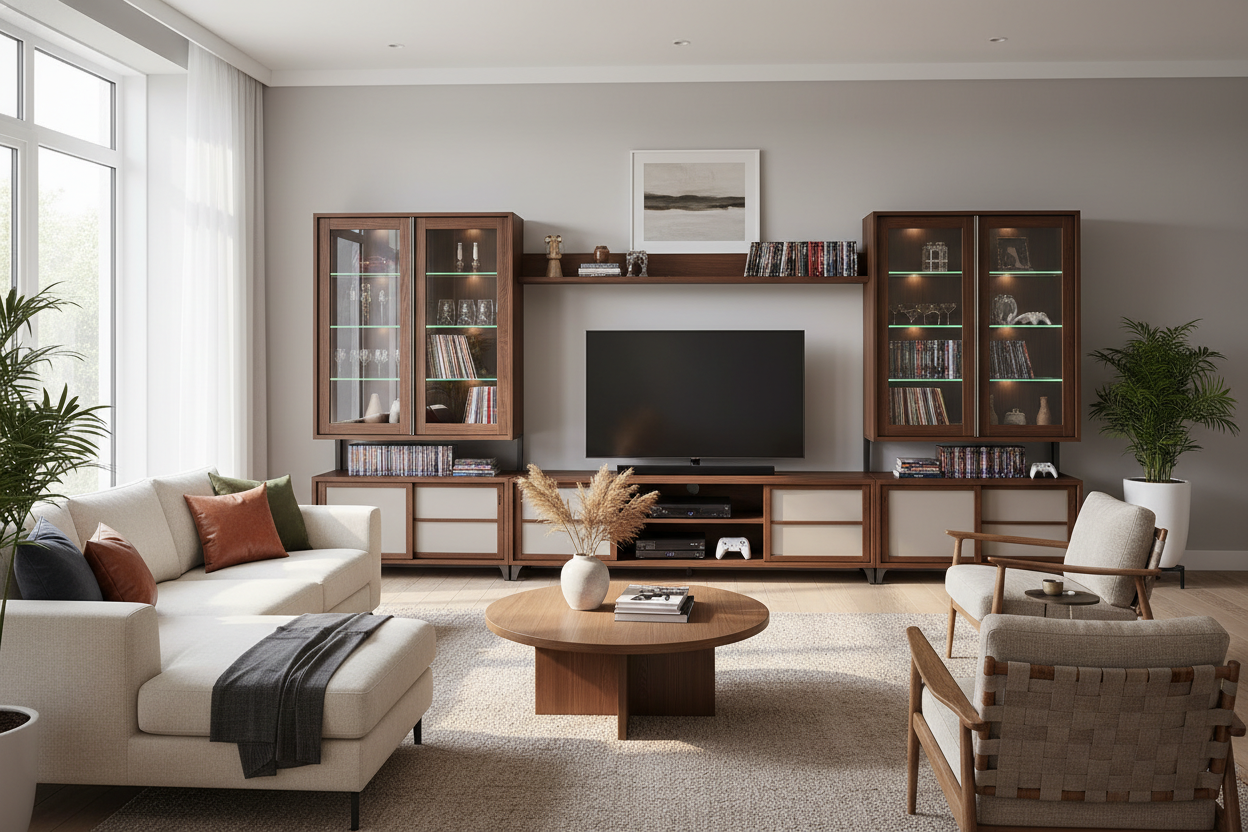
Third, look for a removable back panel. Trying to thread a dozen wires through a two-inch grommet hole is a form of torture. I prefer a modern tv console cabinet that offers a mix of open shelving for the hot gear and drawers for the boring stuff like manuals and extra remotes. It keeps the visual weight balanced while providing the structural integrity your equipment deserves.
Ventilation is Everything (Don't Fry Your Amp)
Amps get hot. I’ve seen Class A/B amplifiers get so warm they could practically toast bread. If you lock a high-powered receiver inside a sealed wooden box with no airflow, it will eventually go into thermal shutdown—or worse, it will slowly cook its own internal capacitors until it dies. You need airflow, period.
This is why I often recommend a cabinet with glass doors or, even better, slatted wood doors. Slat fronts allow air to circulate freely while hiding the clutter from view. Glass is great because it lets IR signals from your remote pass through, but you must ensure the unit has large vents in the back or bottom to let the heat escape. I usually leave about three inches of clearance above my amp inside the cabinet just to be safe.
Where to Actually Put the Turntable
The turntable always goes on the top surface of the stereo tv stand. It’s the crown jewel. But here is the trick: it needs to be perfectly level and isolated from vibration. If your cabinet is wobbly, every time you walk past it, the needle will skip. I like to offset the TV to one side and keep the turntable on the other, which makes it feel like an intentional 'listening station' rather than just a pile of electronics.
I also suggest using small isolation feet under the turntable if your speakers are on the same surface. It prevents the bass from vibrating the needle. My setup involves a heavy oak cabinet that doesn't budge, which is the secret to getting that crisp, skip-free sound even when the kids are running through the house. It took me three tries to find the right unit, but seeing that clean, wire-free setup every morning makes the search worth it.
How deep should a stereo cabinet be?
Look for at least 18 inches of internal depth. Standard 14-inch consoles will leave your receiver sticking out the front or prevent the back cables from plugging in properly.
Can I put my amp behind closed doors?
Only if the doors are slatted for airflow or if the back of the cabinet is completely open. Never run a high-powered amp in a fully sealed wooden box.
What is the best material for an audio stand?
Solid wood or high-grade plywood is best. Avoid thin MDF, as it tends to sag under the weight of heavy vintage transformers and receivers over time.

Dejar un comentario
Este sitio está protegido por hCaptcha y se aplican la Política de privacidad de hCaptcha y los Términos del servicio.