










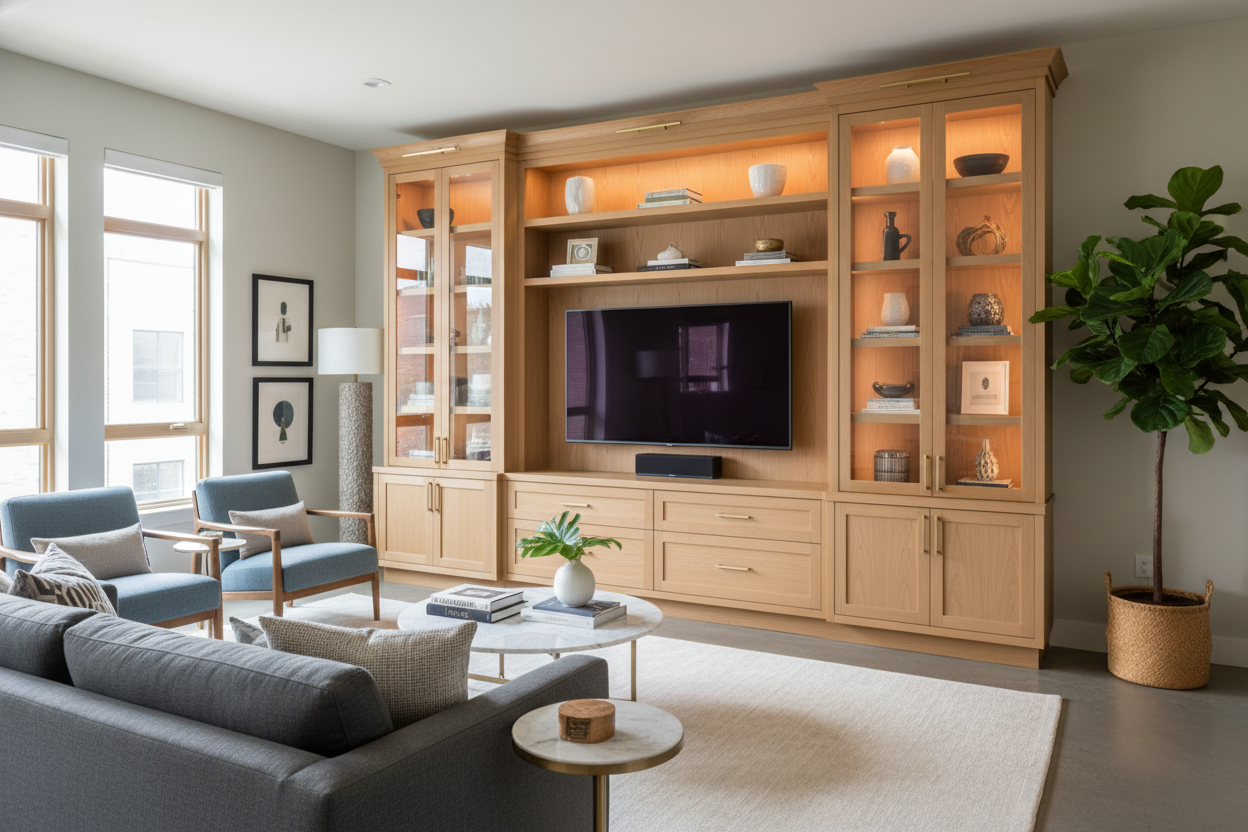
I spent three years staring at a 75-inch TV perched precariously on a mid-century modern console that was exactly 60 inches wide. It looked ridiculous. It was like a bodybuilder trying to squeeze into a toddler’s t-shirt. I told myself I was being 'flexible' with my decor, but in reality, I was just wasting money on individual pieces that never quite fit the scale of my wall. I finally realized that a builtin entertainment center was the only way to stop the cycle of furniture regret.
Quick Takeaways
- Built-ins eliminate the 'floating island' look of small consoles on large walls.
- Floor-to-ceiling units utilize vertical space and actually make small rooms feel larger.
- Modular pieces can mimic a custom look without the $5,000 contractor bill.
- Cable management becomes a non-issue with dedicated internal routing.
The Endless Cycle of Too-Small TV Stands
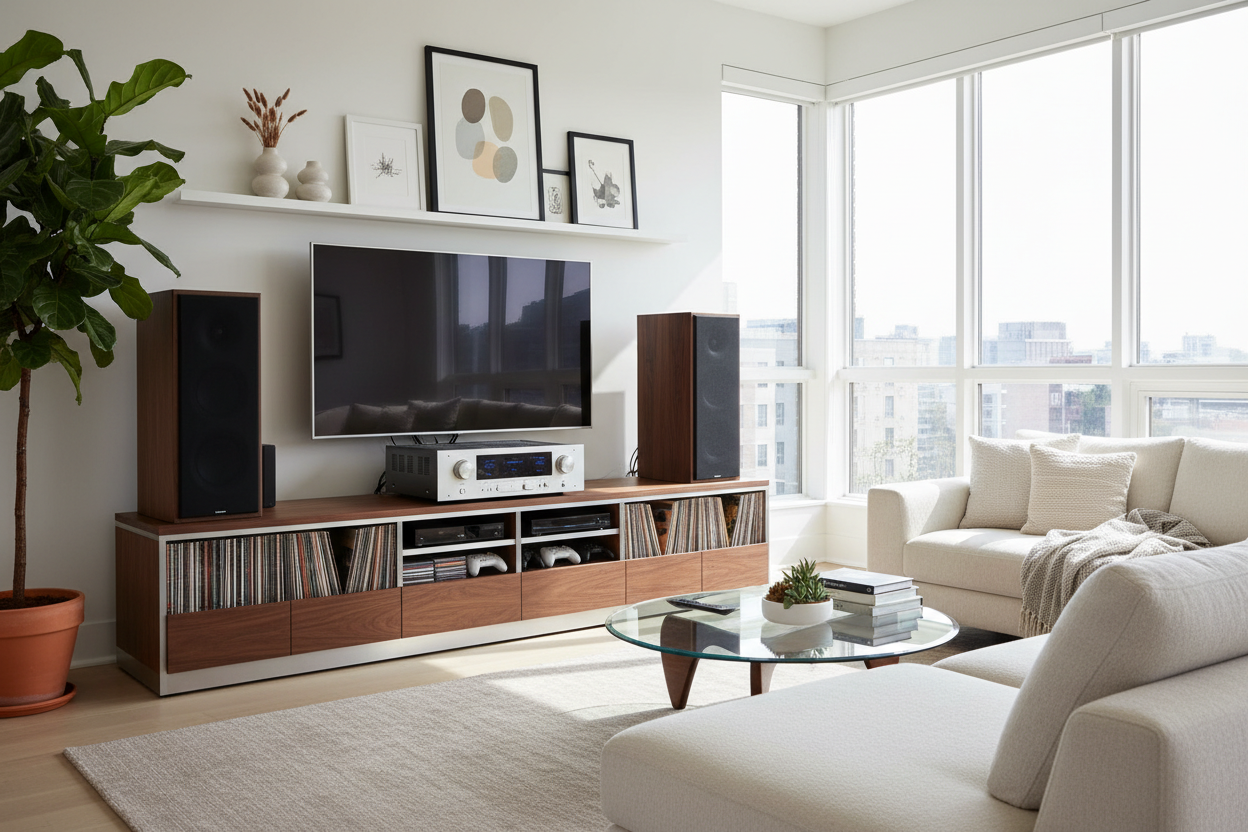
There is a specific kind of interior design purgatory reserved for people who buy freestanding TV stands for large living rooms. You know the look: a 6-foot console centered on a 14-foot wall, leaving two awkward 'dead zones' on either side that you try to fill with dusty floor plants or a lopsided floor lamp. It never looks finished. It always looks like you just moved in and haven't decided on real furniture yet.
I went through three different 'trendy' stands in four years. Each time, I thought a different wood grain or a slightly longer profile would fix the balance. It didn't. I eventually realized I stopped buying trendy consoles because they were just expensive Band-Aids. Standard built in entertainment cabinets solve the scale problem by owning the entire wall. Instead of a lonely piece of furniture, you get an architectural feature that feels like it belongs to the house.
The worst part about the freestanding life was the 'spaghetti monster'—the tangle of HDMI cables, power strips, and router wires that always peeked out from behind the legs. No matter how many Velcro ties I used, it looked messy. Built-in entertainment center modern designs integrate the tech into the cabinetry, so the only thing you actually see is the screen.
How a Builtin Entertainment Center Actually Saves Space
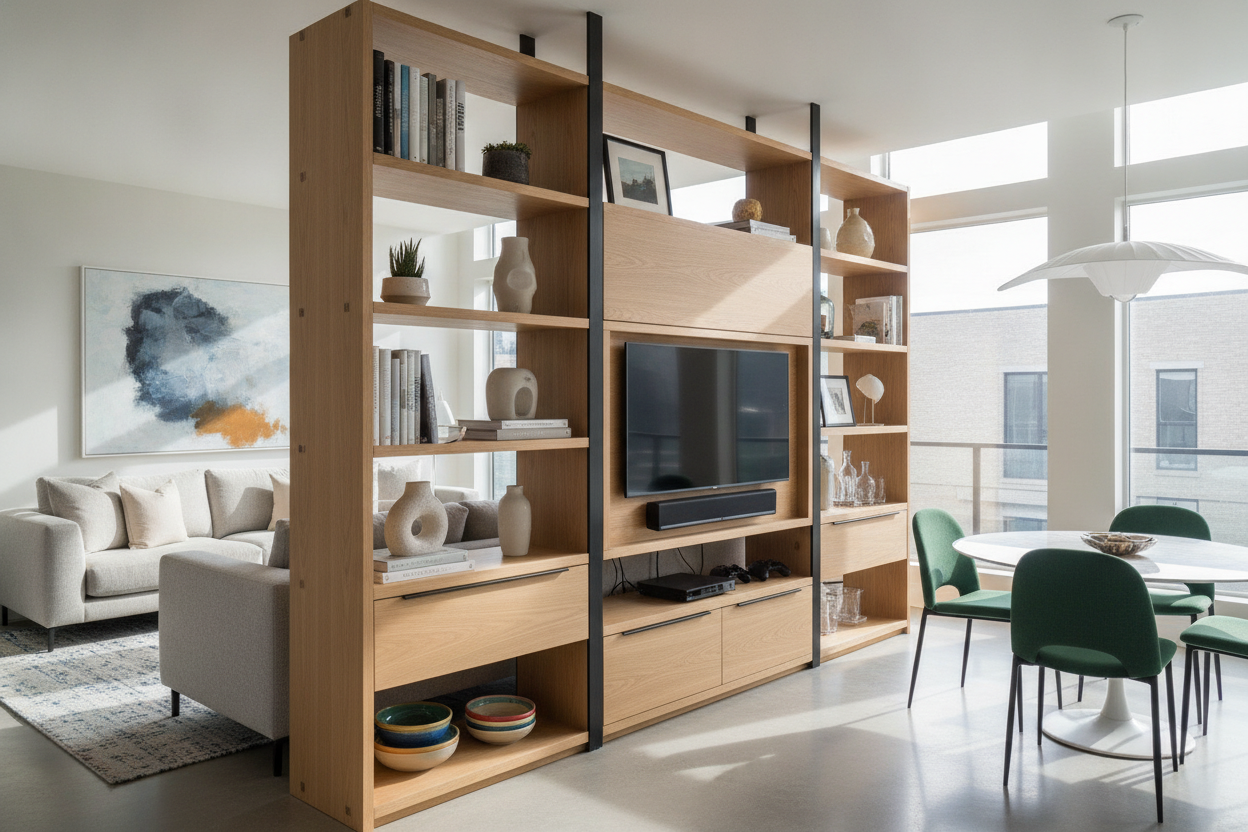
It sounds counterintuitive: how does adding a massive, wall-to-wall entertainment unit built in make a room feel bigger? It’s all about visual clutter. When you have a TV stand, a bookshelf, and a separate storage cabinet, your eye has to jump between three different objects. This breaks up the room and makes it feel choppy and cramped.
When I finally ditched my tv stand for a built-in cabinet wall, the room suddenly felt twice as wide. By using a built-in cabinet for tv that stretches from floor to ceiling, you’re drawing the eye upward. You’re also creating a flush surface. My old console stuck out 18 inches into the walking path; my new built in cabinet tv setup is recessed just enough to feel like part of the wall itself.
A built in cabinet with tv also provides a home for all the stuff that usually litters the coffee table. Remotes, gaming controllers, and those random instruction manuals all disappear behind built in tv cabinets. You aren't just buying a place for the TV; you're buying a storage system that replaces three other pieces of furniture. It’s the ultimate hack for small apartments or narrow dens where every square inch of floor space is a premium.
Faking the Custom Look Without the Contractor Price Tag
Let’s be real: hiring a carpenter to build a custom built-in wall entertainment center can cost as much as a used Honda. I didn't have $8,000 for a custom job, so I looked into modular options. You can get that built-in tv entertainment unit look by using high-quality, pre-fabricated pieces that fit together seamlessly. The trick is to find units that offer a 'flush' fit.
I found that using a modern 3 piece entertainment center with overhead cabinets gave me the exact same aesthetic as a custom build. By choosing a unit that includes bridge shelving or overhead storage, you create a frame around the television. This 'frames' the tech, making it look like a built-in tv stand rather than a piece of glass and plastic stuck to a wall. If you’re handy, you can even add crown molding to the top of modular units to truly trick the eye.
Whether you’re looking for built in tv units or a more traditional built tv unit, the key is the side-to-side coverage. If you can fill at least 80% of the wall's width, it will look intentional. I’ve seen people use a built in bookcase tv cabinet approach where they flank a central console with tall library shelves. It’s a classic look that works for everything from farmhouse to ultra-modern styles.
Cord Management is Finally a Solved Problem
If you’ve ever spent an afternoon on your hands and knees trying to fish a power cord through a tiny 2-inch hole in the back of a cheap dresser, you know the pain. Entertainment center built in cabinets are designed with tech in mind. They usually feature internal channels that allow you to run wires from the top shelf to the bottom baseboard without ever seeing a single wire.
For my setup, I used a black cabinet with glass doors at the base of my built in entertainment wall units. This is a pro tip: glass doors allow your IR remotes to work with your cable box or receiver while keeping the ugly black boxes hidden away. It also helps with airflow. One mistake I made early on was shoving a PlayStation into a solid wood cabinet with no ventilation—it sounded like a jet engine within twenty minutes. Modern built in tv cabinet with doors often include ventilated back panels to prevent your electronics from melting.
Using built in tv cabinets for flat screen tv setups also means you can mount the screen directly to the back panel of the unit. This gives you the 'floating' look without having to drill massive holes into your actual drywall, which is a huge win if you ever decide to rearrange the room later (though with a built-in, you probably won't).
Is Committing to a Wall Unit Worth It?
The biggest hurdle for most people is the 'commitment.' An inbuilt tv unit is a permanent choice. You can't just slide it into the corner next month. But after years of furniture musical chairs, I’ve found that commitment is actually a relief. It anchors the room. It gives you a focal point that doesn't feel flimsy.
Of course, if you’re a renter or someone who moves every twelve months, a massive built in entertainment unit might not be the move. In those cases, I’d suggest something like an adjustable length modern tv console cabinet. It gives you some of that 'wall-filling' flexibility without the permanent footprint. But for homeowners? Stop buying the small stuff. A built in cabinet entertainment center is the single best upgrade I’ve made to my home’s value and my own sanity.
FAQ
How do I choose the right size for a built-in?
Measure your wall and subtract about 6-10 inches from each side if you don't want it to be truly wall-to-wall. However, for the best look, go as wide as the room allows. Ensure the TV opening is at least 5-10 inches wider than your current screen to account for future upgrades.
Can I install a built-in entertainment center myself?
If you’re using modular pieces, absolutely. Most 'built-in' looks are just 3 or 4 separate cabinets pushed together and anchored to the wall studs. Just make sure you have a level and a stud finder.
Do built-in cabinets make a room look dark?
Not if you choose the right finish. If you have a smaller room, go with light oaks or whites. If you have a massive, sun-drenched space, a dark charcoal or navy built-in can add incredible depth and a moody, high-end feel.

Dejar un comentario
Este sitio está protegido por hCaptcha y se aplican la Política de privacidad de hCaptcha y los Términos del servicio.