










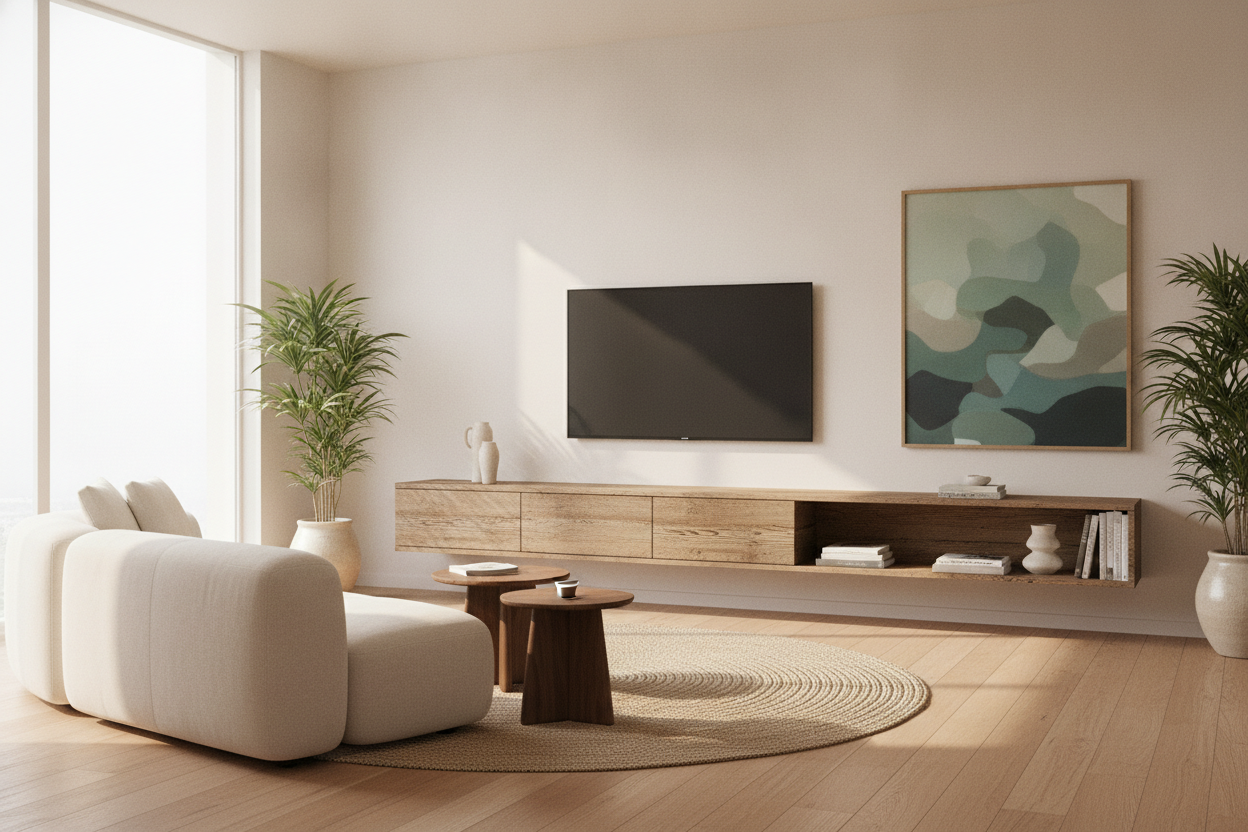
I spent years avoiding anything with the word 'rustic' in the description. To me, it conjured images of heavy, over-distressed barn wood and those chunky X-frame coffee tables that look like they belong in a literal stable. I wanted my living room to feel like a boutique hotel, not a roadside antique shop. But after living with a sterile, high-gloss white console for two years, my space felt cold, clinical, and frankly, a bit boring.
I realized I didn't hate wood; I hated the bulk. I needed the warmth of natural grain without the visual weight of a piece of furniture that looks like it’s anchored to the floor with lead weights. That is how I ended up with a floating rustic tv stand. By lifting that raw, organic texture off the floor, the whole room suddenly had breathing room.
- Visual Airflow: Clearing the floor space makes even the smallest apartments feel twice as large.
- Texture Balance: Rough-hewn wood softens the 'black mirror' effect of a giant television.
- Cable Stealth: Floating units are the ultimate way to hide messy wires behind a clean wooden facade.
- Mounting is Key: Real wood is heavy; you cannot skip the studs for this installation.
Why 'Rustic' Doesn't Have to Mean 'Chunky Barn Wood'
The biggest mistake people make is thinking rustic means outdated. A rustic floating tv console is actually a masterclass in modern design because it relies on the material itself to do the heavy lifting, rather than ornate carvings or bulky legs. When you strip away the floor-standing base, you're left with a clean horizontal line that feels incredibly architectural.
I’ve tested the flimsy particle board versions that try to mimic this look with 'wood-look' laminate, and they always fail the vibe check. You want something with actual grain—the kind where you can feel the ridges of the wood. Because it’s wall-mounted, you get all that tactile, earthy goodness without the piece dominating the entire room. It’s an airy alternative that doesn't sacrifice character for the sake of minimalism.
The Magic of Mixing Sleek Lines With Raw Textures
If you live in a contemporary or organic modern home, you probably worry that wood will clash with your clean lines. It’s actually the opposite. A reclaimed wood floating tv stand acts as a necessary counterpoint to the sharp angles of a flat-screen TV and glass coffee tables. It brings a soul into the room that plastic and metal just can't replicate.
While a massive rustic entertainment center with shelves is great if you have a 20-foot wall to fill, most of us are working with tighter footprints. The floating geometry keeps the floor visible, which tricks the eye into seeing more square footage. You get the 'wow' factor of the live edge or the weathered timber, but the silhouette remains strictly 21st-century.
How I Styled My Floating Setup (Without the Clutter)
The beauty of a floating entertainment center rustic style is that it forces you to be intentional. You can't just shove a bunch of junk underneath it like you might with a traditional cabinet. I use the space below mine for two low-profile woven baskets that hold extra throw blankets and my dog’s toys. It keeps the floor clear but adds a layer of soft texture that complements the wood.
On the top surface, I treat it more like a floating tv shelf rustic accent than a media hub. I keep it simple: one matte ceramic vase and a small stack of books. If you try to crowd it with speakers and game consoles, you lose the clean line that makes the floating look so effective. If you find yourself needing more storage for a massive DVD collection or four different gaming systems, you might want to browse standard TV stands instead, as floating units demand a 'less is more' philosophy.
Hardware Reality Check: Hanging Heavy Wood
Let’s be real for a second: you cannot hang a rustic wall mounted entertainment center with a couple of plastic drywall anchors and a prayer. I learned this the hard way when I tried to mount a solid oak shelf in my first apartment and watched it slowly tilt forward like a sinking ship. Solid timber is dense and heavy.
When you are installing a floating rustic entertainment center, you must use a stud finder. No exceptions. Most high-quality units come with a French cleat system, which is basically a long wooden or metal bracket that distributes the weight across multiple studs. If you are buying a pre-built wall mounted media console entertainment center, check the weight capacity before you buy. My 60-inch unit weighs about 45 pounds empty; add a soundbar and some decor, and you're putting a lot of faith in your wall's construction.
Frequently Asked Questions
How high should I mount my floating TV stand?
The sweet spot is usually having the bottom of the unit about 10 to 12 inches off the floor. You want it high enough to see the floor underneath, but low enough that your TV stays at eye level when you're sitting on the sofa. If you have to tilt your head back, it's too high.
Can I hide the cords if I don't want to cut into my drywall?
Yes, but it's harder. You can use a paintable cord cover that runs from the bottom of the stand to the outlet, but for the cleanest look, I recommend a 'recessed media box' behind the stand. It allows the plugs to sit inside the wall so the unit can sit flush.
Is reclaimed wood harder to clean?
Not really, but you can't just spray it with Windex. Use a microfiber cloth and a wood-specific cleaner. Since it's 'rustic,' a few extra character marks or dust in the grain just add to the look anyway.

Dejar un comentario
Este sitio está protegido por hCaptcha y se aplican la Política de privacidad de hCaptcha y los Términos del servicio.