










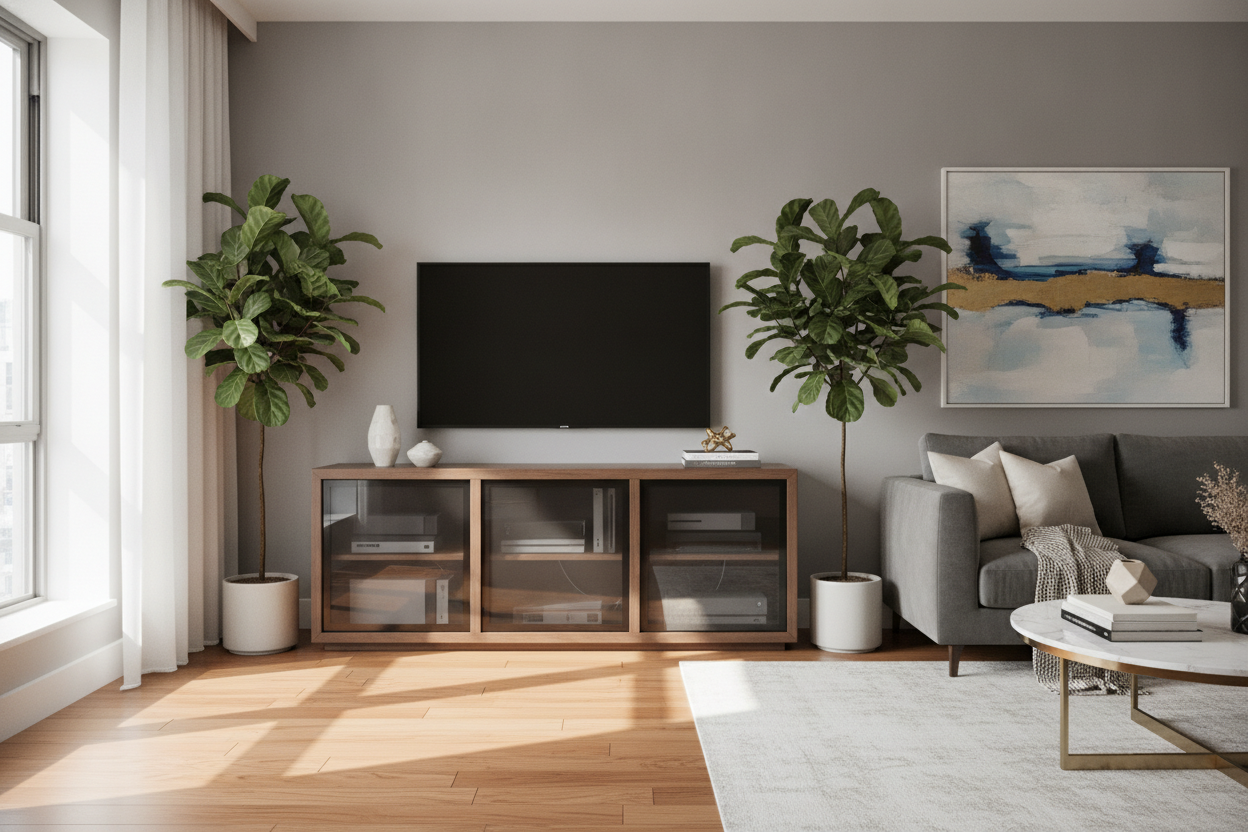
My living room used to look like a RadioShack backroom from 1998. Between the PS5, the Switch, the Apple TV, and a router that blinks like a strobe light, the area under my television was a dusty tangle of black plastic and neon green LEDs. I tried the whole 'open shelving' minimalist thing, but unless you spend four hours a week dusting your HDMI cables, it just looks messy.
I spent weeks scrolling through 47 browser tabs of tv unit glass doors options, trying to find a way to hide the chaos without losing functionality. I didn't want a solid box that would bake my electronics, but I also couldn't stand looking at my dusty Nintendo 64 collection anymore. The solution ended up being a lot more stylish than I expected.
- Glass doors allow infrared signals to pass through, so your remotes actually work.
- Fluted or smoked glass is the secret for hiding messy cables while keeping things airy.
- Heat is the enemy—always check for back-panel ventilation.
- Tall units are better for narrow rooms; small units work best for minimalists.
The 'Tech Farm' Problem: Why Open Shelves Were Ruining My Living Room
Open shelving is a lie sold to us by people who don't actually own electronics. It looks great in a catalog with one ceramic vase and a single coffee table book, but the second you plug in a router, the aesthetic dies. My living room felt like a 'tech farm'—a collection of blinking lights and tangled wires that caught every cat hair in a five-mile radius.
Every time I sat down to watch a movie, my eyes would drift to the glowing blue light of the internet hub. It was distracting. Plus, cleaning open shelves around delicate electronics is a nightmare. You're either moving a dozen heavy consoles or just letting the dust bunnies colonize your PlayStation vents. I needed a barrier that didn't feel like a wall.
Why Solid Wood Doors Are a Trap for Gamers
I almost bought a beautiful mid-century sideboard with solid walnut doors. I'm glad I didn't. Solid doors are a death sentence for modern consoles. A PS5 or an Xbox Series X generates an incredible amount of heat; trap them in a wooden box with no airflow, and you'll be hearing the fans scream within twenty minutes. Then there's the remote issue. Most standard remotes need a line of sight, and wood doesn't exactly let signals through.
I realized this after I Swapped My Solid Console for a Wood TV Cabinet With Glass Doors. Suddenly, I didn't have to leave the doors hanging open like a kitchen cabinet while I played games. The glass provides that necessary window for the IR sensors while keeping the physical heat-trapping to a minimum, provided you have decent cutouts in the back for air exchange.
Fluted vs. Smoked: Choosing Your Entertainment Unit Glass Doors
Not all glass is created equal. Clear glass is basically just a dust-proof window—it doesn't hide the mess. If you want to actually obscure the fact that you have six different controllers and a mess of power bricks, you need texture or tint. An entertainment unit glass doors setup with fluted or ribbed glass is my personal favorite. It blurs the contents into soft shapes and colors without showing the specific 'spaghetti' of the wires.
If you prefer a more modern, moody look, go with smoked glass. I've found that a Black Cabinet With Glass Doors using smoked panels is the ultimate camouflage. The dark tint blends perfectly with the black plastic of most consoles and the TV screen above it. It makes the whole setup look like one cohesive unit rather than a TV sitting on top of a box of junk.
Going Vertical: When You Need a Tall TV Stand With Glass Doors
If you're living in a place with high ceilings but zero floor space, stop looking at wide credenzas. A tall tv stand with glass doors can be a lifesaver. By moving the storage upward, you get space for things that aren't tech—like your board game collection or vinyl records—on the higher shelves while keeping the consoles at eye level. It uses vertical real estate that usually just goes to waste.
I recommended a Tall Storage Cabinet With Glass Doors to a friend in a studio apartment last month. It allowed her to tuck her router and cable box on a middle shelf and use the bottom for heavy books. It keeps the footprint small but the storage high, which is the only way to survive in under 500 square feet without feeling claustrophobic. Plus, a tall tv cabinet with glass doors adds a bit of architectural interest to a flat wall.
Apartment Reality: Making a Small TV Cabinet With Glass Doors Work
For the rest of us in cozy apartments, a small tv cabinet with glass doors is usually enough. You don't need an 80-inch monstrosity if you only have a TV and a soundbar. Look for something around 40 to 50 inches wide. The glass doors are especially important in small rooms because they reflect light and have a see-through quality that prevents the furniture from feeling like a heavy, dark lump against the wall.
My 3-Step Cord Hiding Strategy (That Actually Works)
Glass doors hide a lot, but they aren't magic. If you have a bright white wall behind your unit and black cables hanging down, you'll still see them through the glass. First, I use Velcro ties—never plastic zip ties, which are a pain to cut off when you buy a new gadget. Bundle the cables tightly behind each console so they don't splay out.
Second, I use a bit of black foam board to create a 'false back' inside the cabinet if the unit doesn't come with a good one. This hides the wall and the outlet. Finally, I place one 'distraction' item on the shelf in front of the densest cable cluster—usually a small decorative box or a stack of games. Behind the glass, it looks intentional and clean, not chaotic.
FAQ
Will my remote work through the glass?
Yes, standard IR remotes work through clear, smoked, and even most fluted glass. If you have Bluetooth remotes (like Apple TV or modern consoles), they don't even need a line of sight, so you're totally fine regardless of the door material.
Do consoles overheat behind glass doors?
They can if there is zero ventilation. Make sure the back of your unit has large precut holes for cables, which also act as air vents. I usually leave about two inches of space between the console and the glass door to ensure air can circulate around the intake vents.
Is tempered glass worth the extra cost?
Absolutely. For a TV unit, you want tempered glass. If a controller flies out of your hand during a heated game or a vacuum hits the door, tempered glass will crumble into dull bits rather than shattering into dangerous, sharp shards. It is a non-negotiable for me.

Dejar un comentario
Este sitio está protegido por hCaptcha y se aplican la Política de privacidad de hCaptcha y los Términos del servicio.