










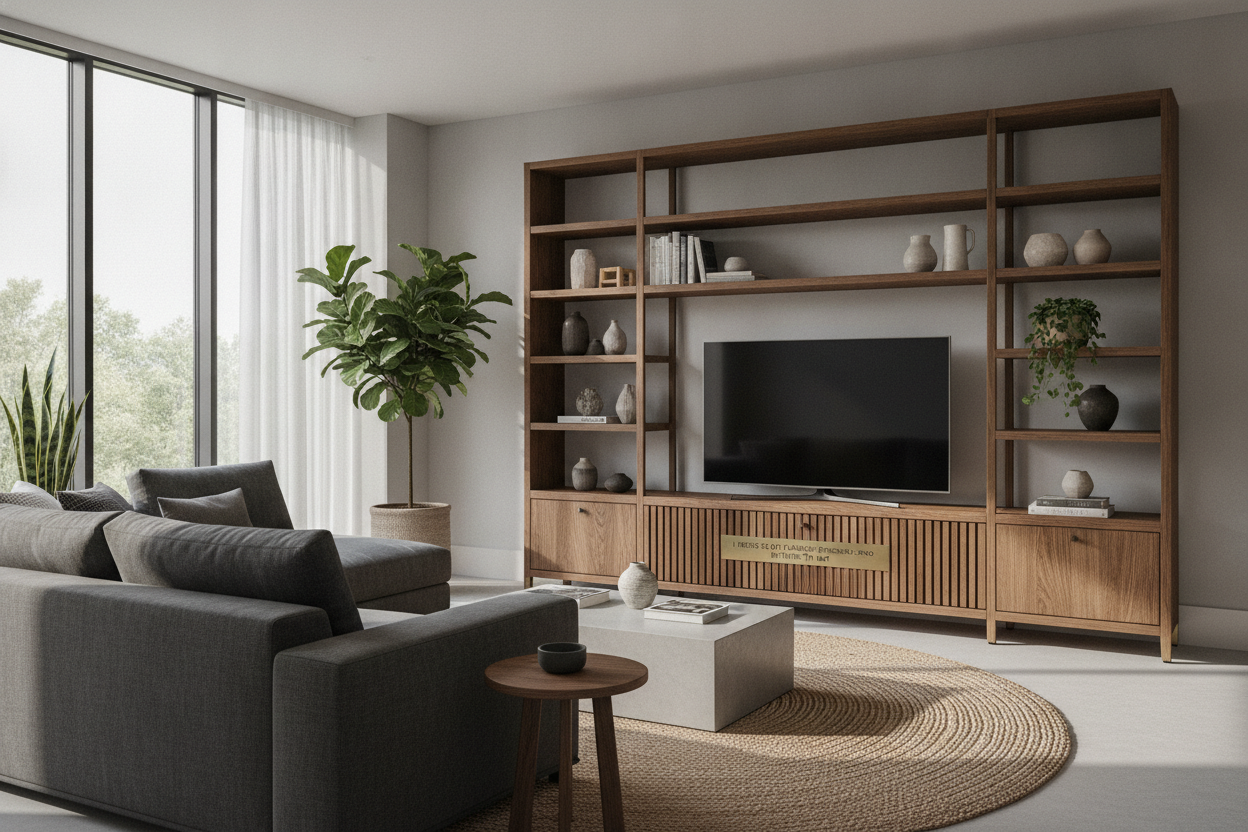
I have spent the last decade of my life in a cycle of 'temporary' living. Every time I moved into a new apartment, I’d panic-buy a cheap, $80 particle board console because I just needed something to hold the screen. By the second move, the cam locks would wiggle loose, the veneer would peel like a bad sunburn, and the middle would sag under the weight of a 55-inch screen. Finding my next tv unit wasn't just about aesthetics; it was about ending the renter's tax of buying the same furniture twice.
Quick Takeaways
- Avoid 'honeycomb' fill or thin MDF if you plan on moving the unit more than once.
- Prioritize ventilation—tech gets hot, and closed cabinets without airflow are hardware killers.
- Look for adjustable feet to compensate for the uneven floors found in older buildings.
- Measure your depth; modern consoles are getting shallower, but your soundbar or receiver might not be.
The 'Disposable Furniture' Trap (And Why I Finally Escaped It)
We’ve all been there. You’re staring at 47 browser tabs at 1 AM, trying to find something that looks decent but won't cost a month's rent. The problem is that most budget options are built for the showroom, not for real life. I once owned a stand that literally bowed two inches in the center after six months because the 'solid' top was actually hollow cardboard. It’s a waste of money and a fast track to the landfill.
I finally realized that spending $600 once is significantly cheaper than spending $150 four times. I stopped looking at 'deals' and started browsing for durable tv stands that used actual joinery instead of just glue and prayers. If you can't sit on it without it creaking, it shouldn't be holding your expensive electronics.
My 3 Non-Negotiable Rules for Grown-Up Media Consoles
First, check the weight capacity. Most cheap stands cap out at 50 lbs, which sounds like enough until you realize a sturdy 65-inch TV and a beefy receiver easily exceed that. You want a unit rated for at least double what you currently own. It’s about structural integrity, not just the number on the box.
Second, cable management isn't a luxury; it's a requirement. I look for units with pre-drilled holes and, ideally, a slatted front. A mid-century modern slatted door stand is my personal gold standard. It allows your remote signals to pass through and lets your PS5 breathe while hiding the rat's nest of HDMI cables that usually ruins the vibe.
Third, look at the backing. If the back of the unit is that flimsy, foldable cardboard you nail on with tiny tacks, walk away. A real piece of furniture has a solid or framed back panel that prevents the unit from 'racking' or leaning to one side over time.
Trendy High-Street Styles vs. Timeless Construction
It is incredibly tempting to just grab one of the popular tv units at next or other high-street giants because they look 'Pinterest-perfect.' But you have to look past the styling. Check the hinges. Are they soft-close? Are they adjustable? If the doors feel like they’re going to fly off the rails the third time you open them, they probably will.
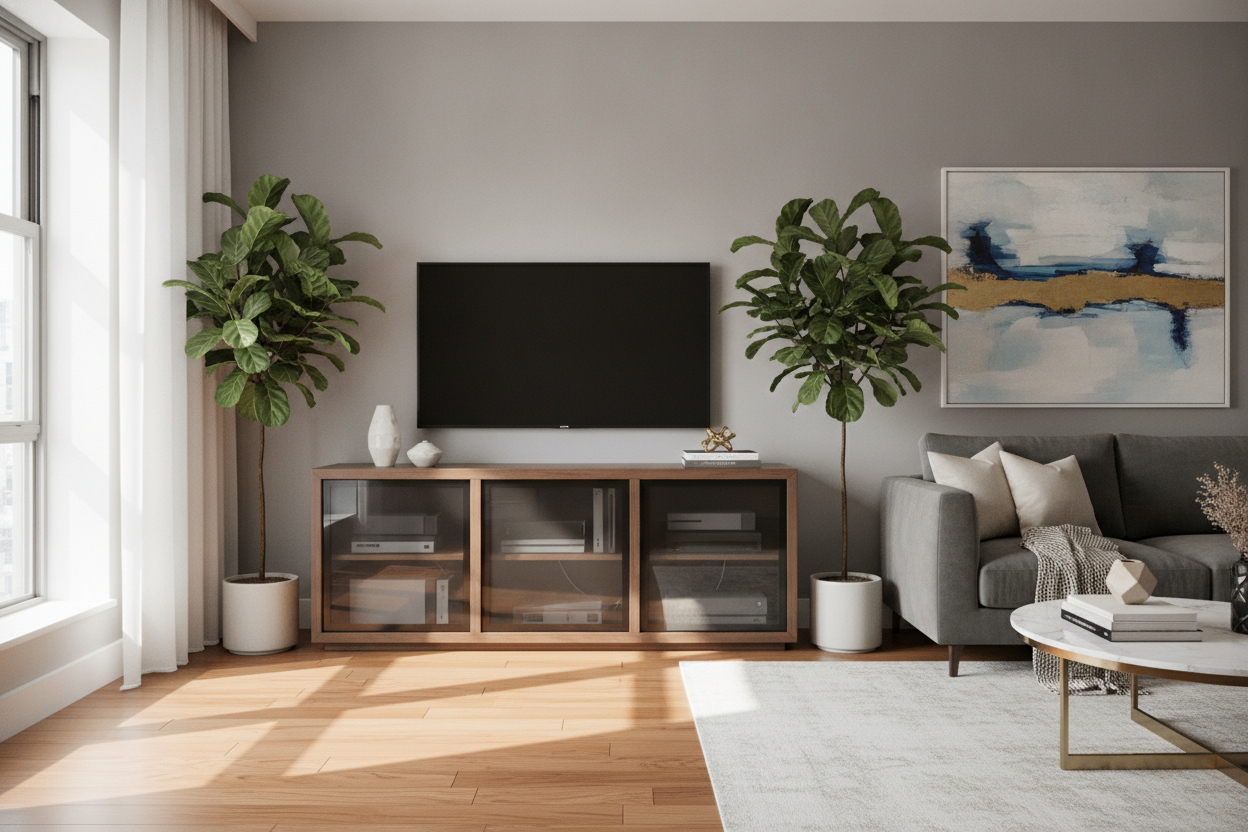
Instead of chasing a specific trend like 'industrial' or 'boho,' I look for pieces that bridge the gap between storage and display. A storage credenza with sliding glass doors is a great example of this. It gives you a place to show off your records or books while keeping the dust off your tech. Sliding doors are also a massive win for small rooms where you don't have the clearance for swinging cabinet doors.
You Upgraded the Unit. Now What About the Empty Wall?
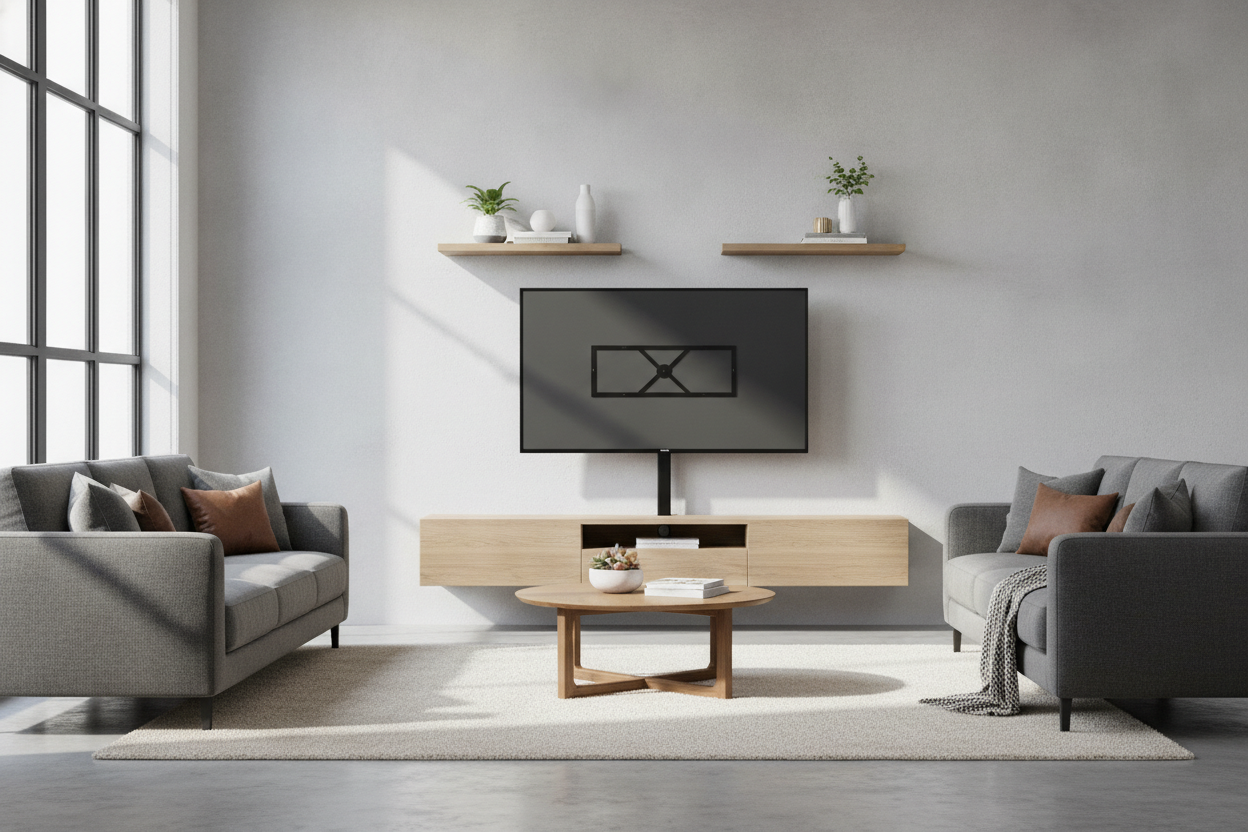
Once you bring in a substantial piece of furniture, the rest of the wall often looks naked. People usually make the mistake of centering the TV and leaving two awkward, empty gaps on either side. I’ve learned the hard way that you need to anchor the piece to the rest of the room. I usually look for what to put next to a tv stand, like a tall floor plant or a stack of oversized art books, to soften those hard edges.
The goal is to avoid the 'black hole' effect where the TV is the only thing your eye sees. By following a few rules for decorating around screens, like adding a warm lamp or some textured pottery, you make the TV feel like part of the decor rather than a giant plastic intruder. It’s about balance, not just hiding the screen.
FAQ
Is solid wood always better than MDF?
Not necessarily. High-grade MDF with a thick wood veneer can actually be more stable in humid climates because it won't warp or crack like solid wood. The key is avoiding the low-density 'particle board' that feels light and crumbly.
How wide should my TV stand be?
Your stand should be at least 3-6 inches wider than your TV on both sides. If the TV overhangs the edges, it looks top-heavy and accidental. A wider base creates a much more grounded, intentional look.
Do I really need a 'media' unit or can I use a sideboard?
You can absolutely use a sideboard, but you'll likely need to drill your own holes for cables and check the height. Sideboards are often 30-36 inches tall, which might be too high for comfortable viewing if you aren't mounting the TV on the wall.

Dejar un comentario
Este sitio está protegido por hCaptcha y se aplican la Política de privacidad de hCaptcha y los Términos del servicio.