










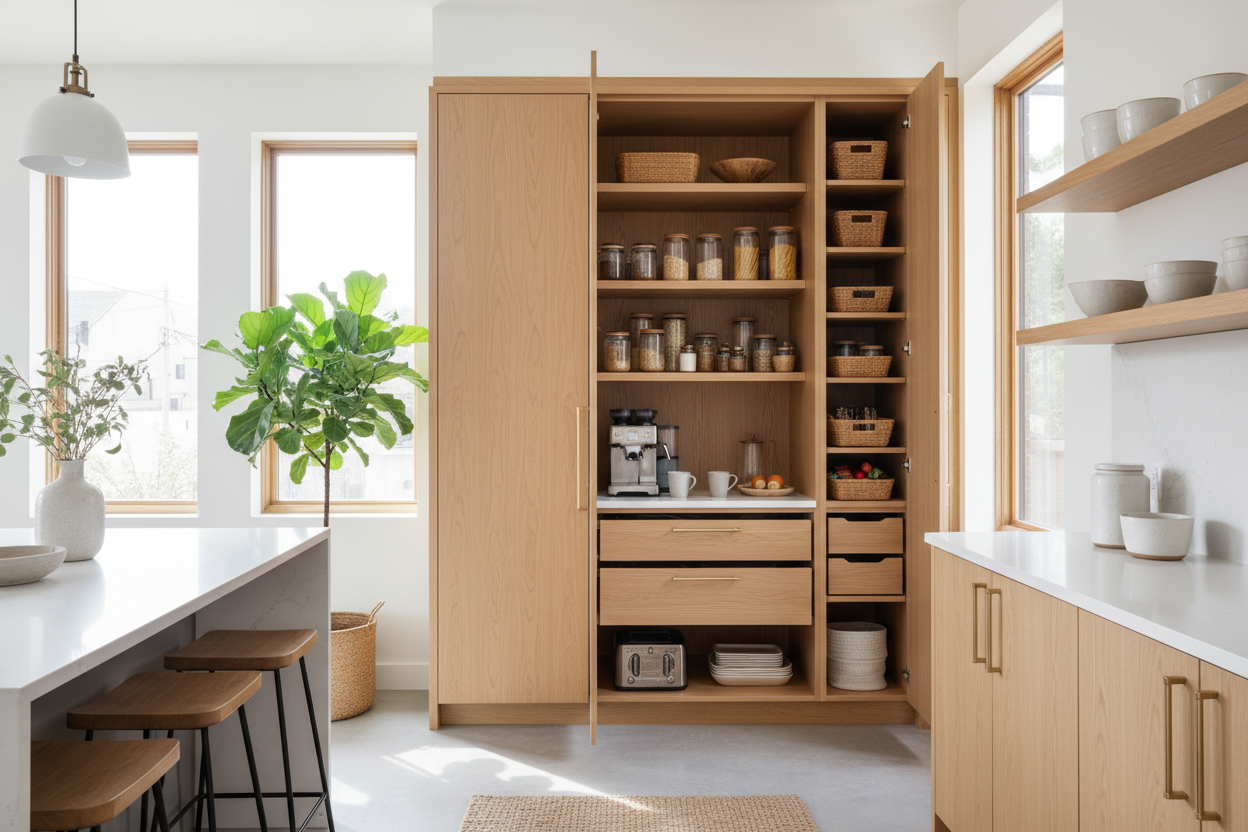
I spent twenty minutes looking for a can of chickpeas yesterday. I knew I had them, but they were buried behind a three-year-old box of matzo meal in my old drywall 'pantry.' It wasn't really a pantry; it was a graveyard for groceries. That's why I finally ripped out the studs and installed a proper built in pantry cabinet.
The difference is staggering. I went from a dark, deep cave where food went to die to a organized system where I can actually see my inventory. If you are staring at a basic closet with wire shelves, you are leaving square footage on the table.
- Drywall walls eat up about 5 inches of width and depth that could be storage space.
- Pull-out drawers are the only way to prevent 'back-of-the-shelf' syndrome.
- Stock cabinets can look like high-end millwork with the right trim and molding.
- Demoing a closet is messy, but it is a one-weekend project that pays off for years.
The Problem with Builder-Grade Drywall Pantries
Why do builders love those framed-in pantry closets? Because they are cheap. It is much faster to throw up some 2x4s and drywall than it is to install actual cabinetry. But for the homeowner, a built in pantry closet is a spatial nightmare. You lose roughly 4.5 to 6 inches of usable space on every side because of the thickness of the wall and the door frame.
Then there is the depth. Most of these closets are 24 to 30 inches deep with fixed wire shelving. Unless you have the reach of an NBA player, you aren't seeing anything in the back. I used to find expired cans of pumpkin puree from three Thanksgivings ago. It’s inefficient, it’s ugly, and it makes your kitchen feel smaller than it actually is.
What Makes a Built-In So Much Better?
When you switch to a built-in kitchen pantry, you are trading dead wall space for high-density storage. Instead of a standard door that swings out and hits your fridge, you get sleek cabinet doors and, more importantly, pull-out drawers. I am a firm believer that every pantry cabinet built in to a wall should have at least four roll-out trays at the bottom.
This setup allows you to utilize the full depth of the cabinet without losing items. You can also customize the interior with various kitchen pantry storage solutions like tiered spice racks or adjustable shelving heights. A pantry built-in shelving system that actually fits your cereal boxes and oversized olive oil bottles is a luxury you won't want to live without once you have it.
How We Faked the Custom Look on a Budget
You don't need a $10,000 custom millwork quote to get this look. I used three 30-inch wide stock pantry cabinets built in to the wall opening. The secret to making it look expensive is the 'trim-out.' We used 1x4 pine boards to fill the gaps between the cabinets and the walls, then finished it off with crown molding that matches the rest of the kitchen.
This is the same logic you'd use for a built-in china cabinet setup in a dining room. If you aren't ready to commit to a full demo, you can even buy a high-quality freestanding food pantry storage cabinet and add base molding around the bottom to make it appear permanent. The goal is to eliminate those awkward gaps where dust bunnies and lost Cheerios congregate.
Maximizing the Awkward Corners
If your kitchen has an L-shape, you probably have a 'dead corner' in your current pantry. Standard wire shelving just ignores these areas, leaving you with a corner that is impossible to organize. A kitchen pantry built in cabinet can solve this by using specialized hardware.
I recommend looking into a corner kitchen pantry cabinet set that features a lazy susan or a 'magic corner' pull-out. This turns that unreachable void into the perfect spot for heavy appliances like stand mixers or bread makers. It’s about making the architecture of the room work for your lifestyle, not against it.
Do You Actually Need a Contractor for This?
Honestly? It depends on what is inside your walls. Ripping out a built in kitchen pantry closet is easy work with a crowbar and a sledgehammer, but you have to be careful about electrical outlets or light switches. If you find a plumbing stack or a load-bearing stud, the project just got much more expensive.
However, if it's just a simple partition wall, a confident DIYer can handle the demo and the cabinet installation in a few days. Just make sure you have a solid laser level. Nothing ruins the look of built in pantry cabinets for kitchen use like doors that hang crooked because the floor wasn't level. If the thought of shimming cabinets makes you sweat, hire a local handyman for the install and do the painting and hardware yourself to save a few bucks.
FAQ
How deep should a built-in pantry be?
While 24 inches is standard for base cabinets, 18 inches is actually the sweet spot for a pantry. It is deep enough for large items but shallow enough that you don't lose things in the back. If you go 24 inches deep, you absolutely must use pull-out drawers.
Can I use kitchen wall cabinets as a pantry?
Yes, but you will need to build a 'platform' or toe kick for them to sit on. Wall cabinets are usually 12-15 inches deep, which makes for a very sleek, shallow built-in that doesn't overwhelm a small room.
What is the best material for pantry shelves?
Skip the wire and the thin MDF. Use 3/4-inch plywood or solid wood. Canned goods are surprisingly heavy, and cheap shelves will sag in the middle within six months, making your beautiful built-in look sad and DIY-gone-wrong.


Dejar un comentario
Este sitio está protegido por hCaptcha y se aplican la Política de privacidad de hCaptcha y los Términos del servicio.