










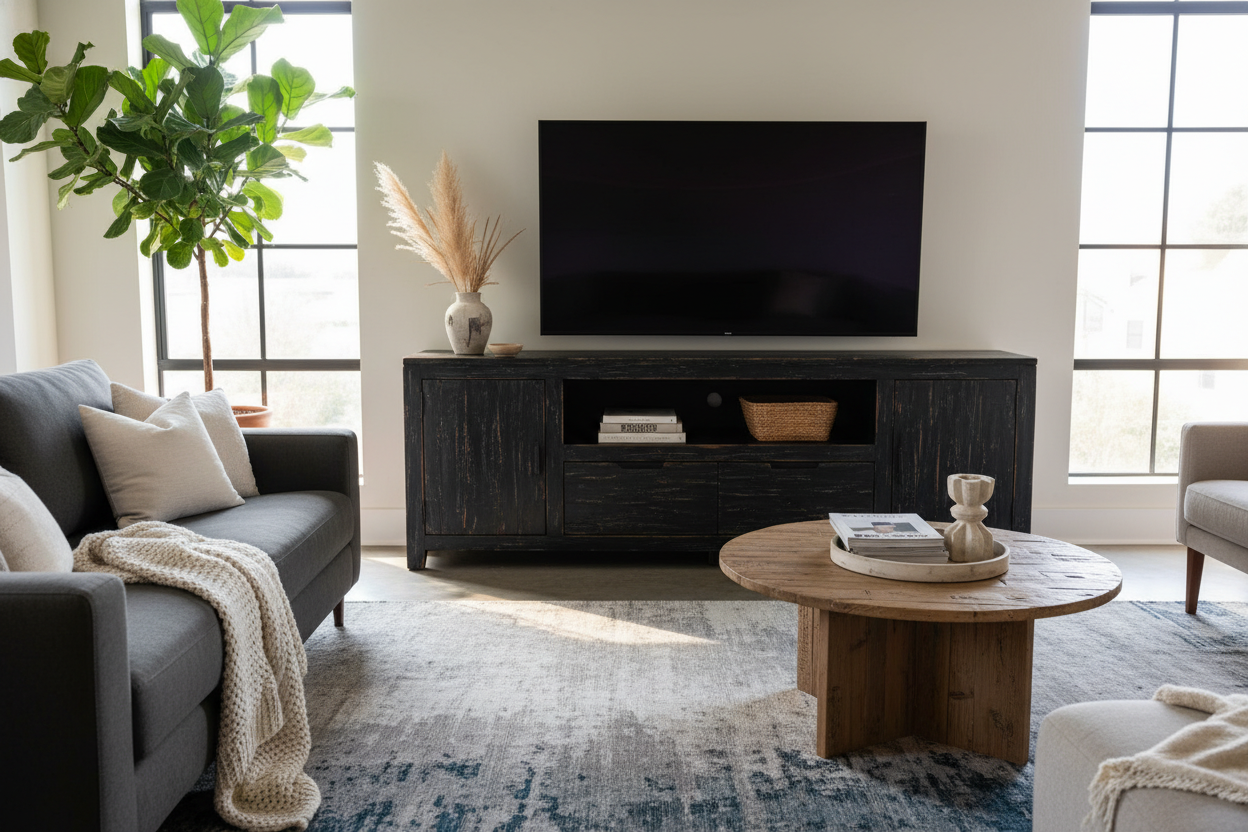
I spent three years as a slave to a high-gloss black media console. It looked incredible for exactly six minutes after I unboxed it, but then the first dust mote landed, followed by my dog’s nose print. Suddenly, I wasn't a homeowner; I was a full-time microfiber cloth technician. Every time the 3 PM sun hit that living room window, my furniture looked like a crime scene of fingerprints and cat hair.
I finally hit my breaking point and swapped the sleek finish for a distressed black entertainment center. It was the smartest move I’ve made for my sanity. Instead of a surface that highlights every imperfection, I now have a piece of furniture that actually looks better with a little life lived around it. If you are tired of the constant upkeep of 'perfect' finishes, here is why you should consider the dark, textured side.
Quick Takeaways
- Texture is your best friend for hiding dust, pet hair, and minor scratches.
- A distressed finish provides a 'lived-in' look that feels cozy rather than cold and clinical.
- Balance a large dark unit with light rugs and metallic hardware to keep the room feeling airy.
- Solid wood with a rub-through finish outlasts painted MDF every single time.
The High-Gloss Mistake I Kept Making
We’ve all been seduced by those minimalist showroom photos. You see a jet-black, matte, or high-gloss unit and think it’s the height of sophistication. But in a real house—one with kids, pets, or just an open window—that finish is a liability. I used to spend my Saturday mornings polishing my console only to have it look filthy by Sunday night. It made me wonder if an entertainment center worth the space even existed if it required that much manual labor.
The problem with flat or glossy black surfaces is that they offer zero visual camouflage. There is no grain, no depth, and no texture to distract the eye from a smudge. It’s a high-maintenance relationship that I just wasn’t prepared for anymore. I wanted a living room where I could put my feet up without worrying about leaving a mark on the furniture.
Enter the Distressed Black Entertainment Center
Switching to a textured finish changed the entire energy of my living room. A quality distressed black entertainment center isn't just 'damaged' furniture; it’s a piece with intentional character. My new unit features a wire-brushed texture and a 'rub-through' finish where the natural wood grain peeks through the black paint on the edges. This creates a depth that simply doesn't exist on a standard painted surface.
When you go searching for a distressed black tv stand, you’ll notice that the best ones aren't just sanded down randomly. They have a purposeful patina. This look fits perfectly into 'modern farmhouse' or 'industrial chic' aesthetics, but honestly, it’s just practical. The black color still provides that grounding, sophisticated weight to the room, but the distressing softens the blow. It feels less like a sterile museum piece and more like a family heirloom that’s seen some history.
The 'Oops, I Scratched It' Patina Effect
Let's be real: furniture gets beat up. My old glossy unit had a visible white scratch from a rogue vacuum cleaner attachment that drove me crazy for two years. With a distressed finish, that kind of 'oops' moment just blends right in. I’ve had my current unit for six months, and between a toddler’s toy cars and my own clumsy vacuuming, it has definitely taken a few hits. The beauty? I can't even find where the new scratches are because they look like they were meant to be there.
Even a stylish black tv stand can be rugged. You don't have to sacrifice the modern look for durability. Look for units with solid wood frames—think kiln-dried pine or oak—rather than the cheap 1.2 lb density particle board that chips the moment you look at it. A solid frame with a textured finish means you’re buying something that will actually look better in five years than it does today.
How to Keep It From Looking Like a Dungeon
The biggest fear people have with large black furniture is that it will turn their living room into a dark, moody cave. And yeah, if you shove an 80-inch black unit against a navy blue wall and put it on a dark gray rug, you’re going to have a bad time. You have to be intentional about how you avoid a heavy living room when working with such a dominant color.
My rule of thumb: contrast is your best friend. I paired my unit with a light cream-colored jute rug and painted the wall behind it a soft, warm white. This makes the black pop without it feeling like a black hole. Natural light is also crucial. If your living room is in a basement with tiny windows, a massive black entertainment center might be too much. But if you have at least one decent window, the light will catch the texture of the distressing and create beautiful shadows that make the room feel layered and expensive.
Styling Tricks to Lighten Up Dark Wood
Once the unit is in place, don't just load it up with black electronics and call it a day. You need to break up that visual weight. I’m a big fan of using metallic accents—brass or copper trays and candle holders—to reflect light off the dark surface. It adds a touch of 'luxe' to the rugged, distressed wood. I also suggest adding some greenery; a trailing pothos or a structural snake plant looks incredible against a black backdrop.
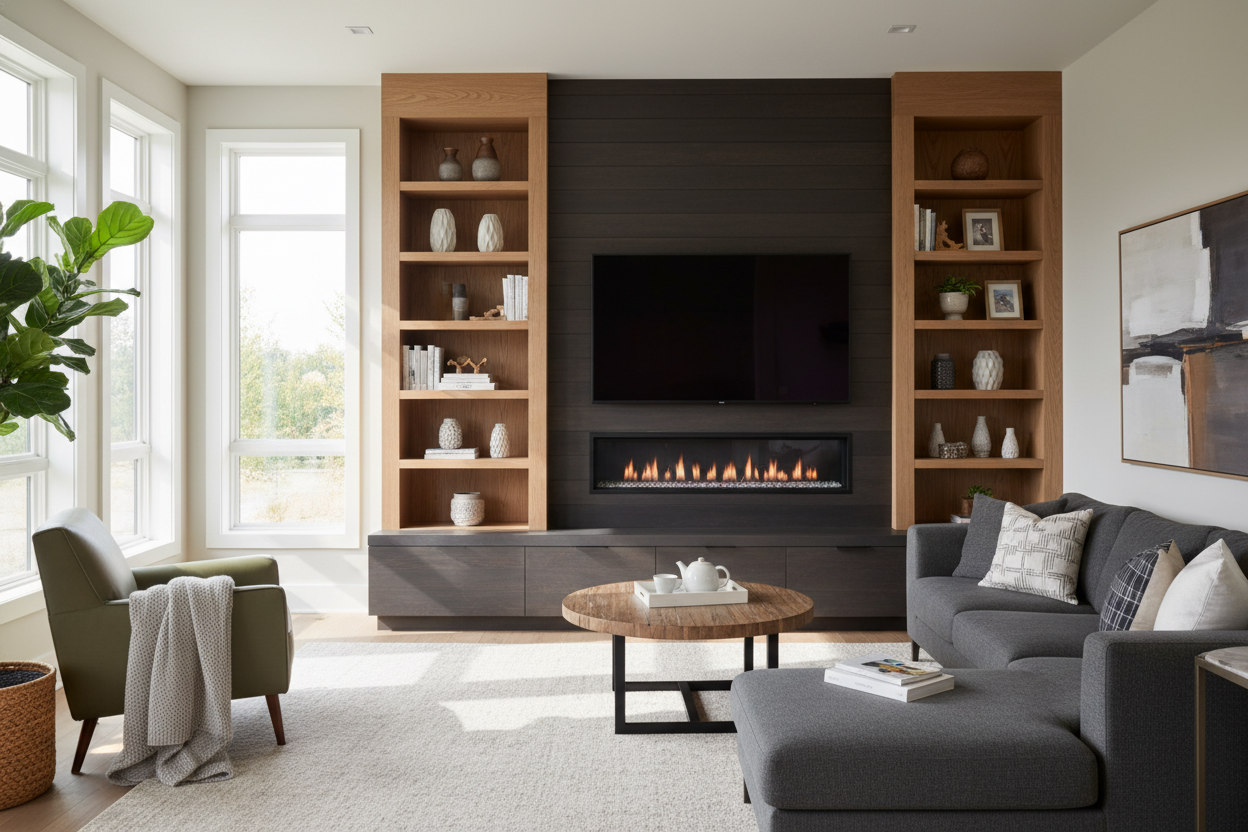
If you’re worried about the piece feeling too 'solid,' look for a black cabinet with glass doors to flank the TV. The glass allows the eye to travel 'into' the furniture rather than just hitting a wall of wood. This simple trick reduces the visual bulk by at least 30%. I use my glass-fronted sections to display white ceramic vases and old hardcover books, which provides a nice bright contrast to the dark frame. It’s all about those little moments of light that keep the piece from feeling overwhelming.
FAQ
Is distressed furniture out of style?
Not if you do it right. Avoid the 'shabby chic' look of ten years ago with heavy white chalk paint. Modern distressing is more about texture and 'rub-through' finishes on dark woods, which is a timeless way to add character.
Does black furniture show more dust?
Solid, flat black shows everything. However, a distressed black finish with visible wood grain and varied tones is actually one of the best colors for hiding dust. It’s the texture that does the heavy lifting.
Can I mix a distressed black stand with other wood tones?
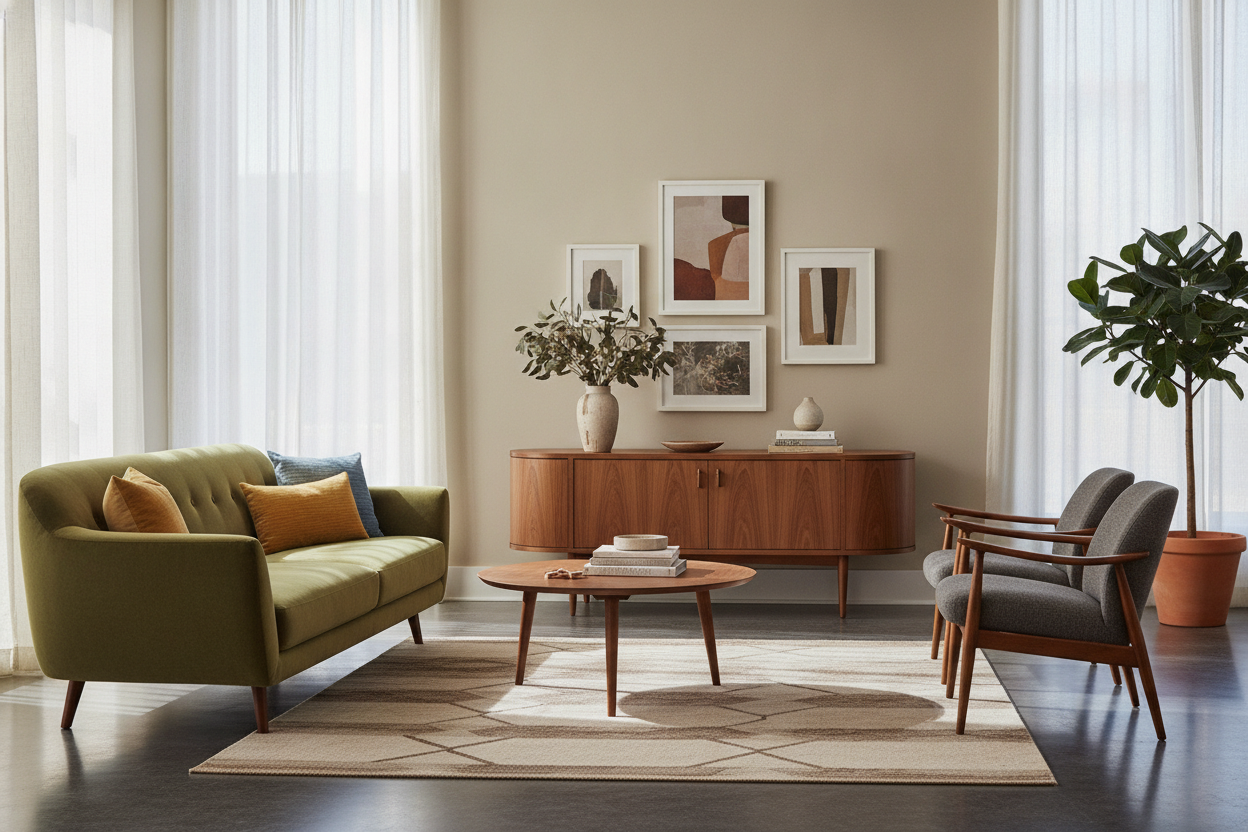
Absolutely. Black is a neutral. It looks great paired with light oak floors or a mid-century walnut coffee table. Just make sure you have at least one other black element in the room, like a lamp or picture frames, to tie it all together.

Dejar un comentario
Este sitio está protegido por hCaptcha y se aplican la Política de privacidad de hCaptcha y los Términos del servicio.