










I spent three weeks staring at a blank wall in my living room, imagining a cozy evening with a glass of wine and a flickering fire. The dream was a built in entertainment center with gas fireplace, but the reality involves a lot more than just picking out a pretty stone facade. It is a major construction project that blends plumbing, electrical, and cabinetry into one expensive cocktail.
Quick Takeaways
- Gas units require professional plumbing and municipal permits—no exceptions.
- Direct-vent models are the gold standard but require access to an exterior wall.
- Heat management is critical; without a proper mantel, you will cook your television.
- Expect to pay 3x more for gas than you would for a high-end electric alternative.
So, You Want Real Flames Under Your TV
Real flames are mesmerizing. Unlike electric inserts that can sometimes look like a high-def screensaver, a gas unit gives you actual heat and that organic, unpredictable flicker. It is the ultimate 'adult' upgrade for a living room. But before you start picking out marble tile, you need to realize you are essentially building a furnace into your custom cabinetry.
This isn't a weekend DIY project you tackle with a cordless drill and a prayer. You are dealing with combustible materials and gas lines. If you're okay with your living room looking like a literal construction site for two weeks, the payoff is incredible. If you're looking for a quick glow-up, this might be more than you bargained for.
The Reality of Running a New Gas Line (It Ain't Cheap)
Gas lines aren't DIY-friendly, and they certainly aren't free. You need a licensed plumber, a permit from the city, and a willingness to see your subfloor or drywall get ripped to shreds. When I priced out a custom built-in last year, the gas line extension alone was a $1,200 surprise because my manifold was on the complete opposite side of the house.
Then there is the framing. You can't just shove a gas box into a wooden hole. You need non-combustible studs (usually steel) around the unit and specific fire-rated drywall. By the time you pay the plumber, the framer, and the inspector, you’ve spent several thousand dollars before the fireplace even arrives on a pallet.
Venting Your Entertainment Center With Gas Fireplace Insert
Venting is the ultimate dealbreaker. A direct-vent entertainment center with gas fireplace insert needs to breathe through an exterior wall. This means your room layout is dictated by where you can punch a hole to the outside. If your dream TV wall is an interior partition, you are looking at complex vertical venting through the roof, which can easily double your labor costs.
Some people opt for ventless models to save money, but I’m not a fan. They vent exhaust directly into your room. While they have oxygen sensors, they can still kick off a 'new car' chemical smell and add a lot of moisture to your air, which isn't great for your electronics or your lungs.
The Great 'Melting TV' Paranoia
Heat rises. It is basic physics that people ignore until their $2,000 OLED starts smelling like hot plastic. A gas fireplace puts out significant BTUs—often between 20,000 and 35,000—which is enough to heat a whole floor. If that heat isn't diverted, it goes straight into your screen.
You need a non-combustible mantel or a deep recess to deflect that heat. Looking back at what I got wrong about my built-in, I underestimated how much a 12-inch deep mantel would interfere with my viewing angle. You have to find the sweet spot between 'saving the TV' and 'not straining my neck' because the fireplace forces the TV higher than is usually comfortable.
When to Ditch Gas and Fake It Instead
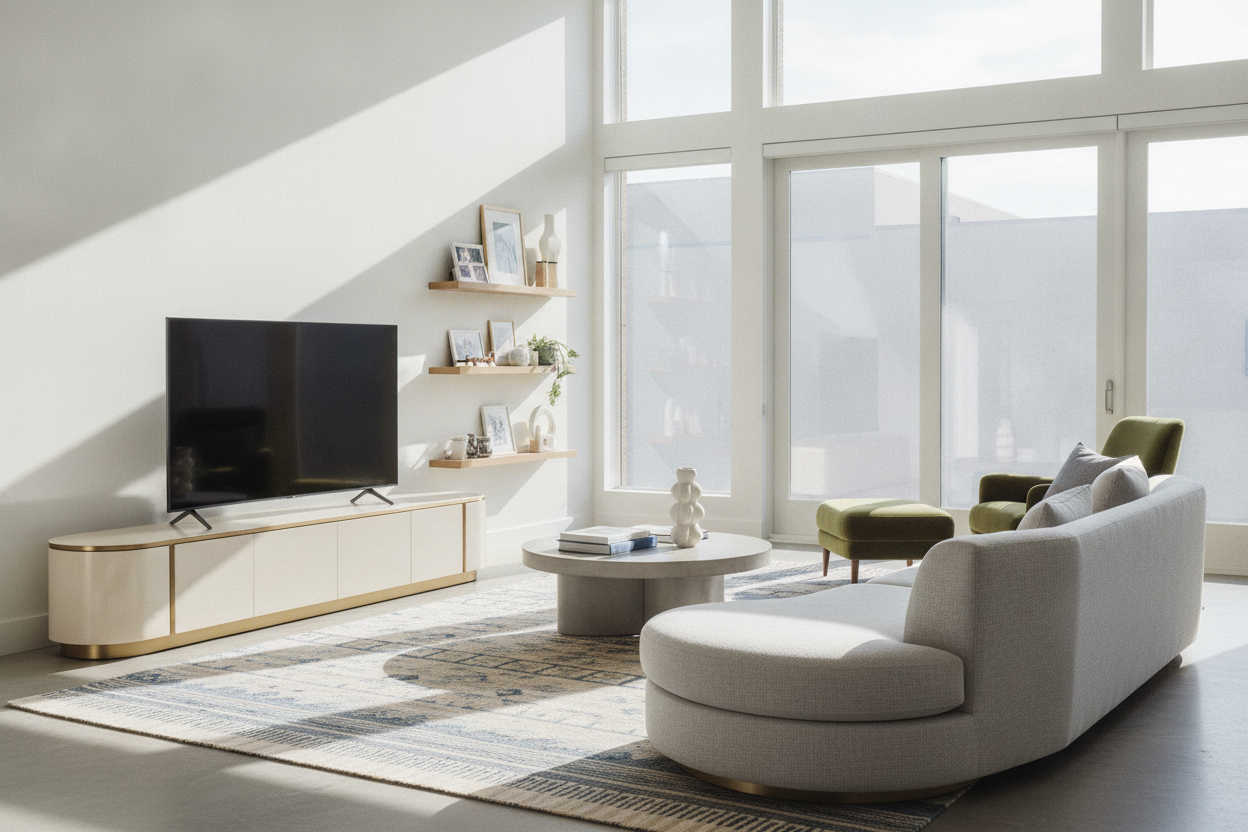
If the quotes are coming back at $15,000 and the city won't approve your venting, it is okay to pivot. Sometimes the headache of gas just isn't worth the three times a year you'll actually use it. A high-end freestanding entertainment center offers the same visual anchor for the room without the permanent structural commitment.
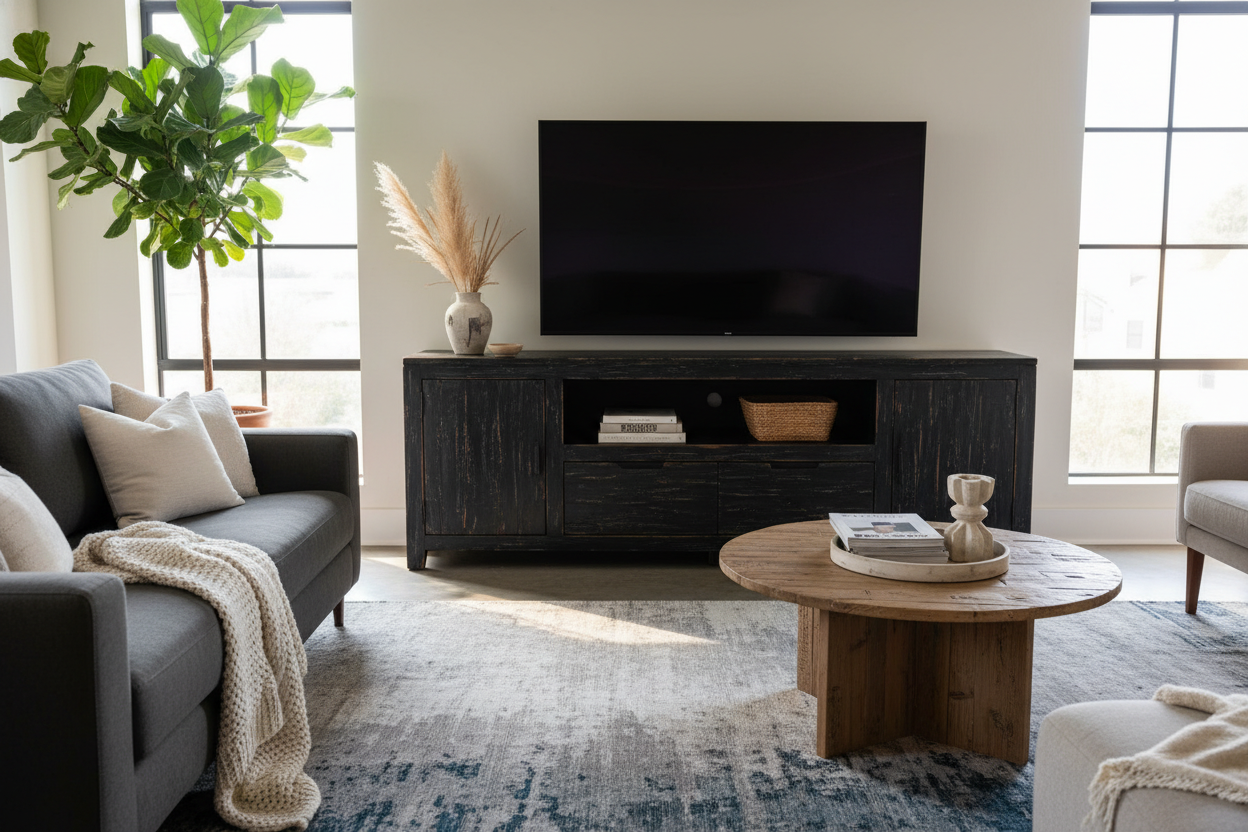
If you just want the aesthetic warmth and the storage, a wood grain color entertainment center provides that organic texture for a fraction of the cost. You get the 'built-in' look by flanking a large console with some floating shelves, and you can spend the $10,000 you saved on a much better sofa or a vacation where someone else lights the fire for you.
Personal Experience: The Soot Factor
I once lived with a gas insert that wasn't adjusted properly. Within six months, there was a faint, dark ghosting on the white cabinetry above the unit. It turns out the air-to-fuel ratio was off, causing tiny amounts of carbon to escape. It’s a reminder that these are living appliances. They require annual cleanings and glass wiping, just like a car requires an oil change. If you want 'zero maintenance,' go electric.
FAQ
Do I need a hearth for a gas built-in?
Usually, no. Many modern gas inserts are 'clean face,' meaning they can be finished flush with the wall. However, check your local codes, as some require a non-combustible floor zone in front of the unit.
Can I put a soundbar under the TV with a gas fireplace?
It is risky. Soundbars are even more sensitive to heat than TVs because of their internal amplifiers. If you do it, ensure the soundbar is tucked well under a protective mantel ledge.
Does a gas fireplace add home value?
Yes, typically more than electric. Appraisers look at gas fireplaces as permanent 'real' features of the home, whereas electric units are often viewed as decorative appliances.

Dejar un comentario
Este sitio está protegido por hCaptcha y se aplican la Política de privacidad de hCaptcha y los Términos del servicio.