










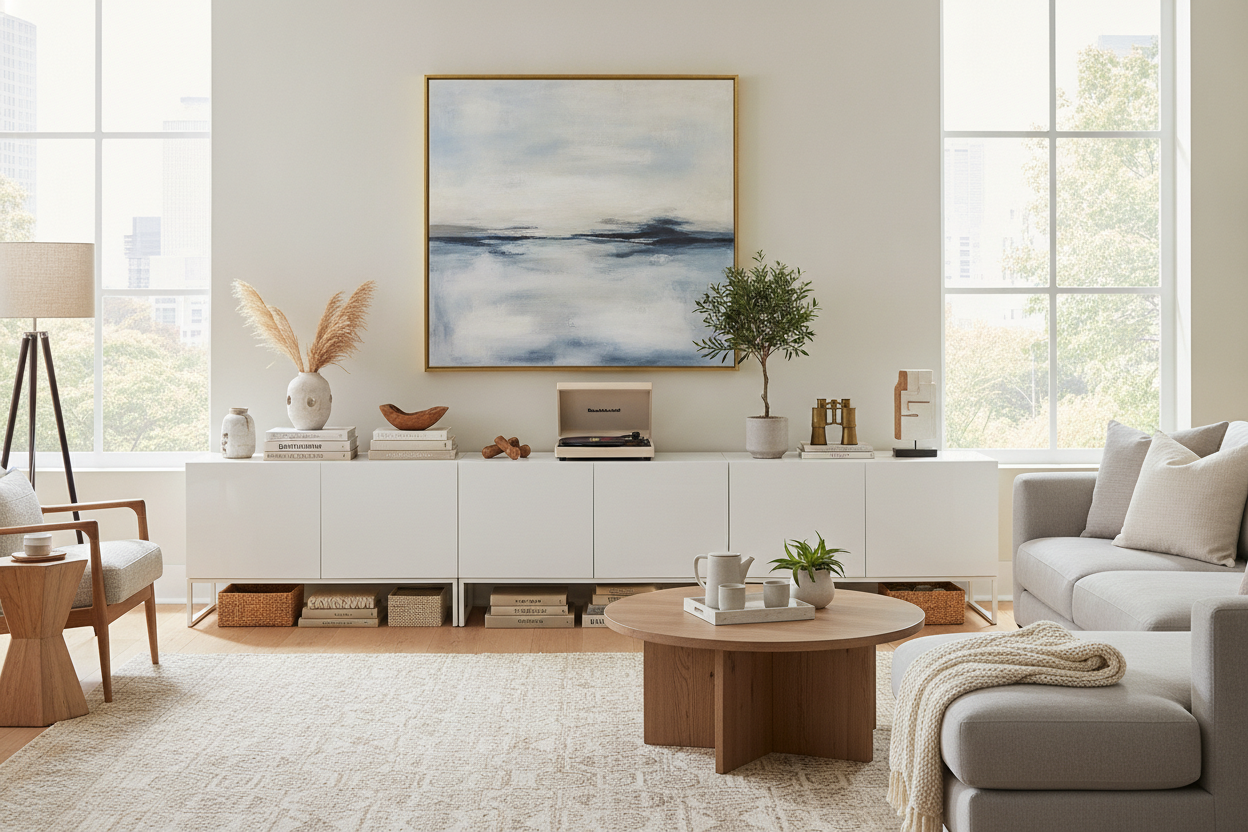
I once spent three weeks hunting for the 'perfect' dining room buffet. I wanted something long, low, and heavy enough to feel permanent, but every dedicated sideboard I found was either 40 inches tall—making my dining room feel like a cramped hallway—or cost more than my first car. Then I saw a low-slung cabinet in a living room floor set and realized I’d been looking in the wrong department. I bought two media console cabinets that day, and I haven't looked back.
Quick Takeaways
- Lower profiles (20-24 inches) keep small rooms feeling airy while providing massive surface area.
- Built-in cord management is a secret weapon for hiding kitchen appliance cables or lamp cords.
- Depth matters; look for at least 16-18 inches to fit dinner plates or board game boxes.
- Solid wood or high-quality veneers beat hollow particle board for heavy stoneware storage.
The 'TV Stand' Label Is a Massive Lie
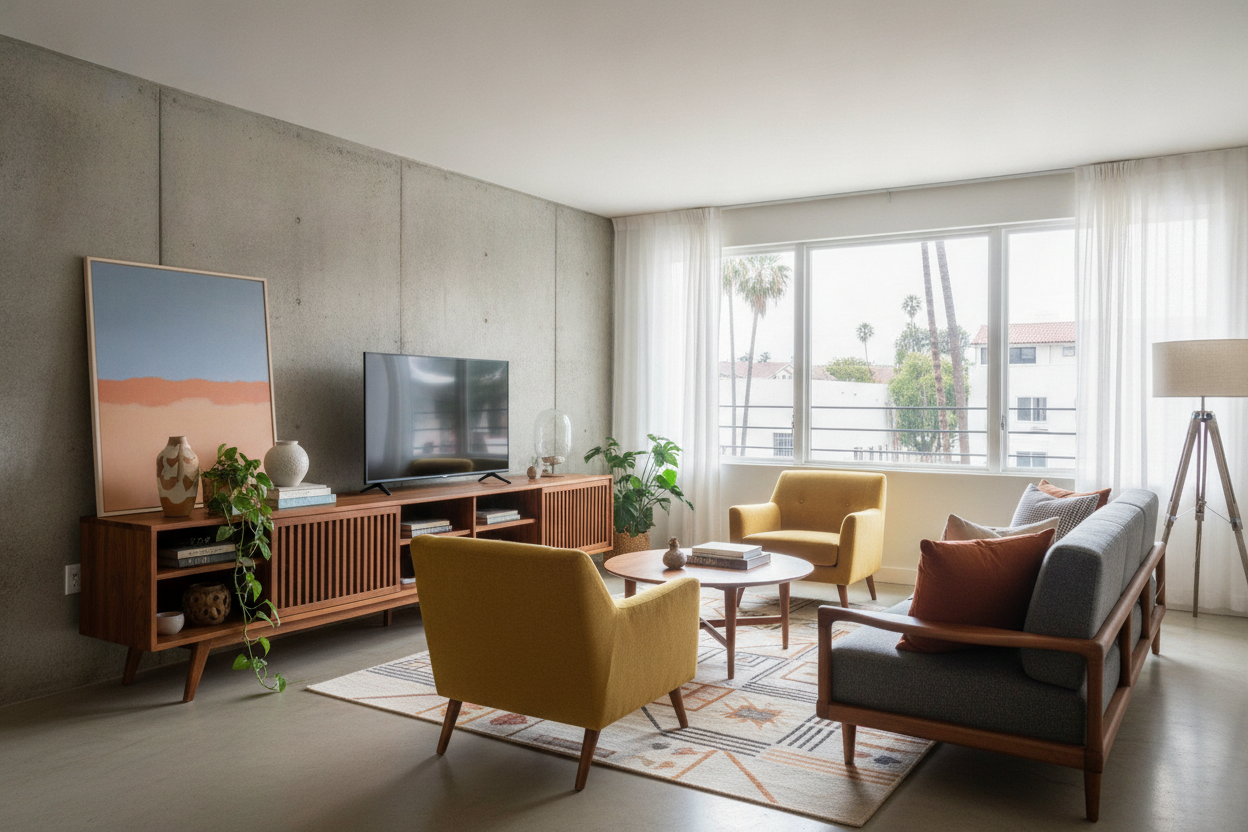
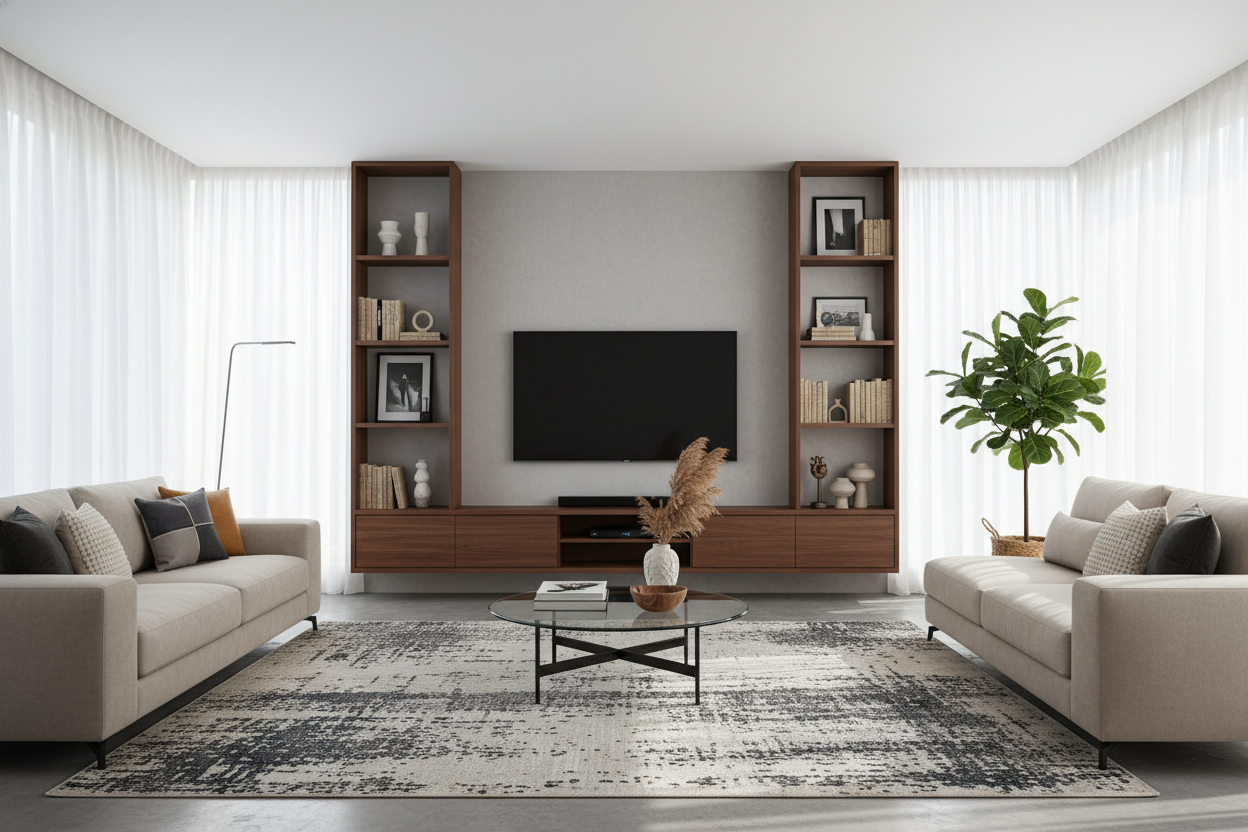
The furniture industry loves to put things in boxes. If it’s in the living room section, it’s a TV stand. If it’s in the dining room, it’s a credenza. But these labels are mostly about marketing, not utility. A long, low cabinet is an architectural anchor. It provides a horizontal line that grounds a room without blocking windows or art. I remember reading a Room And Board Media Console A Designers Honest Review a few years back, and it hit me: these pieces have a specific 'weight' that makes a room feel finished. They aren't just furniture; they are built-ins you can take with you when you move.
When you stop looking for a 'stand' and start looking for a 'low cabinet,' your options explode. You get better cable management, adjustable shelving designed for heavy electronics (which means it can handle your heavy ceramic bowls), and a height that is much more human-scale than a towering dresser.
Why They Make the Ultimate Dining Room Buffet
Standard buffets are often too high to comfortably serve food from if you're under six feet tall. Media units, however, sit at that sweet spot where you can set down a heavy Dutch oven without straining your shoulders. I use a 78 7 Media Console in my current dining space. It’s nearly seven feet of continuous surface area, which is a lifesaver during the holidays.
The real magic is the cord cutouts. Instead of having my slow cooker or warming tray cords draped over the front of the cabinet to reach the nearest outlet, I feed them through the back of the console. It looks clean, professional, and intentional. Inside, the shelves are deep enough to hold my oversized platters that don't fit in standard kitchen upper cabinets. If you have a collection of heavy stoneware, a media unit is built to support the weight of old-school amplifiers, so it won't sag under your plates.
Hiding Hallway Chaos in Plain Sight
Entryways are notorious for becoming 'the pile.' Shoes, dog leashes, and those random packages you need to return eventually end up on the floor. While many people gravitate toward dedicated Shoe Cabinets, those are often quite narrow and flip-out styles can be flimsy. A sturdy media console in a hallway offers a much wider footprint, which actually makes the hallway feel more like a gallery and less like a transition zone.
I’ve found that a 15-inch deep console is the perfect 'slim' profile for a hallway. It’s deep enough to tuck boots and backpacks behind closed doors but shallow enough that you aren't bumping your hips as you walk past. It gives you a place to drop your keys and mail, and you can tuck a couple of baskets underneath if it has legs, doubling your storage without adding bulk.
The Kid Clutter Black Hole
If I see one more primary-colored plastic bin, I might lose it. When my kids were younger, I tried the open-cubby approach, but it just looked like a toy store exploded in my face every day. I swapped the bins for a 78 7 W 4 Drawer Tv Stand Media Console and the change was instant. Drawers are the ultimate hiding spot for the 'bits'—Legos, puzzle pieces, and those tiny action figures that are a menace to bare feet.
The drawers in these units are usually reinforced to handle the weight of heavy media collections, so they don't go off the tracks even when stuffed with board games. Because the unit is low to the ground, the kids can actually reach their own stuff, which (theoretically) means they can help clean it up. Plus, the top is the perfect height for a train table or a dollhouse setup that doesn't require them to stand on a stool.
How to Make It Look Intentional (Not Like a Misplaced TV Stand)
The biggest fear people have is that their dining room will look like a dorm room because of a 'TV stand.' The trick is all in the styling. You have to break the 'long rectangle' look. I always suggest following the tips in Styling A 60 Inch Media Console For A High End Look to create visual triangles. Instead of a TV, hang a massive piece of art—something that is at least 2/3 the width of the cabinet—about 6 to 10 inches above the surface.
Add height on one end with a tall table lamp or a vase of oversized branches. On the other end, stack some large coffee table books or a tray. This creates a 'landscape' for the eye to follow. If the console has cord holes you aren't using, don't worry about them—once you put a few decorative objects inside or on top, those holes disappear into the shadows. The goal is to treat the surface like a mantel, not a tech hub.
My Honest Mistake
I once bought a 22-inch deep media console for a narrow dining room thinking 'more storage is better.' It was a disaster. I couldn't pull the chairs out all the way without hitting the cabinet. I learned the hard way that in tight spaces, 16 inches is the 'goldilocks' depth. It fits a standard dinner plate (usually 10-12 inches) with room to spare, but doesn't eat up your floor space. Measure your walkways twice, buy once.
FAQ
Do the cord holes look ugly if I'm not using them?
Not really. Most modern consoles have black plastic covers or are positioned so low that they are hidden by the items you put on the shelves. If they really bug you, a piece of matching contact paper or even a strategically placed stack of plates covers them right up.
Are media consoles strong enough for heavy dishes?
Usually, yes. They are designed to hold heavy 75-inch TVs and old-school receivers. Just check the weight capacity. Look for units with a center support leg if you're going over 70 inches in length; it prevents the dreaded 'smile' sag in the middle.
What is the best height for a non-TV console?
For a hallway or entryway, 28-30 inches feels like a standard table. For a dining room buffet or a 'behind the sofa' console, 22-24 inches is the sweet spot. It keeps the room feeling open and provides a better height for styling with tall lamps.

Dejar un comentario
Este sitio está protegido por hCaptcha y se aplican la Política de privacidad de hCaptcha y los Términos del servicio.