










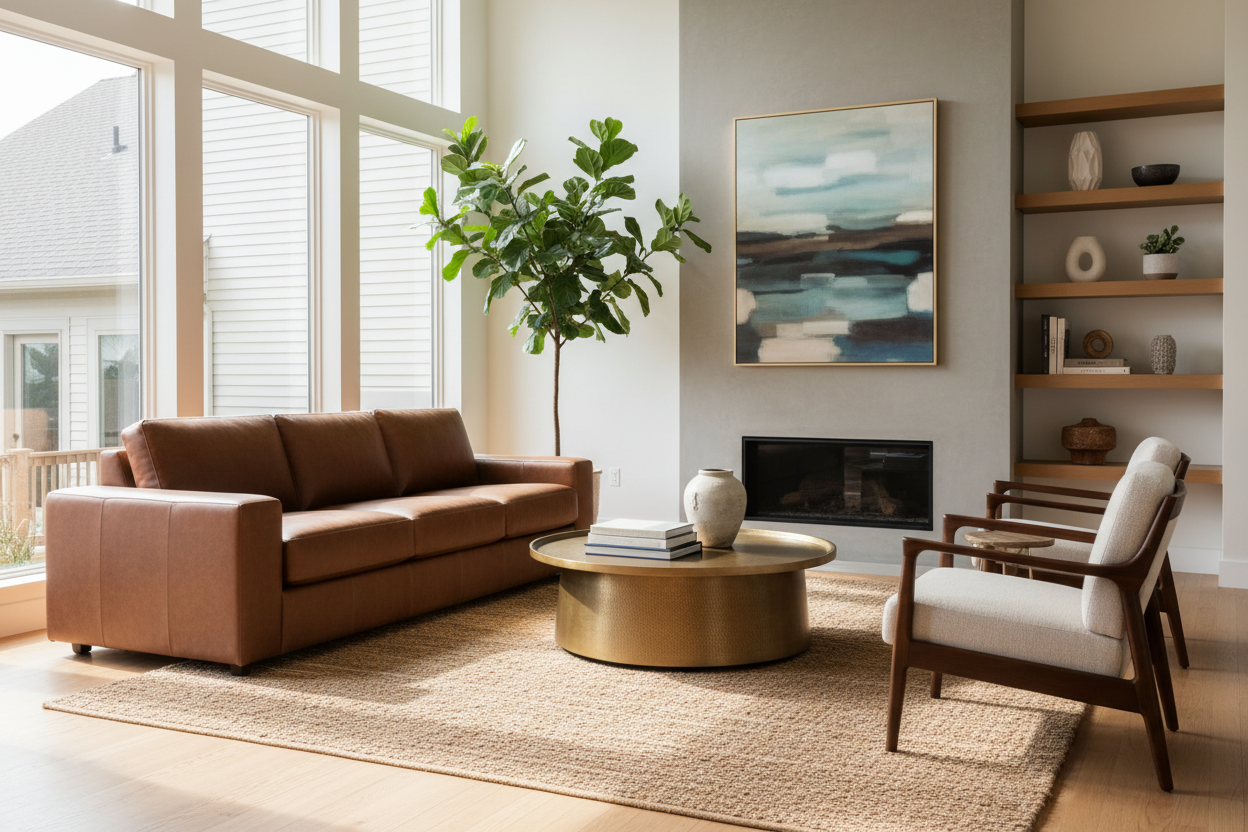
The allure of a rich, cognac leather aesthetic is undeniable, but the price tag—or the high-maintenance nature of natural hide—often leads clients toward a brown vinyl couch. It is a polarizing piece of furniture. For some, it is the ultimate pragmatic solution for busy households; for others, it raises concerns about breathability and longevity. As a designer, I see vinyl not as a compromise, but as a specific material choice that requires careful spatial planning and styling to ensure it elevates your room rather than cheapening it.
Key Features to Look For
- Material Composition: Opt for Polyurethane (PU) over PVC for a softer, more leather-like hand feel.
- Frame Construction: Ensure a kiln-dried hardwood frame to support the non-stretch nature of vinyl.
- Matte Finish: High-gloss vinyl often looks artificial; a matte or semi-aniline finish mimics real leather best.
- Seam Reinforcement: Vinyl is prone to tearing at stress points, so look for double-stitched seams.
Choosing the Right Material: PU vs. PVC
When selecting a brown vinyl sofa, the specific type of synthetic material dictates both the tactile experience and the lifespan of the piece. In my showroom consultations, I steer clients toward high-grade Polyurethane (PU). Unlike the stiff, plastic-like PVC of the past, modern PU offers a suppleness that rivals bonded leather. It creates a silhouette that looks tailored rather than rigid. However, be aware that even high-quality vinyl lacks the natural patina development of leather; it will maintain a uniform color throughout its life, which appeals to modernists but may disappoint those seeking a distressed vintage look.
Styling and Visual Balance
Because brown vinyl has a consistent, often sleek surface, it can read as "cold" or "flat" if not properly accessorized. The secret to making this piece work is heavy textural contrast.
Layering Textures
To break up the visual weight of a dark vinyl surface, introduce organic, matte textures. I recommend draping a chunky wool throw or arranging bouclé scatter cushions. The friction between the smooth vinyl and the rough fabric adds necessary depth and prevents the sofa from dominating the room as a dark, shiny block.
Color Coordination
Brown vinyl leans towards warm undertones—ranging from deep espresso to burnt umber. Pairing this with cool greys can create a jarring clash. Instead, anchor the room with warm neutrals like oatmeal, terracotta, or olive green. This creates a cohesive palette where the sofa feels like an intentional focal point rather than an afterthought.
Ergonomics and Placement
Vinyl is non-porous, meaning it does not breathe like fabric or natural leather. This impacts where you should place the furniture. Avoid positioning a brown vinyl couch in direct sunlight or directly in front of a south-facing window. The heat absorption can make the seating uncomfortable and, over time, can cause the material to become brittle and crack. From an ergonomic standpoint, look for cushions with high-density foam wrapped in down. Since the upholstery offers zero "give," the internal fill must provide the comfort.
My Personal Take on Brown Vinyl Couches
I want to share a candid observation from a project I managed for a young family in a converted loft. We chose a mid-century style brown vinyl sofa because they had two large dogs and needed something wipeable. Visually, it was stunning—it anchored the industrial space perfectly.
However, there was an "unpolished" reality we discovered six months later: the noise. Unlike fabric that absorbs sound, or leather that softens, this specific vinyl developed a distinct "squeak" when anyone shifted weight. We eventually solved this by applying a specialized vinyl conditioner to the friction points between the cushions, but it’s a detail rarely mentioned in product descriptions. Furthermore, during the summer, the family noted that bare skin would stick to the surface uncomfortably. We solved this by styling a linen runner down the center seat. It’s a durable choice, but it requires these small lifestyle adjustments to truly live with it comfortably.
Conclusion
A brown vinyl couch is a resilient, stylish option that offers the sophistication of leather without the fragility. By selecting the right matte finish and balancing the sleekness with soft, organic textiles, you can curate a living space that feels luxurious and inviting. It is about understanding the material's limitations and designing around them to let its durability shine.
Frequently Asked Questions
How do I stop my brown vinyl sofa from cracking?
Moisture is key. While you shouldn't soak the sofa, wiping it down regularly with a damp cloth and applying a vinyl-specific conditioner every 3-6 months keeps the polymers flexible and prevents drying out.
Is a vinyl couch a good option for cat owners?
Generally, yes. Vinyl is tightly woven and non-porous, so cat claws don't snag on it as easily as they do on woven fabrics like tweed. However, deep scratches are permanent and cannot be buffed out like leather.
Does brown vinyl fade in sunlight?
Yes, UV rays can break down the chemical bonds in vinyl, causing fading and brittleness. If the sofa must be near a window, use UV-blocking window treatments or throw blankets to protect the back of the frame.

Dejar un comentario
Este sitio está protegido por hCaptcha y se aplican la Política de privacidad de hCaptcha y los Términos del servicio.