










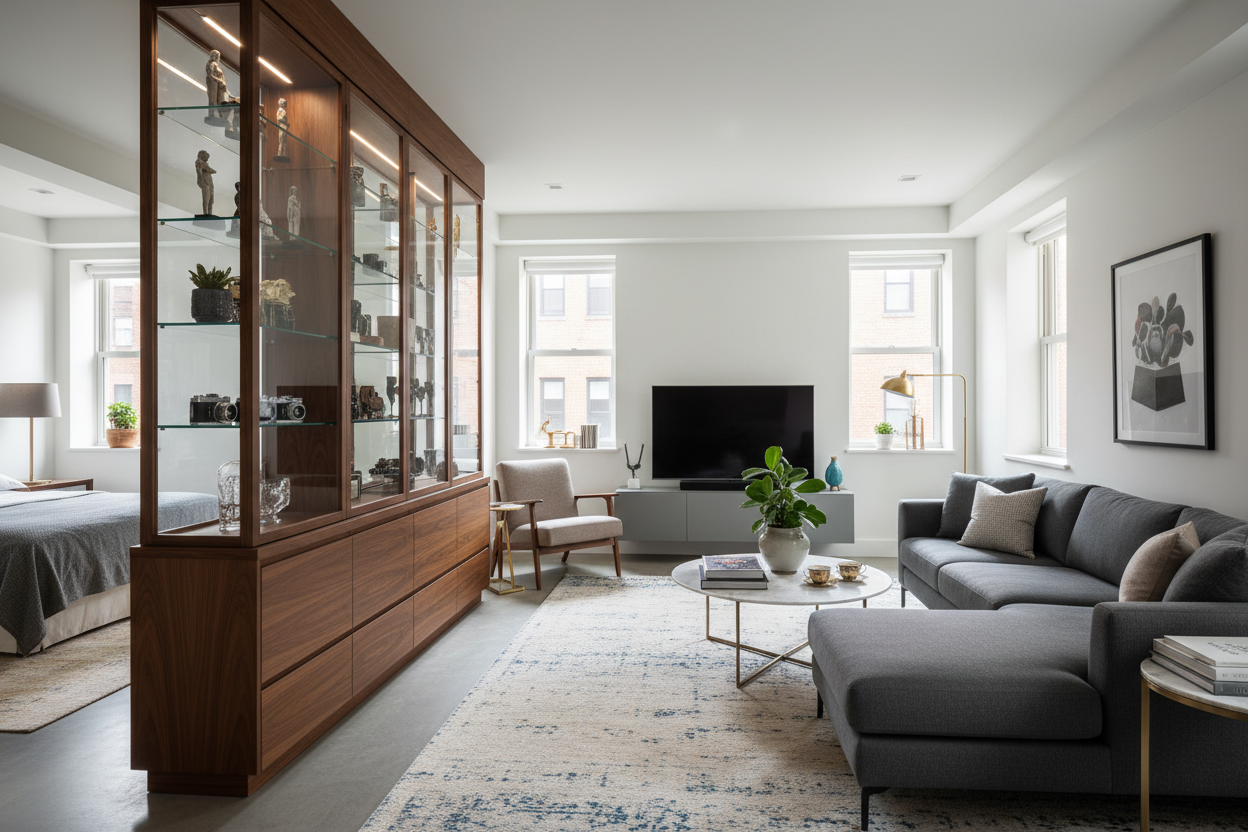
I spent three years telling myself floating shelves were 'minimalist.' In reality, they were just dust magnets that made my limited edition figures look like flea market finds. When you are spending two hours a month with a makeup brush dusting tiny crevices, you realize you have hit a wall. Staring at my 47th browser tab of storage solutions at 1 AM, I finally admitted it: I needed a real hobby display case.
A dedicated enclosure is not just about showing off; it is about reclaiming your Saturday mornings from the tyranny of microfiber cloths. It is the difference between a cluttered room and a curated gallery. Here is how I finally made the jump without ruining my home aesthetic.
Quick Takeaways
- Glass doors reduce dusting maintenance by roughly 90%.
- Furniture-grade finishes help collectors' items blend with adult decor.
- Corner units are the best way to utilize dead space in small apartments.
- Integrated lighting is mandatory to avoid the 'dark storage bin' look.
The Breaking Point: When Floating Shelves Stop Working
We have all been there. You start with one or two pieces on your desk. Then three. Then suddenly, your workspace looks like a warehouse, and the 'minimalist' floating shelves you installed are sagging under the weight of resin and plastic. For me, the breaking point was a mild earthquake—nothing serious, but enough to send my favorite model kit face-first onto the hardwood.
Floating shelves offer zero protection from cats, kids, or gravity. When your collection reaches a certain value—either monetary or sentimental—leaving it exposed is just a gamble. Transitioning to hobby display cabinets felt like a surrender at first, like I was admitting I had a 'problem.' But the moment I closed those glass doors, the visual noise in the room just... stopped. The room felt cleaner because the chaos was contained.
Do Hobby Display Cabinets Actually Look Good in Living Rooms?
The biggest fear is the 'hobby shop' vibe. You do not want your living room to look like the backroom of a comic convention. The trick is choosing finishes that actually talk to your existing furniture. If you have a bright, airy vibe, a white display case with glass doors works because it mimics a traditional china cabinet while housing your vintage cameras or LEGO sets.
I personally prefer pieces with clean lines and minimal hardware. Avoid the cheap wire-and-plastic racks you see in dorm rooms. If you choose a piece made from solid wood or high-quality veneers, it ceases to be 'toy storage' and becomes a piece of furniture. It is about context. If the cabinet looks like it belongs in a grown-up house, the items inside will look like curated art rather than a cluttered pile.
Where to Put It When You Have Zero Spare Room
I live in an apartment where every square inch is a battleground. If you do not have a long stretch of wall, look at the dead zones. That weird 45-degree angle by the radiator or that awkward gap behind the door? That is where a corner display case shines. It utilizes the architectural 'oops' of your floor plan to create a vertical focal point without blocking the flow of traffic.
I once tried to cram a full-sized cabinet into my hallway. Bad move. I hit my elbow on it every time I went to the kitchen. Moving to a corner unit felt like I had gained space rather than losing it. It draws the eye upward, making the ceilings feel higher, which is a neat trick for cramped quarters.
The Hybrid Approach: Mixing Books and Collectibles
Not everyone wants a shrine. Sometimes you just want your hobby to live alongside your life. I have found that mixing high-end cabinets with your library is the most sophisticated way to do it. Using bookcases display cabinets allows you to sandwich your rare hardcovers between your collectibles. It breaks up the visual weight.
This hybrid method prevents the room from feeling one-dimensional. It tells a story about who you are—someone who reads, someone who creates, and someone who collects. I usually put the dust-sensitive items behind the glass sections and leave the heavy art books on the open shelves. It is practical and looks incredibly intentional.
Curating Your Collection So It Looks Like a Museum
Stop cramming. The biggest mistake I made early on was trying to fit every single piece I owned into one unit. It looked like a bargain bin. Use acrylic risers to create depth—put the big stuff in the back and the small details up front. This 'stadium seating' for your hobby items makes everything visible without looking crowded.
And for the love of all things holy, add lighting. Even the most stylish display cabinets look like dark voids if you do not have some warm LED strips inside. I prefer 3000K LEDs; they provide a museum-quality glow without that clinical, blue-ish tint. When you light a collection properly, people stop asking 'Why do you have all this?' and start saying 'Wow, tell me about this one.'
FAQ
Is glass or acrylic better for a display case?
Glass is my go-to. It is much harder to scratch than acrylic and does not yellow over time. Just make sure it is tempered glass for safety, especially if you have pets or kids running around.
How do I stop my display from looking cluttered?
Follow the 'rule of three' and embrace negative space. Do not fill every square inch. If you have too much for one case, rotate your items every few months. It keeps the display fresh and prevents the 'hoarder' aesthetic.
Are internal lights hard to install?
Not anymore. Most modern cabinets come with pre-drilled holes for wiring. Even if yours doesn't, battery-powered LED pucks or adhesive strips are cheap and hide easily behind the door frame.

Dejar un comentario
Este sitio está protegido por hCaptcha y se aplican la Política de privacidad de hCaptcha y los Términos del servicio.